America · Boutique

Bolivia

The roof of South America

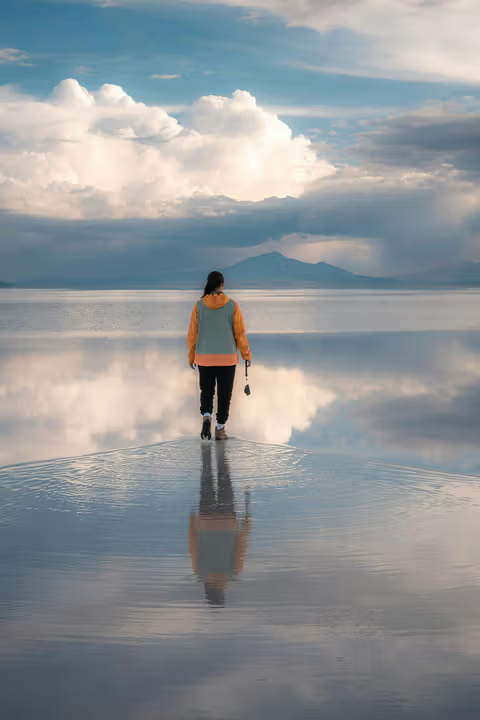
B olivia entered the curious traveller's map with the Uyuni Salt Flat and stayed for everything else. On the altiplano, La Paz beats between adobe hills and snow peaks. In the south, the salt flat mirrors the sky between January and March.

The essence

The country read at three altitudes

B olivia entered the curious traveller's map with the Uyuni Salt Flat and stayed for everything else. On the altiplano, La Paz beats between adobe hills and snow peaks. In the south, the salt flat mirrors the sky between January and March. In the valleys, Sucre keeps the most intact colonial centre in the country. It is a destination of authorship: it works when someone curates it with judgement, far from autopilot and the closed package. The right weather window, the altitudes in the right order, the right hotels and a guide who comes from the community. Done that way, Bolivia delivers the most memorable trip of a South American itinerary.

10,582 km² of salt · the largest salt flat in the world
3,640 m La Paz, the highest seat of government on the planet
37 official languages recognised by the Constitution
4 ecological tiers in a single internal trip

Regions

The 5 faces of Bolivia

La Paz · Bolivia 01 · Capital

2-3 nights

La Paz

The capital that breathes thin

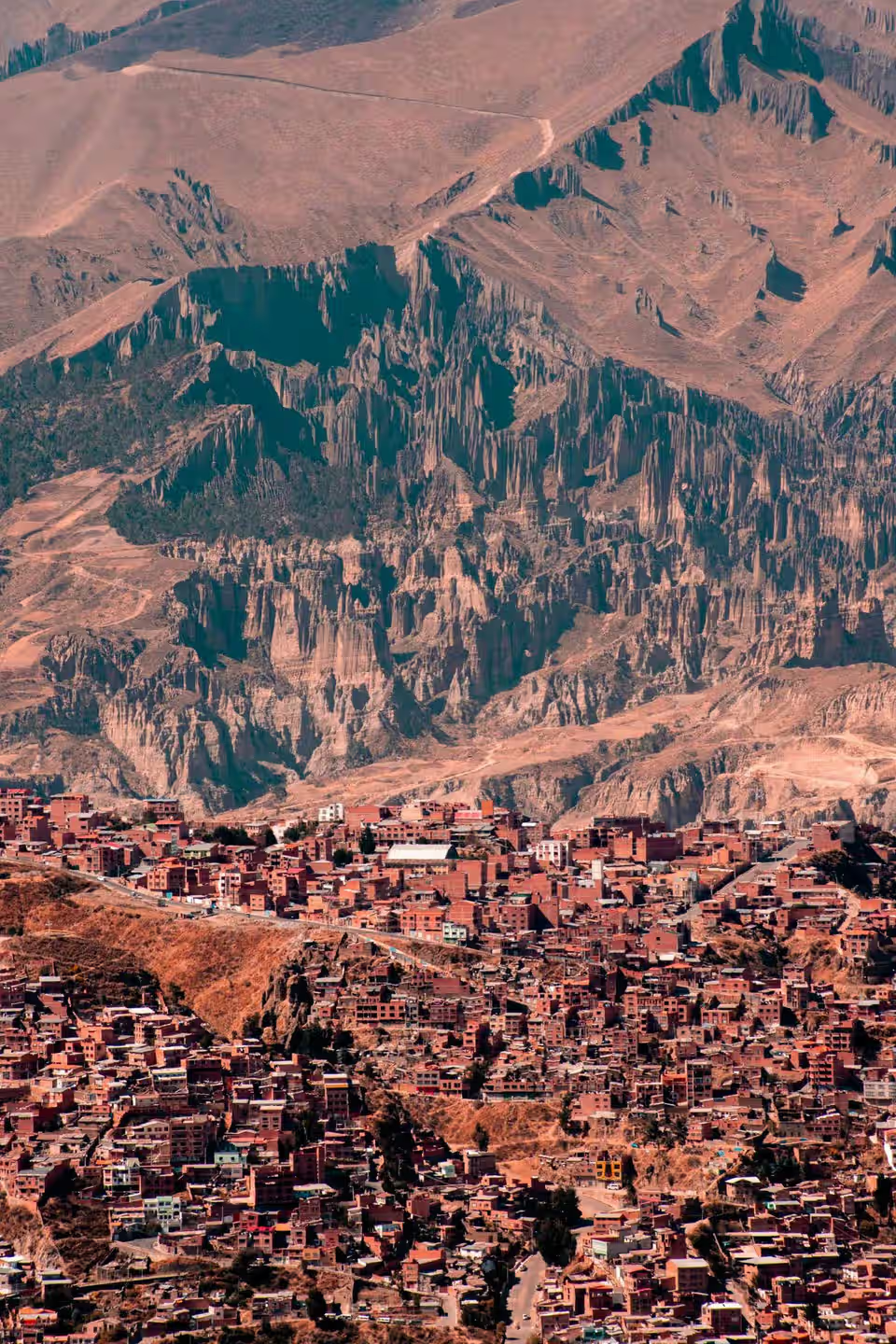
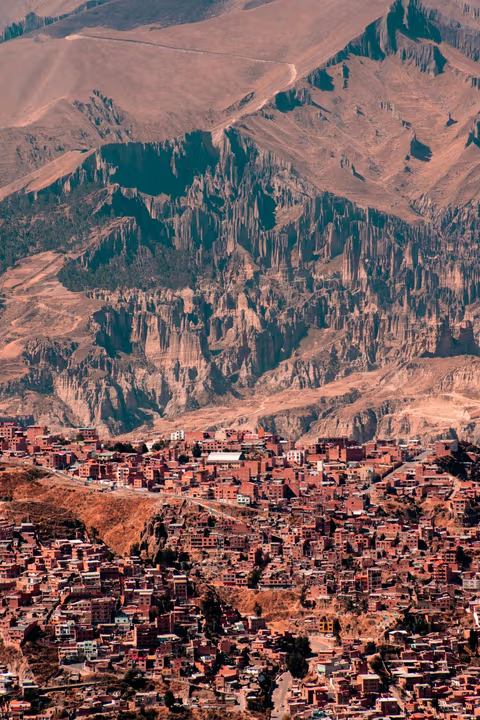
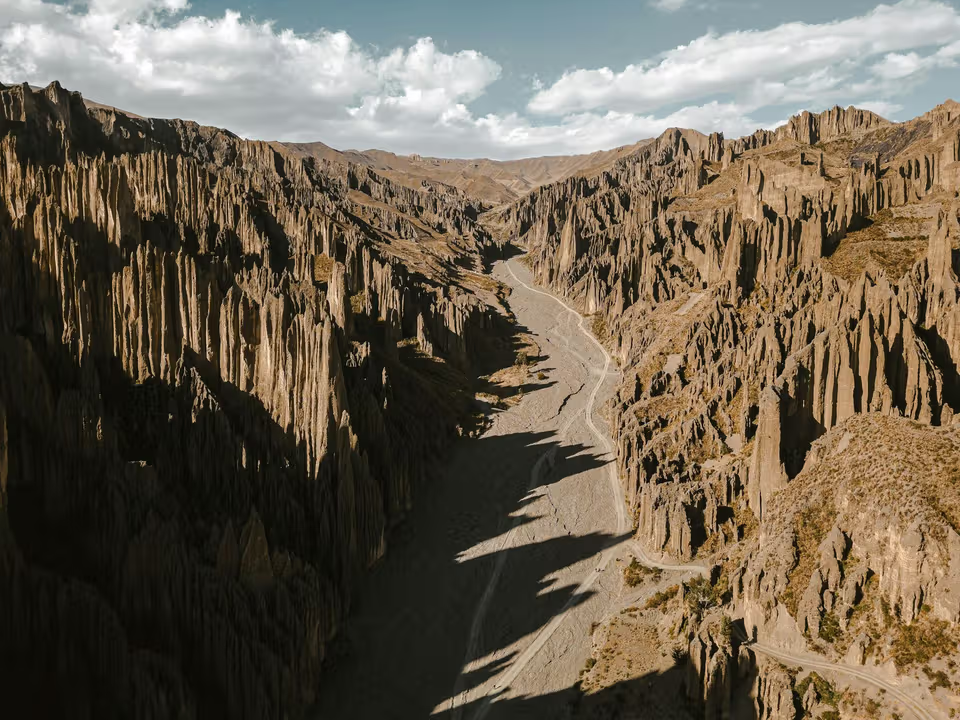
La Paz is descended into. A city hung inside a crater, with the Illimani at the back, that rewards the curious traveller and punishes the rushed one. Cable cars crossing the sky, the witches' market and a young culinary elite.

Hotels
Atix Hotel · Casa Grande · Hotel Rosario
Must-see
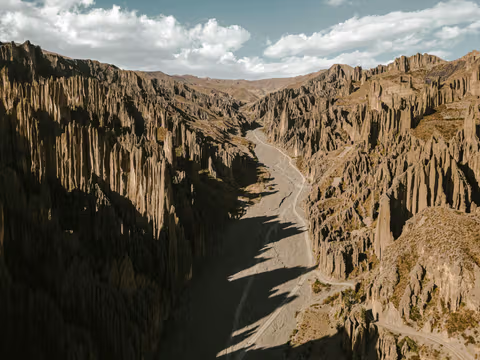
Mi Teleférico · Tiwanaku · Moon Valley
Best time
May to October · clear skies
Uyuni and the Salt Flat · Bolivia 02 · Salt Flat

2-3 nights

Uyuni and the Salt Flat

The world's mirror

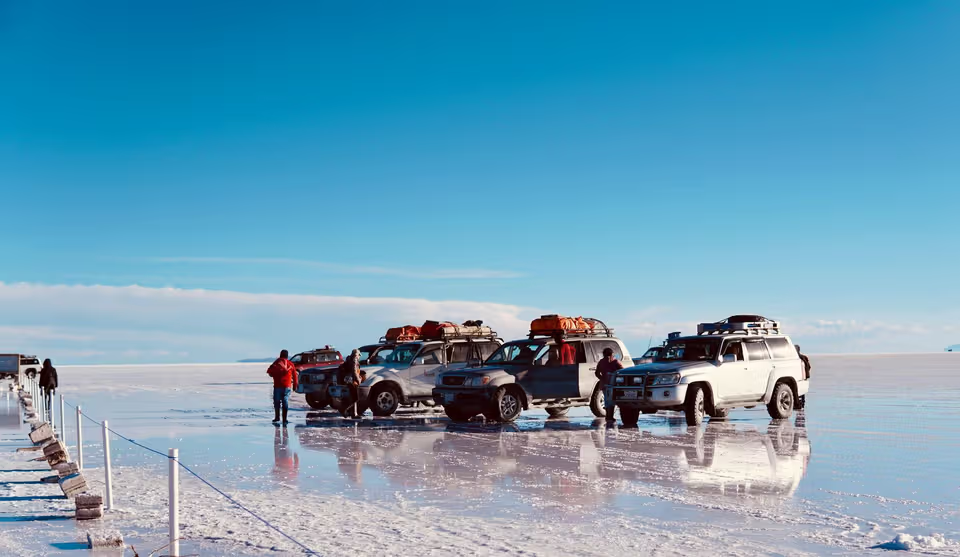
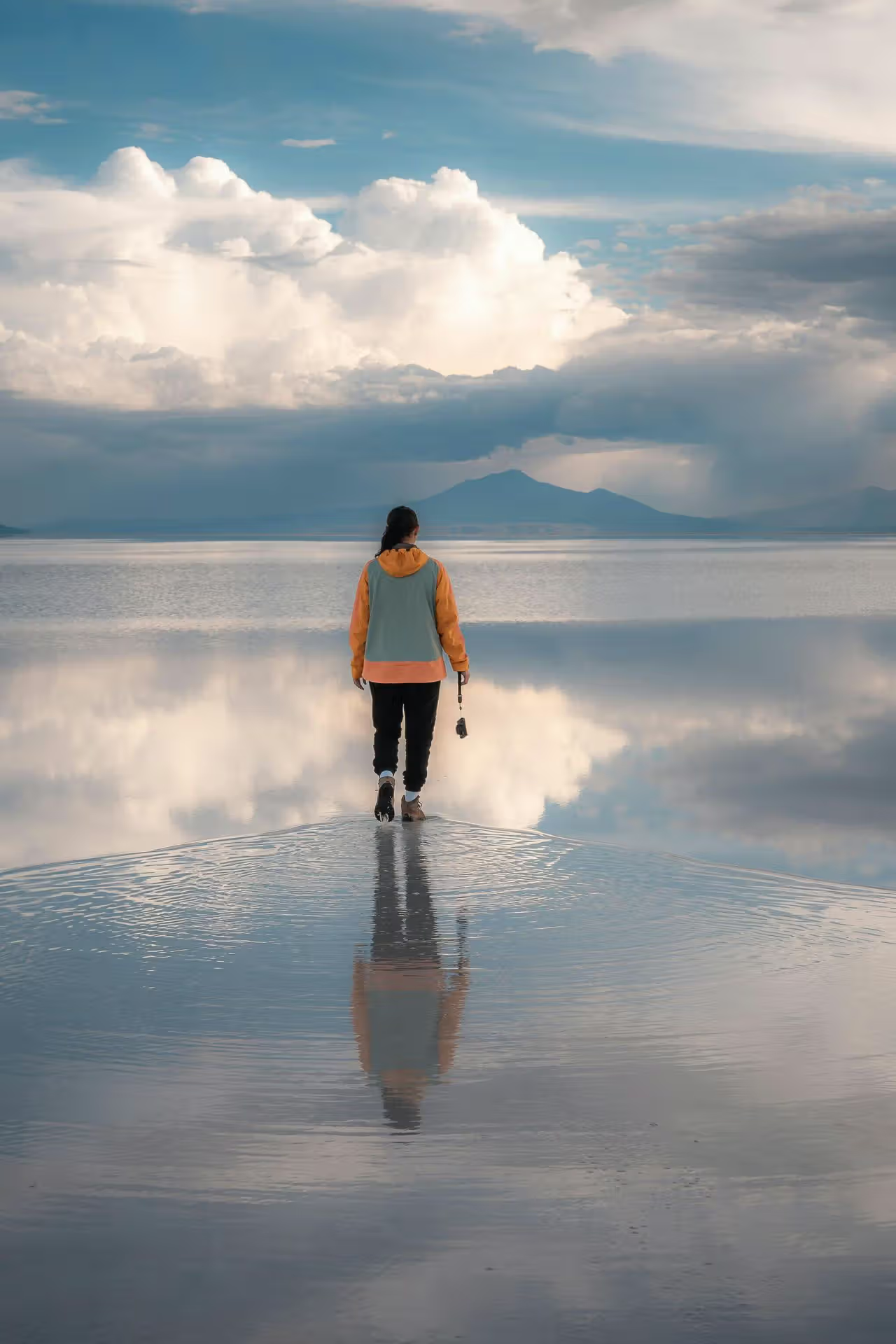
10,582 km² of pure salt at 3,656 metres. When it rains, between January and March, a film of water turns the salt flat into the most perfect mirror on Earth. In the dry season, the hexagonal floor stretches without limit.

Hotels
Kachi Lodge · Luna Salada · Palacio de Sal
Must-see
Mirror sunrise · Incahuasi Island · Train cemetery
Best time
Jan-Mar for the mirror · May-Oct for stable weather
Sucre and the Valleys · Bolivia 03 · Valleys

2 nights

Sucre and the Valleys

The white city

Constitutional capital, the best-preserved colonial centre in Bolivia, a UNESCO World Heritage Site. White walls by ordinance, spring weather all year round and the cradle of South American independence.

Hotels
Parador Santa María La Real · Mi Pueblo Samary
Must-see
Casa de la Libertad · Cretaceous Park · Tarabuco
Best time
April to October · mild weather
Lake Titicaca · Bolivia 04 · Lake

1-2 nights

Lake Titicaca

Mythological cradle of the Andes

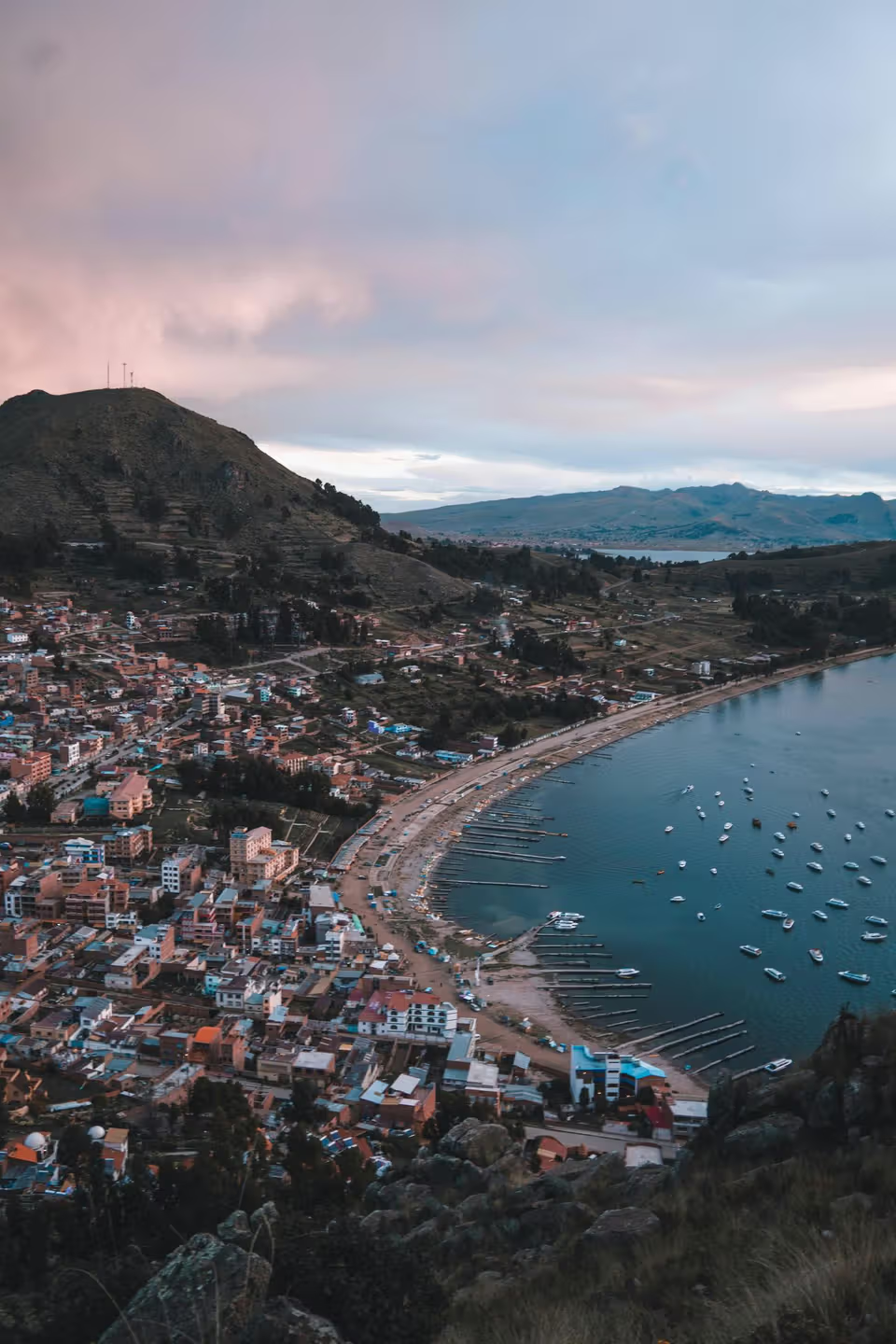
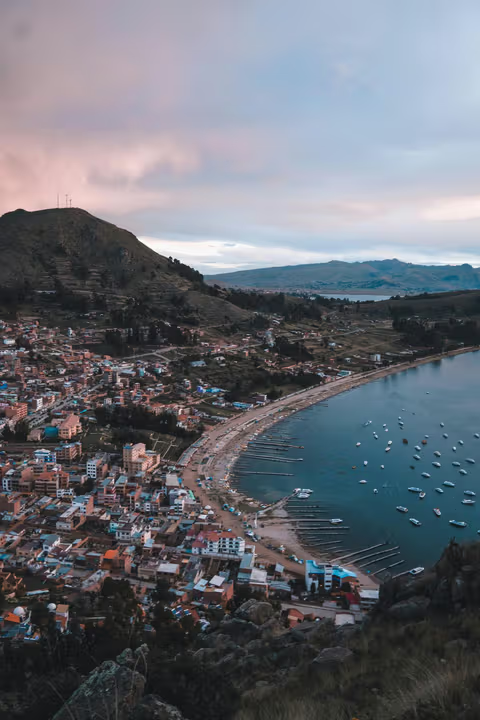
The highest navigable lake in the world, at 3,812 metres. Copacabana and its sanctuary, Isla del Sol as the mythological cradle of the Inca empire and the Aymara memory of the origin of the world.

Hotels
La Estancia Ecolodge · Hotel Rosario del Lago
Must-see
Isla del Sol · Copacabana Sanctuary · Pilkokaina
Best time
May to October · clean light over the lake
The Southern Andes · Bolivia 05 · Desert

2-3 nights

The Southern Andes

Coloured lagoons

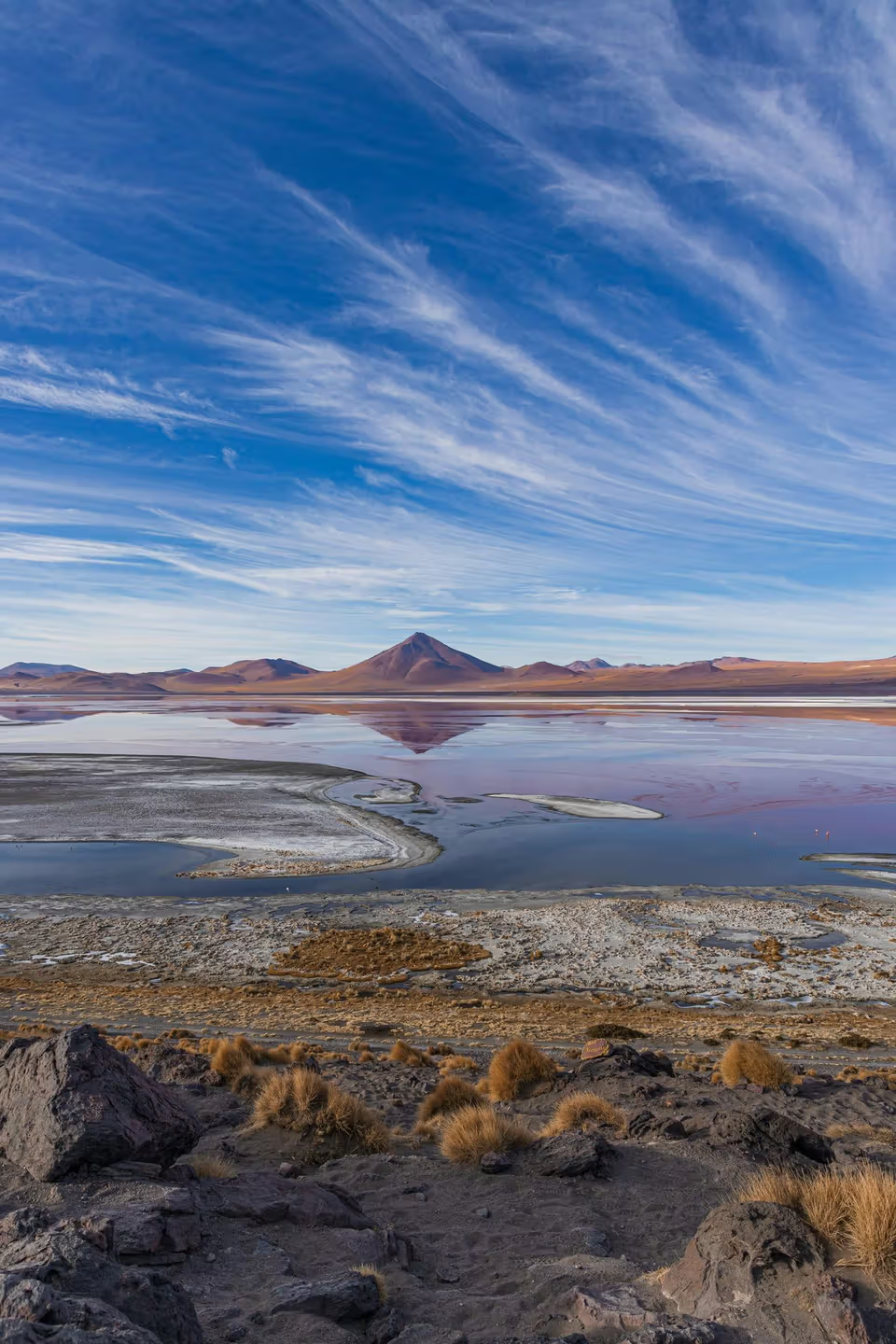
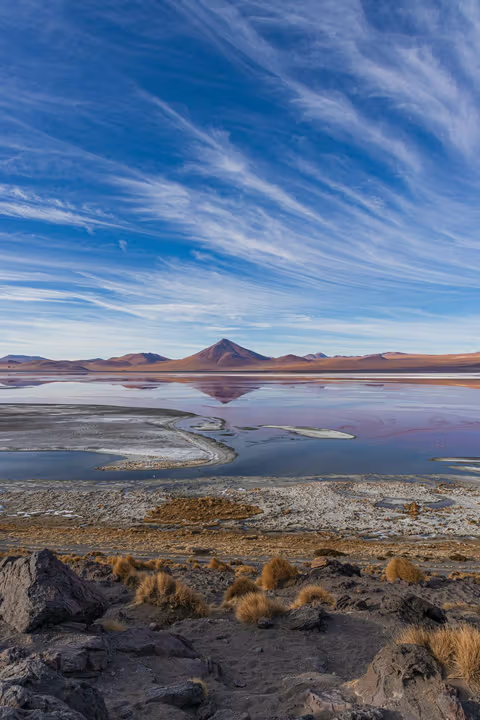
The Eduardo Avaroa Reserve combines lagoons of impossible colours, geysers above 4,800 metres, stony deserts such as Siloli and rocks eroded by the wind. The most photographed south in South America.

Hotels
Colorada · Verde · Hedionda
Must-see
Sol de Mañana geysers · Stone Tree · Flamingos
Best time
May to October · no mud on the tracks

Signature experiences

Moments to remember

Private access, guides born in the place and a rhythm designed around you.

Practical

The essentials before you travel

Information verified by our travel designers, updated for 2026.

Money

Currency
Boliviano (BOB). Reference exchange rate close to 6.96 BOB per USD (verify before travelling).
Pricing
Hotels and agencies quote in USD. Local cash is handy for markets, tips and villages.
USD cash
Carry banknotes in good condition. Outside La Paz, Sucre and Santa Cruz, ATMs are scarce.
Cards
Visa and Mastercard are accepted in boutique hotels and city restaurants, less so in markets.
ATMs
Functional in large cities. Carry two cards from different banks, kept separately.
Tipping
10% in restaurants with table service. Guides, drivers and lodge staff are tipped in boutique travel.

Visa

Latin America
Colombians, Mexicans, Argentines and most South Americans do not require a tourist visa.
Stay
Up to 90 days per calendar year is allowed for visa-exempt countries.
Spain
Spanish citizens also do not require a tourist visa to enter Bolivia.
Passport
Valid for at least six months on entry. Immigration rules change: verify before travelling.
Documents
Keep the voucher of your first lodging, international insurance and return flight to hand.

Health

Yellow fever
Mandatory vaccine if your itinerary includes the Amazon (Rurrenabaque, Madidi, Beni). Apply at least 10 days before.
Altitude
Altitude sickness is real. Progressive acclimatisation, hydration, coca tea and no alcohol on the first day.
Recommended
Hepatitis A and B, typhoid fever and tetanus up to date.
Insurance
Essential, with medical evacuation cover: the altitude may require an urgent descent.
Water
Always bottled, even for brushing your teeth in modest hotels.

Transport

Domestic flights
Boa, Amaszonas and Ecojet connect La Paz, Uyuni, Sucre and Santa Cruz on short legs.
Private 4x4
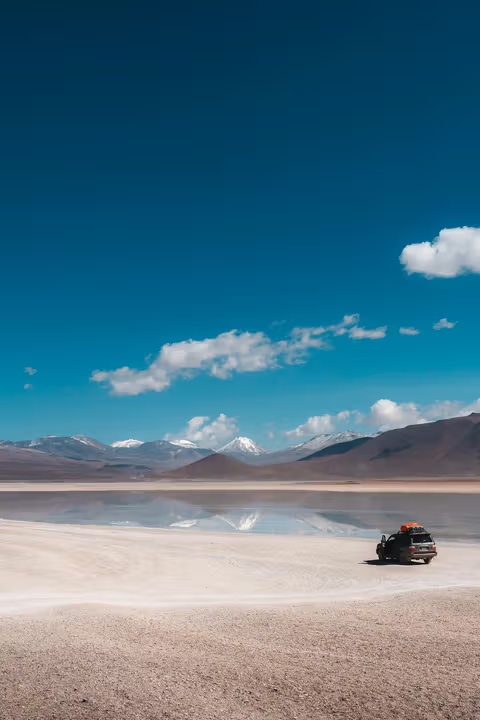
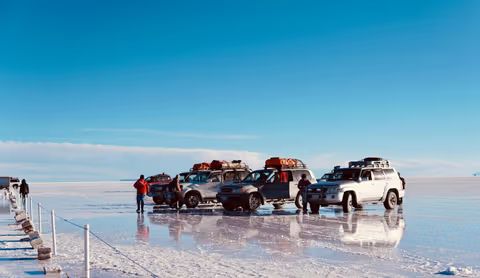
The CocoVolare standard in Uyuni: a privatised four-seat vehicle, not a mass group.
Private driver
Recommended for city days in La Paz and Sucre. It saves two to three hours a day.
Apps
Uber works in La Paz and Santa Cruz. WhatsApp is the universal channel with guides and hotels.
Road blockades
Protests and road blockades are part of political life. CocoVolare monitors routes before every departure.

Language

Official languages
Spanish plus 36 indigenous languages recognised by the 2009 Constitution.
Most spoken
Alongside Spanish, Quechua and Aymara structure daily life on the altiplano.
English
Limited: functional in boutique hotels and specialist guides, scarce outside tourist circuits.
Vocabulary
Jallalla (long live) · Pachamama (mother earth) · ch'alla (offering) · yatiri (Aymara sage).
Detail
CocoVolare works with guides who come from the community: that changes the kind of access a traveller gets.

Etiquette

Pachamama
Before drinking alcohol a little is poured on the ground (ch'alla). Repeating the gesture reads as respect.
Photography
Do not photograph indigenous people without asking. At sacred sites, drones only with authorisation.
Coca
The coca leaf is an Andean ceremonial food. Accepting it when offered is a sign of respect.
Pace
The altiplano and Sucre move at another pace. Impatience reads as a lack of manners.
Offerings
Do not step on the white tables with coca and sweets that appear on corners or doorways. Walk around them in silence.

Climate

When to travel and why

Bolivia is lived from May to October, in the Andean dry season. The chart shows the twelve months with estimated cost, temperature and the iconic festivals. Marked in gold, the times we recommend living Bolivia with us .

Most recommended month July · dry, clear skies, firm salt flat
Best value for the experience May · opening of the dry season
Once-in-a-lifetime phenomenon January to March · the Salt Flat mirror effect

The climate, month by month · La Paz

Reference city: La Paz Best season Temperature °C Relative rainfall
-5° 10° 15° 20° Jan: 4° – 14°C · 115 mm 14° Jan: 115 mm Jan Feb: 4° – 14°C · 105 mm 14° Feb: 105 mm Feb Mar: 3° – 14°C · 70 mm 14° Mar: 70 mm Mar Apr: 2° – 15°C · 40 mm 15° Apr: 40 mm Apr May: 0° – 15°C · 13 mm 15° May: 13 mm May Jun: -2° – 14°C · 6 mm 14° Jun: 6 mm Jun Jul: -2° – 14°C · 7 mm 14° Jul: 7 mm Jul Aug: -1° – 15°C · 12 mm 15° Aug: 12 mm Aug Sep: 1° – 16°C · 28 mm 16° Sep: 28 mm Sep Oct: 2° – 16°C · 40 mm 16° Oct: 40 mm Oct Nov: 3° – 17°C · 50 mm 17° Nov: 50 mm Nov Dec: 4° – 15°C · 90 mm 15° Dec: 90 mm Dec

Highlights of the year: Jan · Uyuni mirrorFeb · Oruro CarnivalJun · Aymara New Year

The dry season (May to October) brings crystalline skies and below-freezing nights on the altiplano. January to March is the rainy stretch, exactly when the Uyuni salt flat becomes the world's largest mirror.

When to go · season & budget

Seasons & estimated cost CocoVolare recommends High Mid Low
Jan: Low season · ≈$385 per person/day Jan Feb: Mid season · ≈$430 per person/day Feb Mar: Low season · ≈$385 per person/day Mar Apr: Mid season · ≈$430 per person/day Apr May: Mid season · ≈$450 per person/day $450May Jun: High season · ≈$520 per person/day $520Jun Jul: High season · ≈$565 per person/day $565Jul Aug: High season · ≈$540 per person/day $540Aug Sep: Mid season · ≈$475 per person/day $475Sep Oct: Mid season · ≈$450 per person/day $450Oct Nov: Mid season · ≈$430 per person/day Nov Dec: Low season · ≈$405 per person/day Dec

In our recommended dates, the estimated cost ranges from $450 to $565 per person/day (Premium level, international flights not included).

Investment

What it costs, no fine print

Bolivia is Andean luxury's best-kept secret: the lodges facing the salt flat cost half what their Atacama equivalents charge. Few destinations stretch a budget this far, the grandeur is supplied by the landscape.

Experience levels · guide budget

Boliviano (BOB) · 1 USD ≈ 6.9 BOB USD · per person/day
Boutique essential Boutique essential: $250 USD · per person/day $250 4-star boutique hotels in La Paz and Sucre, domestic flights and private guides on the salt flat. Premium Premium: $450 USD · per person/day $450 Luna Salada or Palacio de Sal facing the salar, a private 4x4 with driver-guide and a chef's dinner at Gustu. Signature Signature: $800 USD · per person/day $800 Kachi Lodge domes at the edge of the salar, a private crossing of the southern lagoons and full expedition logistics.
Chef's dinner in La Paz (Gustu) USD 50–90La Paz–Uyuni flight USD 80–120Private 4x4 day on the salt flat USD 250–400Night in a salt hotel USD 150–300La Paz cable car (one ride) USD 0.50Airport–hotel transfer USD 20–35

Indicative 2026 values per person, excluding international flights. Every CocoVolare quote is tailored to season, hotels and travel pace.

Signature itineraries

Six Bolivias to choose yours

Zero templates: every itinerary is rewritten 100% to your measure. Prices per person in double occupancy, boutique category, international flights not included.

5 days · 4 nights · Altiplano

Essential Bolivia

La Paz → Tiwanaku → Uyuni Salt Flat

Bolivia compressed but coherent, without losing the rhythm

  • Gentle acclimatisation in La Paz and a panoramic ride on Mi Teleférico
  • Tiwanaku with a private archaeologist: Andean civilisation before the Incas
  • The mirror sunrise over the Uyuni Salt Flat and a night in the domes of Kachi Lodge

FromUSD 2,300

7 days · 6 nights · Andes

Balanced Bolivia

La Paz → Uyuni Salt Flat → Sucre

Three cities, three climates, three ways to read the country

  • La Paz with Tiwanaku, markets and the bohemian life of Sopocachi
  • A full day on the Uyuni Salt Flat with the mirror sunrise and Incahuasi Island
  • Colonial Sucre: Casa de la Libertad and the Cal Orck'o Cretaceous Park

FromUSD 3,500

10 days · 9 nights · Four regions

Deep Bolivia

La Paz → Titicaca → Uyuni → Sucre

Four Bolivias in a single trip, with time to breathe

  • Three days in La Paz: acclimatisation, Tiwanaku, Moon Valley and Calle Jaén
  • Isla del Sol with an Aymara guide: the sacred rock and the cradle of the Inca empire
  • The Uyuni Salt Flat with the mirror sunrise and a curated Andean producers' dinner

FromUSD 6,000

14 days · 13 nights · Altiplano and jungle

Extended Bolivia

La Paz → Titicaca → Uyuni → Sucre → Madidi

Altiplano, valleys, Amazon rainforest and silence

  • The deep route: La Paz, Lake Titicaca, the Uyuni Salt Flat and Sucre
  • A flight to Rurrenabaque and navigation along the Beni river into the jungle
  • Madidi with an indigenous Tacana guide: walks and wildlife watching

FromUSD 9,000

10 days · 9 nights · Romance

Andean Honeymoon

La Paz → Uyuni Salt Flat → Isla del Sol

Begin the rest of your life on the world's mirror

  • An upgrade to a suite in every city, with a view of the Illimani or the salt flat
  • A private dinner under the stars on the Salt Flat with a photography technician
  • An Aymara offering ceremony to the Pachamama with a certified yatiri

FromUSD 7,500

7 days · 6 nights · Gastronomy

Bolivian Flavour Route

La Paz → Uyuni Salt Flat → Sucre

The most underrated cuisine in South America, table by table

  • A tasting dinner at Gustu, founded by a Noma co-founder
  • The Rodríguez market with a home cook and lunch at Ali Pacha
  • A curated Andean producers' dinner in the heart of the Uyuni Salt Flat

FromUSD 4,200

None of them fits? We design your own. WhatsApp →

Gastronomy

The flavors of Bolivia

From the morning salteña to the twelve-course tasting menu. Bolivian cuisine is the last in South America to be discovered, and that is part of its value. Where a unique pantry becomes memory.

Gustu

Calacoto · La Paz

Founded in 2013 by a Noma co-founder. Twelve courses with 100% Bolivian ingredients and high-altitude wines from Tarija. One of the best gastronomic experiences in South America.

Ali Pacha

Centre · La Paz

100% plant-based and conceptual cuisine with national produce. A before and after in South American plant-based cooking.

Ancestral

Sopocachi · La Paz

Contemporary cuisine with llama, quinoa and ancestral maize in an intimate setting.

Phayawi

Sopocachi · La Paz

Bolivian Amazonian cuisine on the altiplano: surubí, pacumutu and tropical fruits from the Beni.

Origen

Plaza Anzures · Sucre

Contemporary Bolivian cuisine with Chuquisaca produce. The emerging star of the white city.

Manq'a

Several locations · La Paz

A school-restaurant where young people from La Paz cook with Bolivian produce. Accessible prices, serious technique.

Calendar

Dates worth traveling for

A well-chosen date turns a trip into a memory. We design your itinerary around the moment that matters most to you.

Mirror salt flat · Jan-Mar

The Uyuni Salt Flat fills with a film of water and becomes the largest mirror in the world, visible even from space.

Oruro Carnival · Feb · Mar

Intangible Cultural Heritage of Humanity. Diablada, Morenada and Caporales in forty continuous hours of dance.

Day of the Sea · 23 March

Bolivia commemorates the loss of its access to the Pacific in 1879. A serious historical wound, central to the national identity.

Gran Poder festival · May · Jun

The great procession of fraternities in La Paz, with thousands of dancers crossing the city in colour.

Aymara New Year · 21 June

Wilkakuti, the southern winter solstice, is celebrated at Tiwanaku with hands open to the first light of the sun.

Independence Day · 6 August

Bolivia celebrates its 1825 independence. August is also the month of Pachamama, with offerings across the altiplano.

Day of the Dead · 2 November

One of the most living Andean traditions, with tables, tantawawas and visits to the cemeteries.

Chiquitos Baroque Music · Apr-May

A biennial international festival of Renaissance and Baroque music, in the Jesuit missions of eastern Bolivia.

CocoVolare recommends

What we would tell a friend

Advice from our travel designers: what we book first, what we avoid, and the details that turn a good trip into an unforgettable one.

01

Acclimatize before you push

La Paz sits at 3,640 meters and your body knows it from the airport. The first 48 hours: slow pace, plenty of water, coca tea and no alcohol. We design itineraries so the salar arrives once you are already acclimatized.

02

The salar's mirror has a date

From January to March, rain turns Uyuni into an infinite mirror; from May to October the sky is clean and the salt hexagons surface. They are two different trips: decide which photo you want before choosing your dates.

03

For Colombians, no visa and no paperwork

Bolivia is an Andean Community partner: Colombians enter visa-free, even with just their national ID card. Still, travel with a valid passport, domestic flights and hotels will ask for it.

04

Kachi and the salt hotels sell out

Kachi Lodge's domes and Luna Salada's best rooms are few and fill months in advance, especially July to August and around the full moon. The salar at night is half the trip: do not leave it to chance.

05

Dress for two climates in one day

On the altiplano the midday sun burns at 20°C and night falls below zero. Layers, hat, gloves and SPF 50+: at 3,600 meters the radiation is unforgiving, even under clouds.

06

Cash for the altiplano

Outside La Paz and Sucre, cards fail and ATMs are scarce: in Uyuni and the southern villages cash rules. Carry bolivianos in small bills and some US dollars as backup.

In motion

Bolivia, live

Testimonials

What our travelers say

★ ★ ★ ★ ★

“We left the lodge at half past four in the morning. When the light came, the salt flat was a perfect mirror: the sky below, the sky above, and the two of us floating in the middle. There was no one else on the horizon. CocoVolare had timed it to the minute.”

Mariana Restrepo

Bogotá · Honeymoon · 10 nights

★ ★ ★ ★ ★

“I arrived in La Paz afraid of the altitude. The team brought me down slowly, gave me coca tea and let me rest the first day without guilt. By the third day I was climbing Tiwanaku with no trouble. That planning of the altitudes changed everything.”

Javier Mendoza

Mexico City · Couple's trip · 10 nights

★ ★ ★ ★ ★

“The guide came from the Aymara community of Isla del Sol. He didn't tell us a postcard: he opened his world, his table, his way of reading the lake. You don't buy that from just any agency.”

Andrés Lozano

Medellín · Cultural trip · 12 nights

FAQ

Frequently asked questions

Do I need a visa to enter Bolivia?

Travellers from Colombia, Mexico, Argentina and most of South America do not need a visa: a valid passport is enough, with a stay of up to 90 days per calendar year. Spanish citizens also do not require a tourist visa. The passport must have at least six months of validity. Immigration rules change: verify before travelling.

How do I manage altitude sickness in La Paz and Uyuni?

The key is progressive acclimatisation. CocoVolare designs the order of altitudes so the body adapts: a slow descent from El Alto airport, a first day of rest in the Zona Sur of La Paz, constant hydration, coca tea and no alcohol on the first day. Some boutique hotels offer oxygen at check-in.

What is the best time to travel to Bolivia?

May to October is the Andean dry season: clear skies, a driveable salt flat and stable cold nights. June, July and August are the most beautiful months on the altiplano. From January to March the Uyuni Salt Flat fills with water and becomes the largest mirror in the world. November and December are the least recommended window.

How many days do I need to discover Bolivia?

Five days cover La Paz and the Uyuni Salt Flat in a compressed but coherent way. Seven to ten days add Sucre and Lake Titicaca. Fourteen days allow the Bolivian Amazon in Madidi to be included. CocoVolare designs itineraries from five up to twenty-one days according to pace, profile and season.

What currency is used in Bolivia?

The boliviano (BOB), with a reference exchange rate close to 6.96 BOB per USD. It is wise to carry US dollar cash: outside La Paz, Sucre and Santa Cruz ATMs are scarce and unreliable. Visa and Mastercard cards are accepted in boutique hotels and city restaurants, less so in markets.

Is it safe to travel to Bolivia?

Yes, on the usual tourist circuits: central La Paz and the southern zone, Sucre, Uyuni, central Santa Cruz and Rurrenabaque. Violent crime against foreigners is low. The real risks are others: theft on buses, unofficial taxis and road blockades. CocoVolare monitors safety conditions and adjusts routes if necessary.

Do I need a yellow fever vaccine?

The yellow fever vaccine is mandatory if your itinerary includes the Bolivian Amazon (Rurrenabaque, Madidi, Beni) or if you enter overland from Brazil. For a trip limited to the altiplano it is recommended but not mandatory. The certificate must be applied at least ten days before entry.

How much does a trip to Bolivia cost?

A ten-day boutique trip, excluding international flights, sits in the comfort band between 3,600 and 6,250 USD per person in double occupancy. CocoVolare signature itineraries start from 2,300 USD per person for five days. Each quote is adjusted to your real travel window.

Why do the Uyuni Salt Flat with a private 4x4?

The group tour takes six people per jeep to the same rock in midday light. CocoVolare operates with privatised 4x4s of four seats maximum, with an on-board cook, a dedicated guide-photographer and sunrise departures with no queues. That difference, multiplied across the whole circuit, is another trip.

Does Uber work in Bolivia?

Uber works in La Paz and Santa Cruz, with Yango as a local alternative. Outside the large cities, CocoVolare coordinates private transfers with a driver. In El Alto it is wise to avoid unofficial taxis: only radio taxi, Uber or transport coordinated by the hotel.

Is Bolivia a good destination for foodies?

Yes, and it is one of the most underrated. Bolivian cuisine has a unique pantry: more than two hundred varieties of quinoa, thousands of native potatoes, high-altitude llama and Titicaca fish. From Gustu, founded by a Noma co-founder, came a generation of cooks who now run signature restaurants in La Paz and Sucre.

Can I travel to Bolivia with children?

Yes, with an adapted design. For families with young children it is wise to acclimatise first in Sucre (2,800 m) rather than La Paz, with family-specialist guides, short visits and hotels with a pool. The Cretaceous Park, with a palaeontologist who tells the dinosaurs like stories, is usually the favourite.

What does a CocoVolare trip to Bolivia include?

Itinerary design, domestic flights where applicable, boutique hotels with breakfast, a privatised 4x4 in Uyuni, private transfers with a driver, expert local guides, signature experiences, site entrances and a 24/7 concierge. Every trip is designed from scratch to your profile.

Bolivia

No molds, made to measure

Tell us what excites you and we will design a tailor-made proposal in under 24 hours, with a dedicated travel designer.