



Brazil · CocoVolare

America · Boutique

Brazil

A country you choose by region

B razil entered the curious traveller's imagination through Rio de Janeiro and never left · because everything else demanded attention too.

The essence

A country that reads in five distinct voices

B razil entered the curious traveller's imagination through Rio de Janeiro and never left · because everything else demanded attention too. What sets it apart from its neighbours is coexistence: African, indigenous, Portuguese, Italian, German, Japanese and Lebanese heritages blend without ceremony. The result is a cuisine, a music and a physical ease found nowhere else on the continent. This is a destination that rewards curation, far from autopilot and the sealed package. It works when someone applies discernment: the right region, the right season, the right boutique hotels, and a guide who comes from the place. Done that way, Brazil is a long, unhurried conversation between the sea, the jungle, the mountains and the street.

5th largest country on earth · nearly half a subcontinent
275 cascades at Iguazu Falls
60% of the Amazon rainforest lies within Brazilian territory
5 regions that each feel like a distinct country

Regions

The 5 faces of Brazil

Rio de Janeiro · Brazil 01 · Icon

3–4 nights

Rio de Janeiro

The impossible city

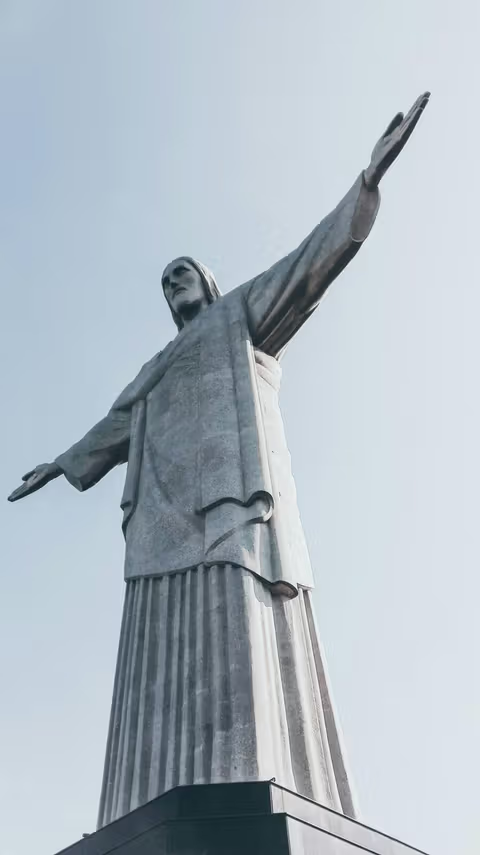
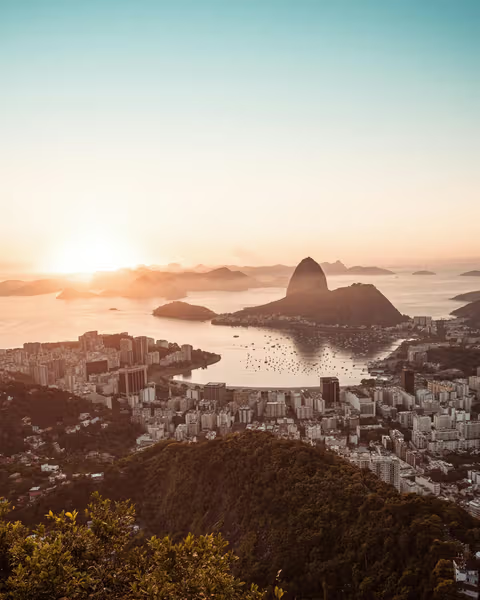
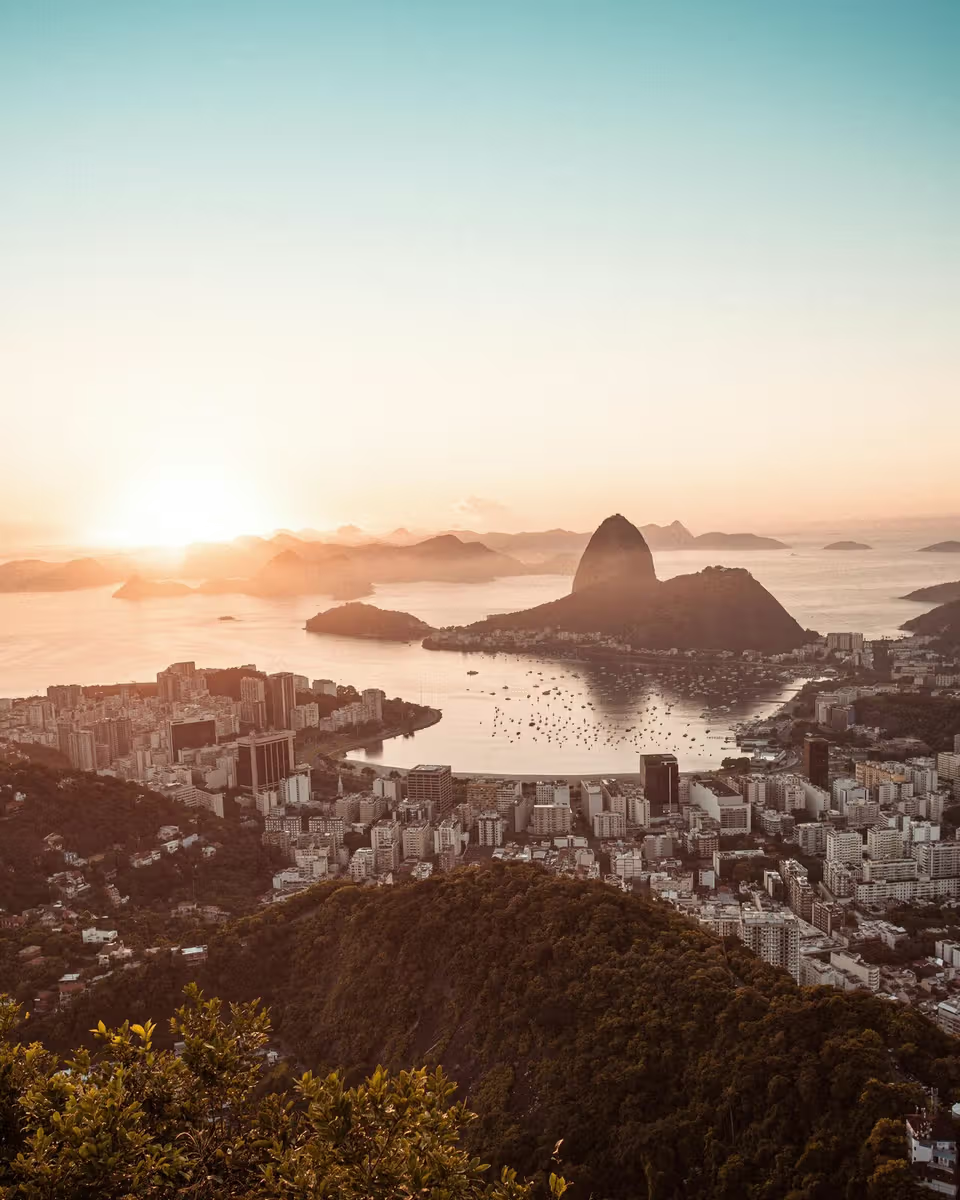
Rio surrenders all at once. One of the rare cities where geography overrules the urban grid: mountains plunging into the sea, Sugarloaf, Christ the Redeemer, and a beach that functions as the city's living room. The emotional anchor of any journey to Brazil.

Hotels
Belmond Copacabana Palace · Fasano · Janeiro Hotel
Must-see
Sugarloaf Mountain · Christ the Redeemer · Arpoador
Best time
April to October · cool and dry

São Paulo · Brazil 02 · Capital

2–3 nights

São Paulo

The gastronomic capital

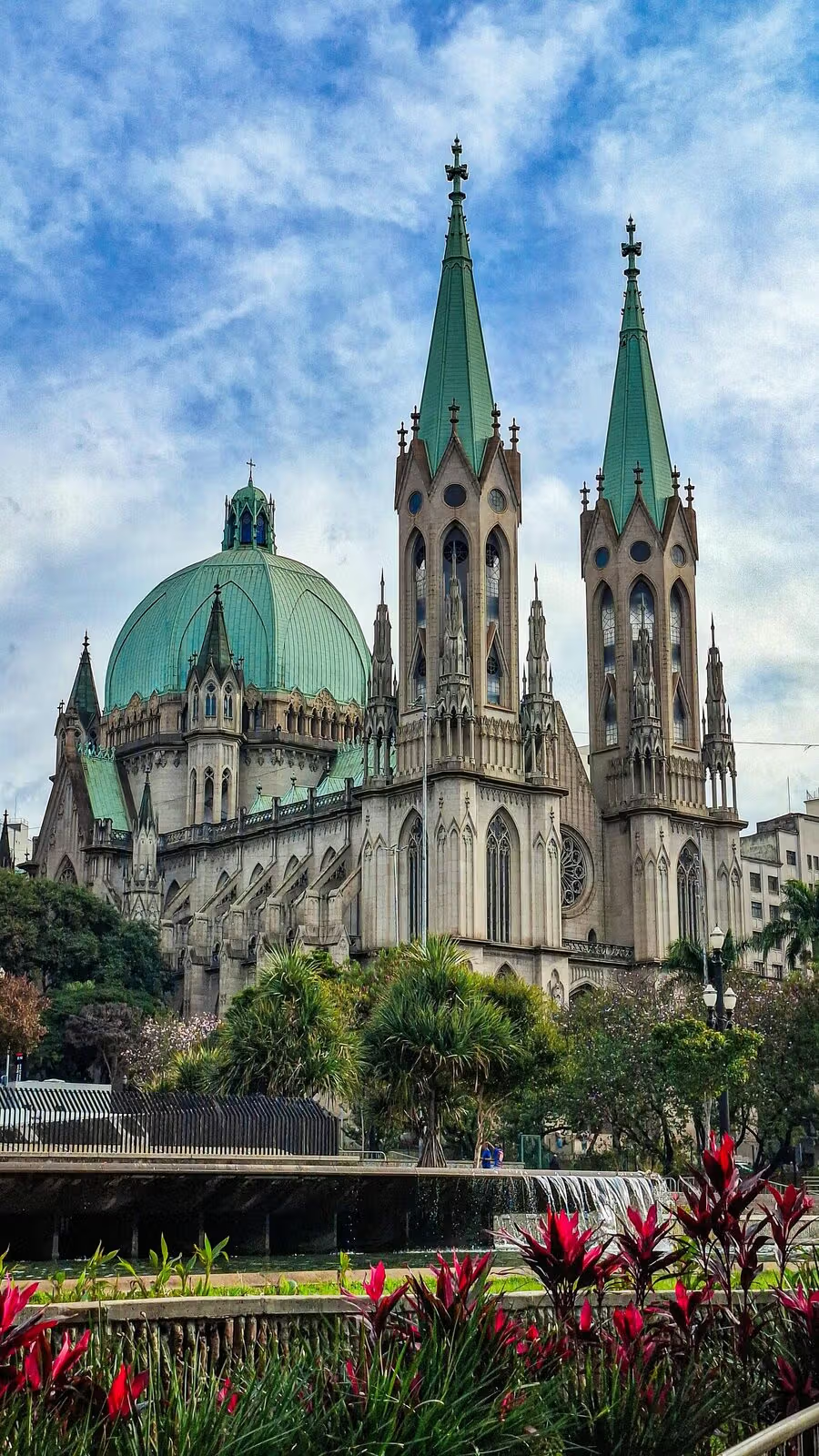
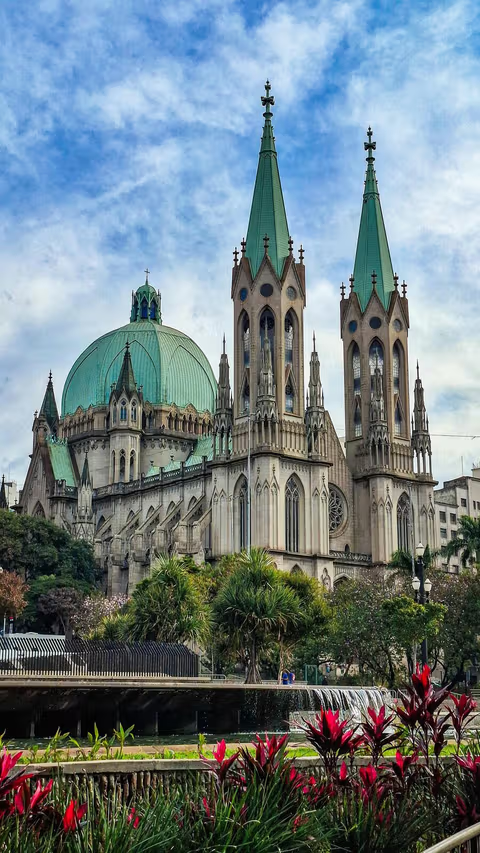
São Paulo must be earned. South America's largest city conceals the continent's finest dining and contemporary art scenes, more than a hundred ethnicities within its boundaries, the Modernist legacy of Niemeyer and Lina Bo Bardi, and a nightlife of rare sophistication.

Hotels
Rosewood · Fasano · Tivoli Mofarrej
Must-see
MASP · Avenida Paulista · Pinacoteca · D.O.M.
Best time
March to October · temperate climate
Salvador de Bahia · Brazil 03 · Northeast

3 nights

Salvador de Bahia

The Afro-Brazilian heartland

Salvador is at once Brazil's oldest city and its most alive. The first Portuguese colonial capital in the Americas, with over 80% Afro-descendant population. The UNESCO Pelourinho, candomblé ceremonies, capoeira and the most intensely flavoured dendê cooking in the country.

Hotels
Fera Palace Hotel · Pestana Bahia Lodge
Must-see
Pelourinho · São Francisco · Farol da Barra
Best time
September to March · sun and sea
Iguazu Falls & the Costa Verde · Brazil 04 · Falls

2 nights

Iguazu Falls & the Costa Verde

Nature on a monumental scale

Iguazu Falls unites 275 cascades straddling Brazil and Argentina. The Brazilian side delivers the definitive panoramic view of the entire system in a single sweep. South of Rio, the Costa Verde adds colonial Paraty and Ilha Grande · mountain meeting sea.

Hotels
Belmond Hotel das Cataratas · Casa Turquesa
Must-see
Devil's Throat · Paraty · Ilha Grande
Best time
April to October · moderate water flow
The Pantanal & the Amazon · Brazil 05 · Wilderness

3–4 nights

The Pantanal & the Amazon

The kingdom of wildlife

The Pantanal is the world's largest tropical wetland and the Americas' finest destination for seeing wild jaguars: jaguar sightings exceed 90% during the dry season. The Amazon adds the meeting of the waters at Manaus and deep-forest lodges along the Rio Negro.

Hotels
Pousada Caiman · Rio Negro lodges
Must-see
Jaguar safari · meeting of the waters
Best time
July to October · dry season

Signature experiences

Moments to remember

Private access, guides born in the place and a rhythm designed around you.

Practical

The essentials before you travel

Information verified by our travel designers, updated for 2026.

Money

Currency
Brazilian real (BRL, R$). Reference exchange rate approximately 4.90 BRL per USD (verify before travel).
PIX
The central bank's instant payment system is accepted everywhere, including street stalls. Brazil is one of Latin America's most cashless societies.
Cards
Visa and Mastercard accepted at hotels, restaurants and formal retailers. American Express has more limited coverage.
Cash
Bring some reals for markets, beach kiosks, small tips and rural pousadas. Crisp, unmarked USD notes for currency exchange.
ATMs
Banco do Brasil and Bradesco offer the best terms for international cards. Avoid street money changers.
Gratuities
A 10% serviço charge is usually included on restaurant bills. It is customary to add a cash tip for private guides and drivers.

Visa

Latin America
Colombians, Argentinians, Chileans and most South Americans do not require a tourist visa for Brazil.
Length of stay
Up to 90 days for visa-exempt nationalities, with a valid passport.
Spain
Spanish citizens are also exempt from tourist visa requirements.
Mexico
Rules changed in 2026 with the introduction of a reciprocal e-visa. Verify the current status before booking.
Documents
Passport valid for at least six months, onward ticket, proof of accommodation and international insurance to hand.

Health

Yellow fever
Vaccination required or strongly recommended for virtually the entire country, especially the Pantanal, Amazon, Goiás and parts of Minas Gerais. Administer at least 10 days before departure.
Recommended
Hepatitis A and B, typhoid for rural areas and up-to-date tetanus.
Dengue and Zika
Higher incidence during the southern summer. Use DEET or icaridin repellent; wear long sleeves in jungle areas.
Insurance
Essential · ensure it includes medical evacuation. Policies with good Brazil coverage: IATI, Assist Card, Allianz, Heymondo.
Water
Tap water is technically potable in large cities, but bottled is the standard in practice. In rural areas and the jungle, always bottled.

Transport

Domestic flights
LATAM, Gol, Azul and Voepass connect the country. Distances are enormous and flying is usually the only sensible option.
Private driver
The CocoVolare standard for city days in Rio, São Paulo and Salvador. Saves two to three hours of logistics per day.
Apps
Uber and 99 operate in all major cities and handle 90% of urban transfers.
Ferry
Essential on the Costa Verde to reach Ilha Grande, in Salvador to cross to Morro de São Paulo, and in the Amazon to reach river lodges.
Car hire
Worthwhile only for the Costa Verde, the Estrada Real or the Linha Verde. Driving in major cities is not advisable for tourists.

Language

Official language
Portuguese. Brazilian Portuguese is a distinct language with nasal vowels and its own vocabulary · not Spanish with an accent.
Spanish
Portuñol works for basic communication, but mispronunciation can cause misunderstandings.
English
Limited outside the tourism sector. Functional in boutique hotels, upscale restaurants and with certified guides.
Useful phrases
Bom dia (good morning) · obrigado or obrigada depending on your gender · por favor · com licença · jeitinho (the art of finding a creative way through).
Our approach
CocoVolare prioritises local guides with strong English fluency for all English-speaking clients at every destination.

Etiquette

Greeting
Two cheek kisses between women and between a woman and a man in most regions. Physical contact in social settings is warm and natural.
Photography
Never photograph people, candomblé ceremonies or terreiros without permission. It is a living religion, not a spectacle.
Timekeeping
A social engagement at 8pm may begin at 9:30pm. Arriving punctually to an informal invitation is not the local norm.
Football
Do not joke about someone's team when you have just met them. The passion is genuine, not decorative.
Gestures
Avoid the thumb-and-index-finger circle (the American "OK" sign): in Brazil it carries an obscene connotation. Maintain eye contact when toasting.

Climate

When to travel and why

Brazil spans five climate zones, so there is no single best month for the whole country. Rio and the Southeast are best from April to October; the Northeast coast from October to April; the Pantanal from July to October. The chart shows all twelve months with costs, temperatures and iconic festivals. Marked in gold, the windows we recommend experiencing Brazil with us .

Most recommended month May · dry, mild, clear skies over Rio
Best value vs. experience April · shoulder season after the summer peak
Once-in-a-lifetime window July to October · jaguars in the dry Pantanal

The climate, month by month · Rio de Janeiro

Reference city: Rio de Janeiro Best season Temperature °C Relative rainfall
15° 20° 25° 30° 35° Jan: 23° – 30°C · 137 mm 30° Jan: 137 mm Jan Feb: 24° – 31°C · 130 mm 31° Feb: 130 mm Feb Mar: 23° – 30°C · 135 mm 30° Mar: 135 mm Mar Apr: 22° – 28°C · 95 mm 28° Apr: 95 mm Apr May: 20° – 26°C · 70 mm 26° May: 70 mm May Jun: 18° – 25°C · 42 mm 25° Jun: 42 mm Jun Jul: 18° – 25°C · 42 mm 25° Jul: 42 mm Jul Aug: 19° – 26°C · 44 mm 26° Aug: 44 mm Aug Sep: 19° – 26°C · 53 mm 26° Sep: 53 mm Sep Oct: 20° – 27°C · 86 mm 27° Oct: 86 mm Oct Nov: 21° – 28°C · 97 mm 28° Nov: 97 mm Nov Dec: 22° – 29°C · 134 mm 29° Dec: 134 mm Dec

Highlights of the year: Feb · Rio CarnivalJun · Festas JuninasDec · Réveillon

The southern winter (May to September) is dry, sunny and mild: Rio's finest window. Summer is hot and humid, but February brings Carnival, which justifies everything.

When to go · season & budget

Seasons & estimated cost CocoVolare recommends High Mid Low
Jan: High season · ≈$745 per person/day Jan Feb: High season · ≈$800 per person/day $800Feb Mar: High season · ≈$660 per person/day Mar Apr: Mid season · ≈$525 per person/day $525Apr May: Low season · ≈$440 per person/day $440May Jun: Low season · ≈$440 per person/day $440Jun Jul: Mid season · ≈$550 per person/day $550Jul Aug: Mid season · ≈$525 per person/day $525Aug Sep: Mid season · ≈$525 per person/day $525Sep Oct: Mid season · ≈$550 per person/day Oct Nov: Mid season · ≈$580 per person/day Nov Dec: High season · ≈$745 per person/day Dec

In our recommended dates, the estimated cost ranges from $440 to $800 per person/day (Premium level, international flights not included).

Investment

What it costs, no fine print

Brazil prices itself by region: Rio and São Paulo charge global-capital rates, while Bahia, Iguazú and the Pantanal stretch much further. The real favors travelers arriving with dollars.

Experience levels · guide budget

Brazilian real (BRL) · 1 USD ≈ 5.2 BRL USD · per person/day
Boutique essential Boutique essential: $300 USD · per person/day $300 4-star boutique hotels in Ipanema or the Pelourinho, domestic flights and experiences with carioca guides. Premium Premium: $550 USD · per person/day $550 The Fasano or the Copacabana Palace, private transfers and a paulista chef's table every night. Signature Signature: $950 USD · per person/day $950 Oceanfront suites, a helicopter over the Christ, a private Pantanal lodge and an in-villa chef in Trancoso.
Dinner at a chef-driven restaurant USD 50–100Caipirinha at a beach kiosk USD 4–7Rio–Iguazú flight USD 100–180Train to Christ the Redeemer USD 16Pantanal lodge day (all inclusive) USD 400–700Airport–Ipanema transfer USD 40–60

Indicative 2026 values per person, excluding international flights. Every CocoVolare quote is tailored to season, hotels and travel pace.

Signature itineraries

Six Brazils · choose yours

Zero templates: every itinerary is rewritten 100% to your measure. Prices per person in double occupancy, boutique category, international flights not included.

5 days · 4 nights · Rio and Iguazu

Brazil Essence

Rio de Janeiro → Foz do Iguaçu

Brazil distilled to its essence · compact yet perfectly paced

  • Sugarloaf Mountain by cable car in golden afternoon light over Guanabara Bay
  • Christ the Redeemer on the Corcovado rack railway with a cultural guide from Rio
  • Iguazu Falls from the Brazilian side · the definitive panoramic view of all 275 cascades

FromUSD 2,800

7 days · 6 nights · Rio and Costa Verde

Balanced Brazil

Rio de Janeiro → Paraty → Ilha Grande

The impossible city and the Costa Verde · a week calibrated to perfection

  • Rio with Sugarloaf Mountain, Christ the Redeemer, Santa Teresa and the historic centre
  • Colonial Paraty: cobbled streets, cachaça distillery workshops and caiçara cuisine
  • Private schooner across Paraty Bay with snorkelling at hidden islands

FromUSD 4,200

10 days · 9 nights · Four regions

Deep Brazil

Rio → Paraty → Pantanal → Salvador

Four Brazils in one journey · with room to breathe

  • Rio de Janeiro in depth: Sugarloaf Mountain, Christ the Redeemer, Santa Teresa and the beaches
  • Colonial Paraty and the Costa Verde bay by private schooner
  • River safari in the Pantanal with a wildlife biologist and jaguar sightings

FromUSD 6,800

14 days · 13 nights · City, jungle and Northeast

Extended Brazil

Rio → Paraty → Pantanal → Salvador → Northeast

Rio, jungle, Afro-Brazilian heritage and the Northeast coast

  • The deep itinerary: Rio, Paraty, the Pantanal and Salvador de Bahia
  • Natural pools of Maragogi and Alagoas beaches by private boat
  • Gastronomic finale in São Paulo with a chef's table dinner and contemporary art

FromUSD 11,500

10 days · 9 nights · Romance

Carioca Honeymoon

Rio → Paraty → Fernando de Noronha

Beginning the rest of your life between the bay and the Atlantic

  • Suite upgrade with a view at every destination, from the Copacabana Palace to Noronha
  • Dawn photography session at the Cristo viewpoint with the city to yourselves
  • Private schooner reserved exclusively for the two of you across Paraty Bay

FromUSD 9,500

7 days · 6 nights · Gastronomy

Brazilian Flavours Route

São Paulo → Rio de Janeiro → Salvador

Latin America's gastronomic capital · table by table

  • Tasting menu at D.O.M. by Alex Atala · a landmark of Latin American cuisine
  • São Paulo's Mercado Municipal and the modern kitchen of A Casa do Porco
  • Saturday feijoada and a boteco tour through Botafogo in Rio de Janeiro

FromUSD 5,400

None of them fits? We design your own. WhatsApp →

Gastronomy

The flavors of Brazil

From the morning salgadinho to a fifteen-course tasting menu. São Paulo is Latin America's undisputed culinary capital, and Brazilian cuisine is a mosaic that reinvents itself every five hundred kilometres.

D.O.M.

Jardins · São Paulo

Alex Atala's two-Michelin-star restaurant. Contemporary Brazilian cuisine built on traceable Amazonian ingredients · a landmark of Latin American gastronomy.

Maní

Pinheiros · São Paulo

Helena Rizzo's one-Michelin-star kitchen. Sophisticated Brazilian cooking in a softly lit room, with local produce reinterpreted through a creative lens.

A Casa do Porco

República · São Paulo

Jefferson Rueda's restaurant, a regular on Latin America's 50 Best. Pork elevated to high cuisine with technique and unwavering product integrity.

Lasai

Botafogo · Rio de Janeiro

One Michelin star. Rafa Costa e Silva's contemporary kitchen draws on Rio's local larder and its own kitchen garden.

Mocotó

Vila Medeiros · São Paulo

Rodrigo Oliveira elevated Northeastern cooking to chef-driven cuisine without losing the spirit of the neighbourhood boteco. Worth a detour.

Origem

Rio Vermelho · Salvador

Fabrício Lemos's contemporary Bahian kitchen · dendê and Atlantic produce reinterpreted with precision and respect for tradition.

Calendar

Dates worth traveling for

A well-chosen date turns a trip into a memory. We design your itinerary around the moment that matters most to you.

Lavagem do Bonfim · January

In Salvador, the syncretic Catholic and Candomblé procession that ritually washes the steps of the Igreja do Bonfim. A living Afro-Bahian tradition.

Festa de Iemanjá · 2 February

At Rio Vermelho in Salvador, fishermen offer flowers to the sea goddess Iemanjá. One of the most deeply moving Afro-Brazilian celebrations.

Carnival · Feb · Mar

The world's largest popular festival, according to UNESCO. Rio at the Sambadrome, Salvador with street trios elétricos, Olinda with frevo and giant puppets.

Festas Juninas · June

The Northeast's rural celebrations · quadrilha dancing, bonfires, corn-based dishes and caipira dress. The finest are in Campina Grande and Caruaru.

Boi Bumbá de Parintins · June

The Amazonian festival where two rival bois · Caprichoso and Garantido · compete inside a riverside stadium. An unmissable spectacle in June.

Festival de Inverno · July

Classical music and jazz in the highlands of Campos do Jordão and Bonito. Brazil's boutique winter face.

Jaguars in the Pantanal · Jul–Oct

The dry season concentrates wildlife around shrinking waterbodies · the year's best window for spotting wild jaguars.

Réveillon at Copacabana · 31 December

The country's most symbolic New Year's Eve. White dress, offerings to Iemanjá and fireworks above the beach.

CocoVolare recommends

What we would tell a friend

Advice from our travel designers: what we book first, what we avoid, and the details that turn a good trip into an unforgettable one.

01

Carnival books out six months ahead

In February Rio's hotels triple their rates and the Sambadrome boxes sell out from September. If Carnival is your trip, we lock it in half a year early; if it is not, skip those two weeks and Rio becomes yours again.

02

Sleep in Ipanema or Leblon

These are the neighborhoods where beach, cafés and restaurants are a calm walk apart. Copacabana is worth it only for the Palace, a world of its own; downtown buzzes by day and goes dark at night.

03

Visa-free for Colombians, even with a national ID

Brazil asks no visa of Colombians: up to 90 days as a tourist, and regional agreements make the cédula enough. Bring your passport anyway, it simplifies domestic flights, hotels and any connection.

04

The Christ, early and by train

Take the first Corcovado train around 8:00: you get the clean view before the clouds and the crowds climb. By afternoon, mist covers the statue more often than the photos admit.

05

Portuñol yes, assumed Spanish no

Brazilians understand some Spanish, but opening with a 'bom dia' and an 'obrigado' transforms the welcome. Assuming everyone understands your Spanish is the classic mistake of the Hispanic traveler in Brazil.

06

Travel light to the beach

You go to the sand without a watch, without jewelry and with the phone tucked away: that is local custom, not paranoia. The kiosks take cards, so you need almost no cash. Valuables stay in the hotel safe.

In motion

Brazil, live

Testimonials

What our travelers say

★ ★ ★ ★ ★

“We reached Sugarloaf just before sunset and the whole city lit up beneath us. CocoVolare had timed it to the minute · no queues, with a host who told us the history of the bondinho. It's the moment we come back to every day.”

Mariana Restrepo

Bogotá · Honeymoon · 10 nights

★ ★ ★ ★ ★

“I arrived in São Paulo thinking it would be just a stopover. Three days later I understood why they call it the gastronomic capital of Latin America. Dinner at D.O.M. and the market with a guide who knew every stall changed my entire idea of Brazilian food.”

Javier Mendoza

Mexico City · Flavour route · 7 nights

★ ★ ★ ★ ★

“Our Pelourinho guide came from the Afro-Bahian community. He didn't give us a postcard tour · he opened up his Salvador: its music, his way of reading the city and candomblé with genuine respect. That's not something you find at just any travel agency.”

Andrés Lozano

Medellín · Cultural journey · 12 nights

FAQ

Frequently asked questions

Do I need a visa to enter Brazil?

Travellers from Colombia, Argentina, Chile and most of South America do not need a tourist visa · a valid passport is enough, for stays of up to 90 days. Spanish nationals are also exempt. For Mexican citizens the rules changed in 2026 with the implementation of a reciprocal e-visa; it is worth checking the current status. Passports must have at least six months of remaining validity.

What is the best time to visit Brazil?

There is no single best month for the whole country, as Brazil spans five climate zones. For Rio and the Southeast, April to October is cool and dry. For the Pantanal and wildlife, July to October. For beach destinations in the Northeast, October to April. December to February is the austral summer · hot, rainy and with doubled prices; April and November are shoulder seasons offering the best value.

How many days do I need to see Brazil?

Brazil is the size of Western Europe, so choices must be made. Five days cover Rio plus Iguazú. Seven to ten days add Paraty, Salvador or the Pantanal. Fourteen days allow for the Northeast or the Amazon. CocoVolare designs itineraries from five to twenty-one days; the combinations that work best are Rio with Iguazú, Rio with the Green Coast, and Rio with the Pantanal or Salvador.

Is it safe to travel to Brazil?

Yes, within the established tourist circuits: Rio's South Zone (Copacabana, Ipanema, Leblon, Botafogo, Urca), São Paulo, Salvador's Pelourinho by day, Paraty, Trancoso, Iguazú and Fernando de Noronha. This conversation calls for honesty without alarmism: with three basic rules · do not display valuables, travel by Uber after dark, and never improvise visits to favelas without a guide · a boutique trip proceeds without incident. CocoVolare monitors conditions before every departure.

What currency is used in Brazil?

The Brazilian real (BRL, R$), with a reference exchange rate of around 4.90 BRL per USD. Brazil is one of the most cashless countries in Latin America: the PIX payment system and Visa and Mastercard dominate in hotels, restaurants and shops. It is worth carrying some cash in reais for markets, beach kiosks, small tips and rural pousadas, along with clean, unmarked USD notes for exchange.

Do I need a yellow fever vaccine for Brazil?

The yellow fever vaccine is required or strongly recommended for almost the entire country, particularly if your itinerary includes the Pantanal, the Amazon, Goiás or parts of Minas Gerais · and for re-entry to Colombia or Argentina after visiting endemic areas. It must be administered at least ten days before travel. The coastal strip between Rio Grande do Sul and Santa Catarina is exempt.

How much does a trip to Brazil cost?

A boutique ten-day trip, excluding international flights, falls in the comfort band between USD 4,550 and 7,600 per person in double occupancy. CocoVolare signature itineraries start from USD 2,800 per person for five days. Brazil is highly sensitive to the real exchange rate, which opens or closes buying windows month by month · so every proposal is adjusted to your actual travel dates.

Does English get you far in Brazil?

English is limited outside the tourist sector in most cities. Brazilian Portuguese is a distinct language with nasal sounds and its own vocabulary · learning a few key phrases (bom dia, obrigado/obrigada, por favor) makes a real difference to how you are received. CocoVolare assigns English-speaking guides and drivers for all its international clients.

Is Rio Carnival worth it?

Carnival is the world's largest popular festival according to UNESCO, with a moveable date in February or March. It divides people: those who understand it come back, those who don't prefer the street blocos or a quiet escape to Paraty right after. For boutique travellers, CocoVolare designs the experience with a premium box at the Sambadrome, private transfer on the way back and accommodation in Ipanema or Leblon. Book six months ahead.

Is the Brazilian or Argentine side of Iguazú better?

Both are complementary and ideally visited on separate days. The Argentine side covers 80% of the walkways including the Devil's Throat from above, and needs four to five hours. The Brazilian side delivers the best panoramic view of all 275 falls in a single sweep and takes two to three hours. CocoVolare bases clients on the Brazilian side and handles the border crossing with a private driver.

Is the Pantanal worth it for jaguar sightings?

Yes · it is the best effort-to-reward ratio for large wildlife anywhere in the Americas. During the dry season, July to October, animals concentrate around shrinking waterways and jaguar sightings on river safaris along the Cuiabá from Porto Jofre exceed a 90% probability. CocoVolare operates with a boutique lodge and a dedicated biologist who can read tracks and identify wildlife by call.

How do you get to Fernando de Noronha?

The archipelago is only accessible by air from Recife or Natal, a flight of around two hours. Noronha enforces a daily visitor cap and charges a per-night environmental levy, making bookings three to six months in advance essential. CocoVolare handles flights, pousada and park permits as a single package. It has Brazil's finest beaches and waters with visibility of up to 50 metres.

What does a CocoVolare trip to Brazil include?

Itinerary design from scratch, domestic flights where applicable, boutique hotels with breakfast, private transfers with a driver, expert local guides, one-of-a-kind signature experiences, site admissions and 24/7 concierge. Every trip is tailored to your profile: honeymoon, family, foodie, slow travel or adventure. The quote is free and delivered within 24 hours with a dedicated travel designer.

Brazil

No molds, made to measure

Tell us what excites you and we will design a tailor-made proposal in under 24 hours, with a dedicated travel designer.