Croatia · CocoVolare

Europe · Boutique

Croatia

The Adriatic with discernment

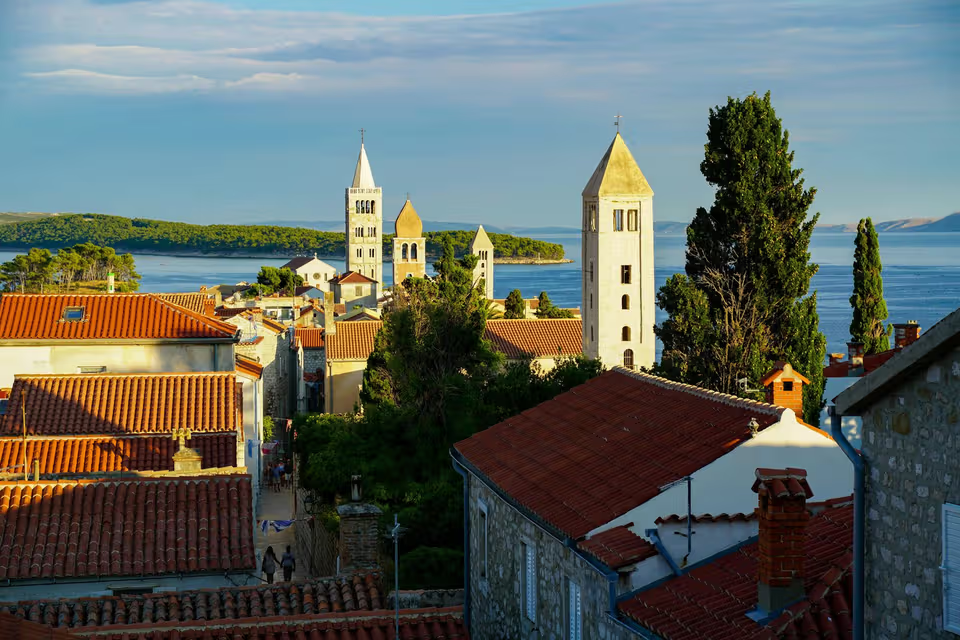
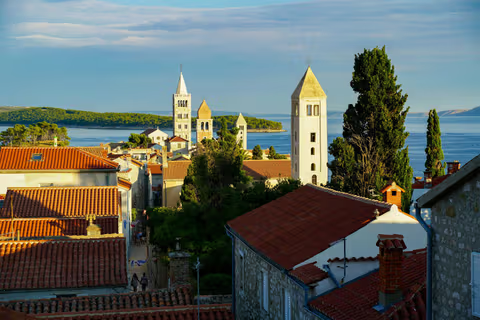
C roatia is the product of fifteen hundred years of crosscurrents: Rome, Byzantium, Venice, the Habsburgs, the Ottomans and the brief war of independence in the 1990s. That layering is something you read directly in the stones.

The essence

A country you read stone by stone

C roatia is the product of fifteen hundred years of crosscurrents: Rome, Byzantium, Venice, the Habsburgs, the Ottomans and the brief war of independence in the 1990s. That layering is something you read directly in the stones. A street in Split can begin at a wall from Diocletian's 4th-century palace, pass through a Romanesque church and a Venetian loggia in the space of a hundred metres. This is a destination for the discerning traveller: it works when someone curates it with intelligence, far from autopilot and the mass cruise ship. The right seasonal window, the right sequence of places, the right boutique hotels and a guide who comes from the city. Done that way, Croatia delivers a European journey with less tourism and more genuine conversation with the place.

2,000 km of Adriatic coastline packed into a narrow strip
8 national parks · from Plitvice to Kornati
1,244 islands and islets · around thirty inhabited
305 AD Diocletian's Palace · a living city to this day

Regions

The 5 faces of Croatia

Istria · Croatia 01 · North

2–3 nights

Istria

Italian at the table, Slavic at heart

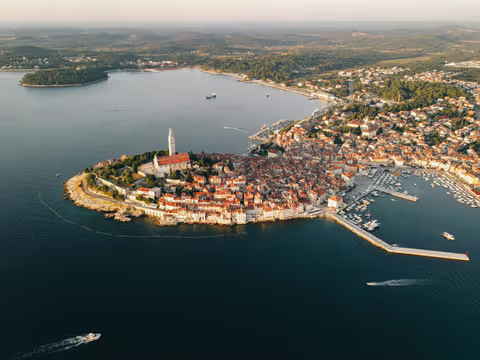
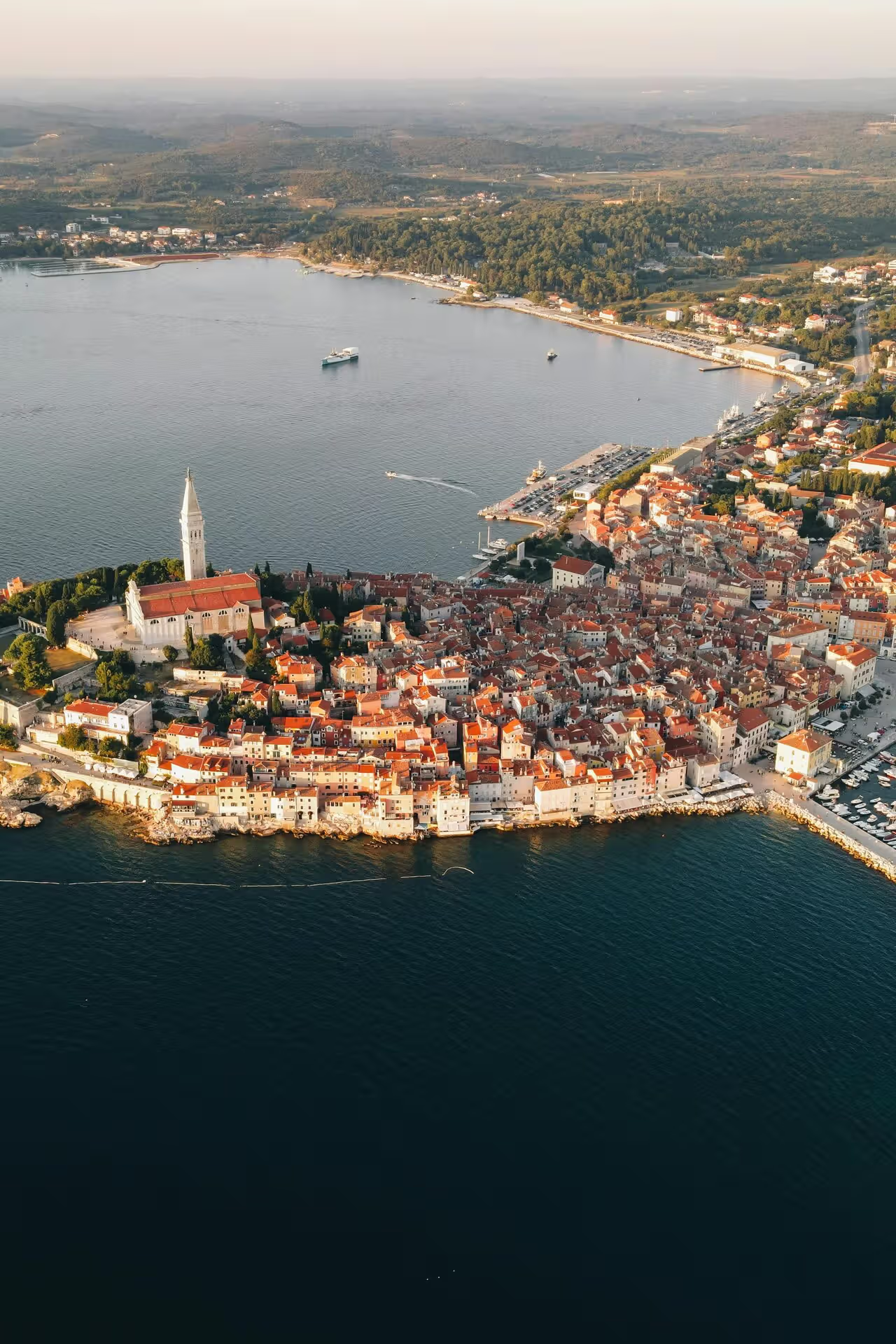
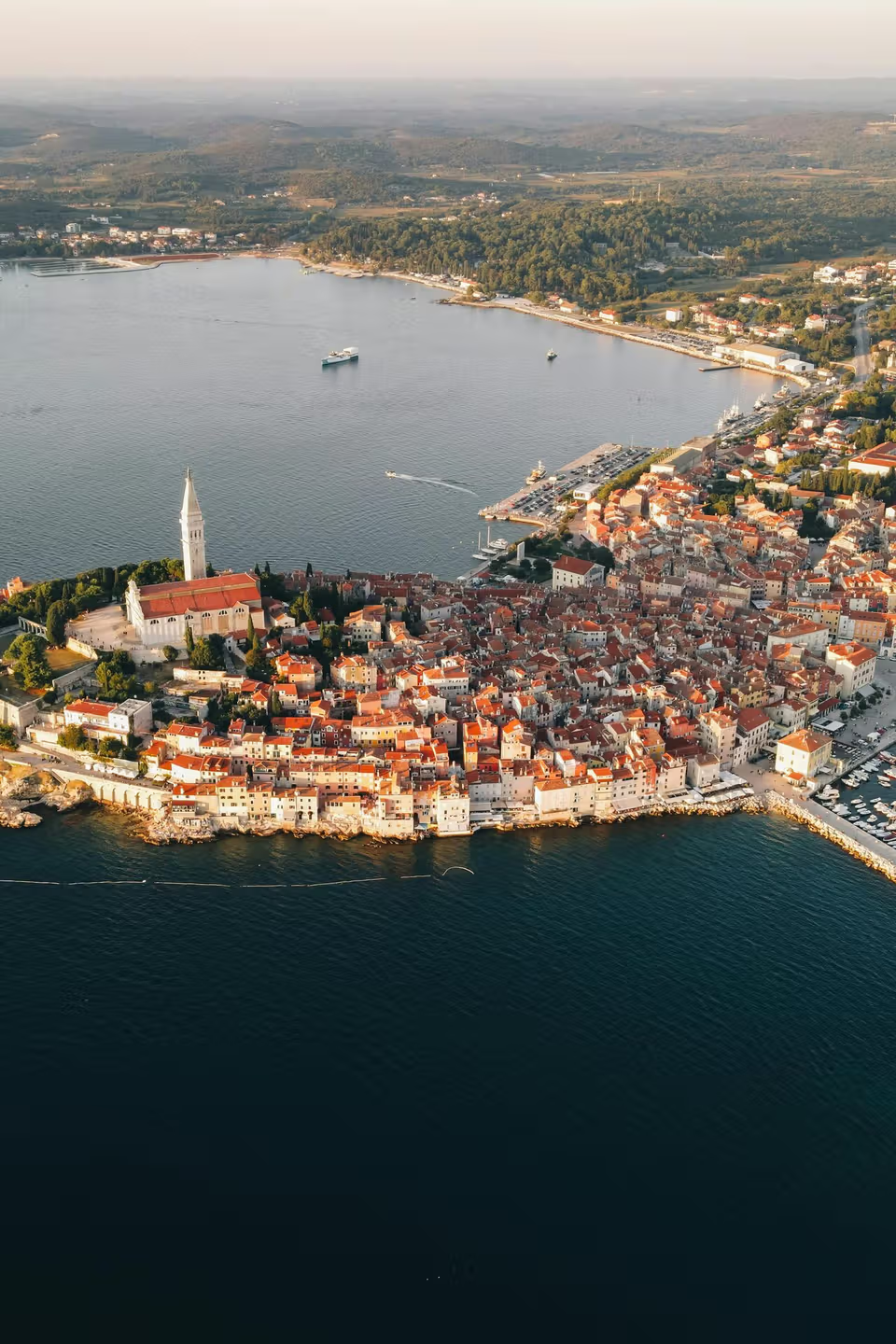
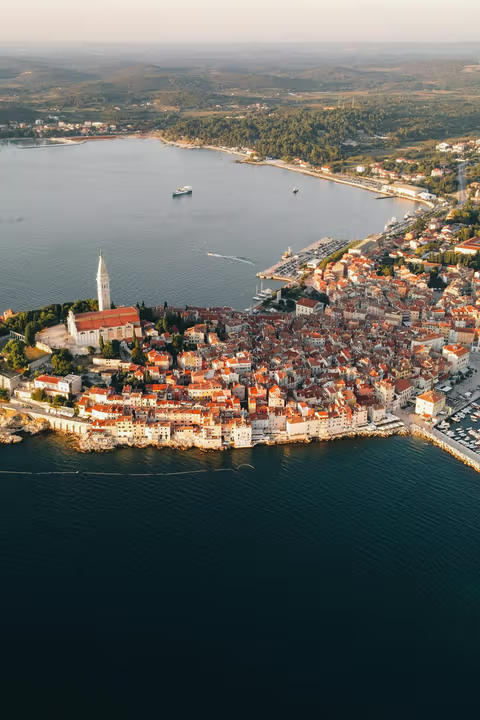
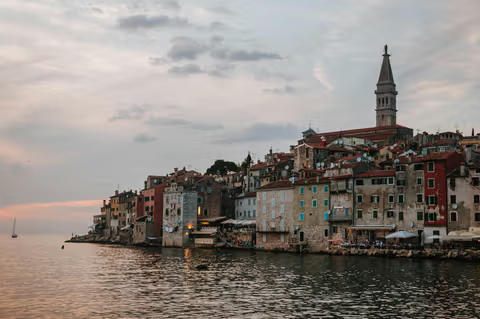
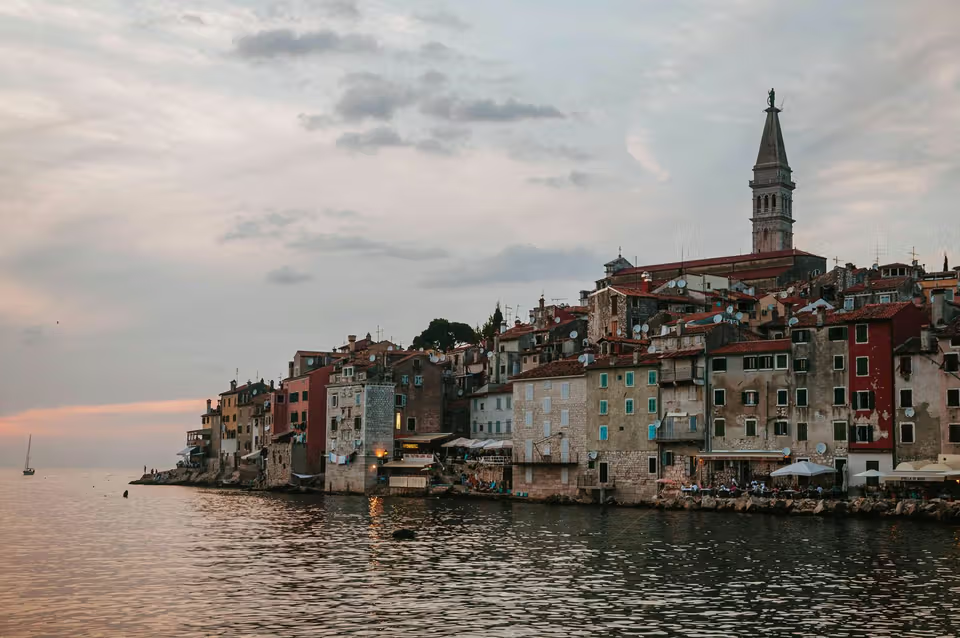
The northern peninsula blends Venetian-Italian facades in Rovinj, hilltop medieval villages like Motovun and Grožnjan, and the country's finest cuisine: forest truffles, award-winning extra virgin olive oil and estate-grown malvazija wine.

Hotels
Hotel Monte Mulini · Meneghetti Wine Hotel
Must-see
Rovinj · truffles in Motovun · Pula amphitheatre
Best time
April to June · September and October for truffles
Split and Central Dalmatia · Croatia 02 · Dalmatia

2–3 nights

Split and Central Dalmatia

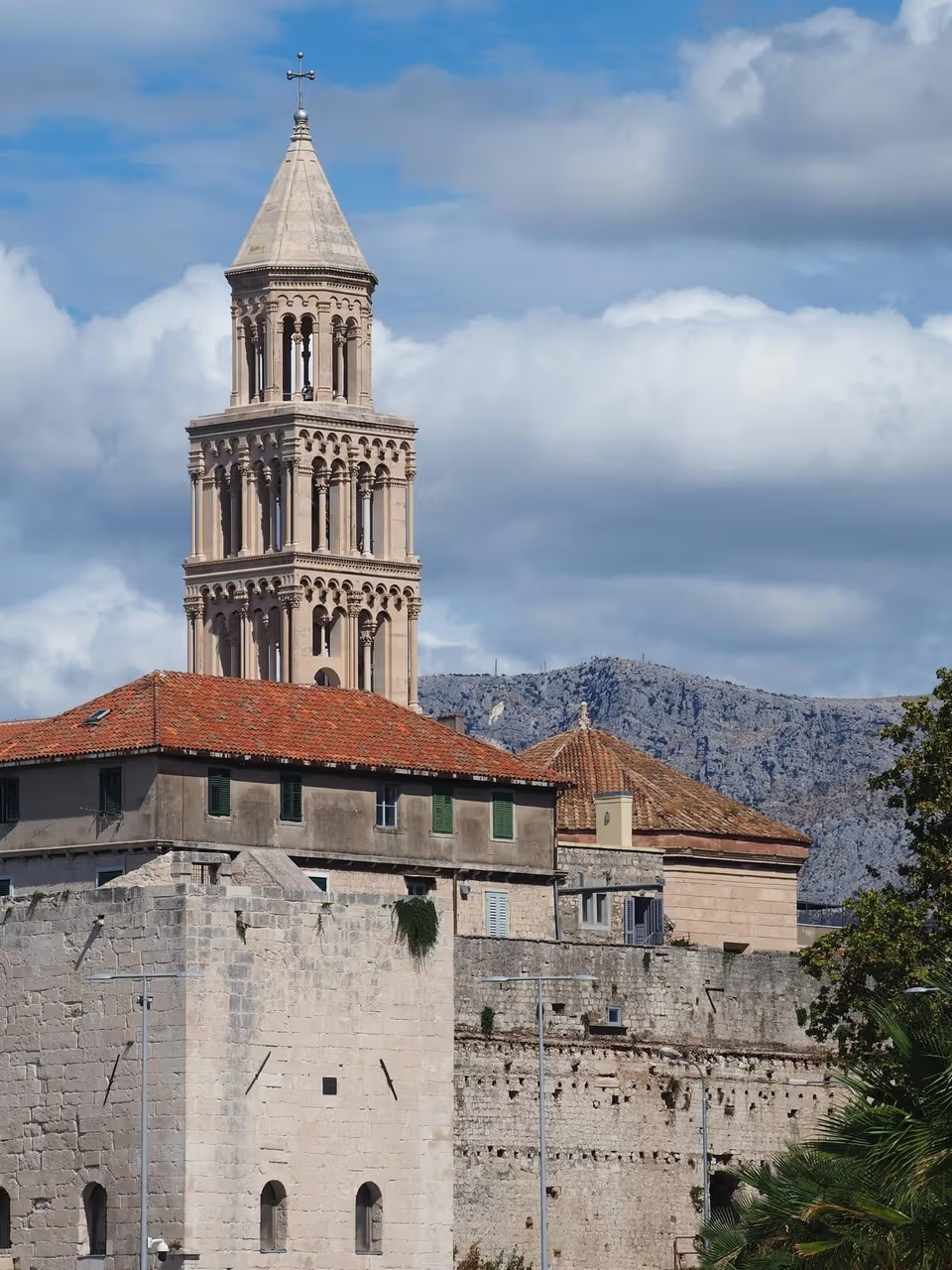
A city inside a palace

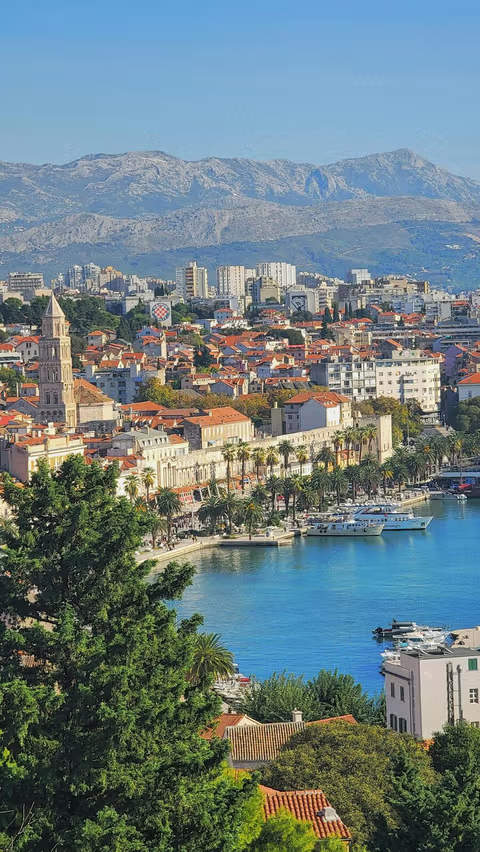
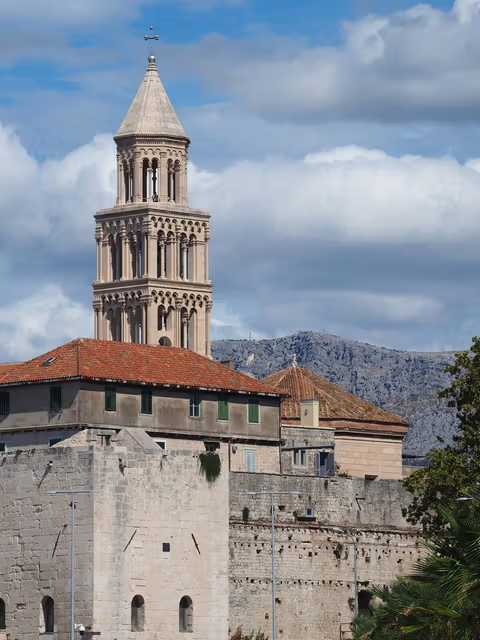
Split is a city that lives inside the retirement residence Emperor Diocletian built in 305 AD. The ferry hub for Hvar, Brač and Vis, and the natural gateway to Dalmatian cuisine and Trogir.

Hotels
Heritage Hotel Antique · Marvie Hotel · Cornaro
Must-see
Diocletian's Palace · Mount Marjan · Trogir
Best time
May to October · year-round for the city
The Adriatic Islands · Croatia 03 · Islands

3–6 nights

The Adriatic Islands

Thirty identities on the water

Hvar with its lavender fields, Vis and its military past, Korčula as the possible birthplace of Marco Polo, Brač with the Zlatni Rat beach. Each inhabited island has its own voice · best read from the deck of a private sailing yacht.

Hotels
Adriana Hvar Spa · boutique villas in Stari Grad
Must-see
Pakleni Islands · Blue Cave at Biševo · Pelješac
Best time
June and September · sea at 24°C
Dubrovnik and the South · Croatia 04 · South

2–3 nights

Dubrovnik and the South

The ancient Republic of Ragusa

The walled city at the southern tip occupies half a square kilometre of pale limestone and packs more architectural density than many capitals. Well planned · at dawn, before the cruise ships arrive · Dubrovnik is cinematic; the base for the Elaphiti Islands and Montenegro.

Hotels
Hotel Excelsior · Villa Dubrovnik · Pucić Palace
Must-see
City walls at dawn · Mount Srđ · Trsteno
Best time
May, June and September · avoid August
Plitvice and the Parks · Croatia 05 · Nature

2–3 nights

Plitvice and the Parks

Water as the journey's organising force

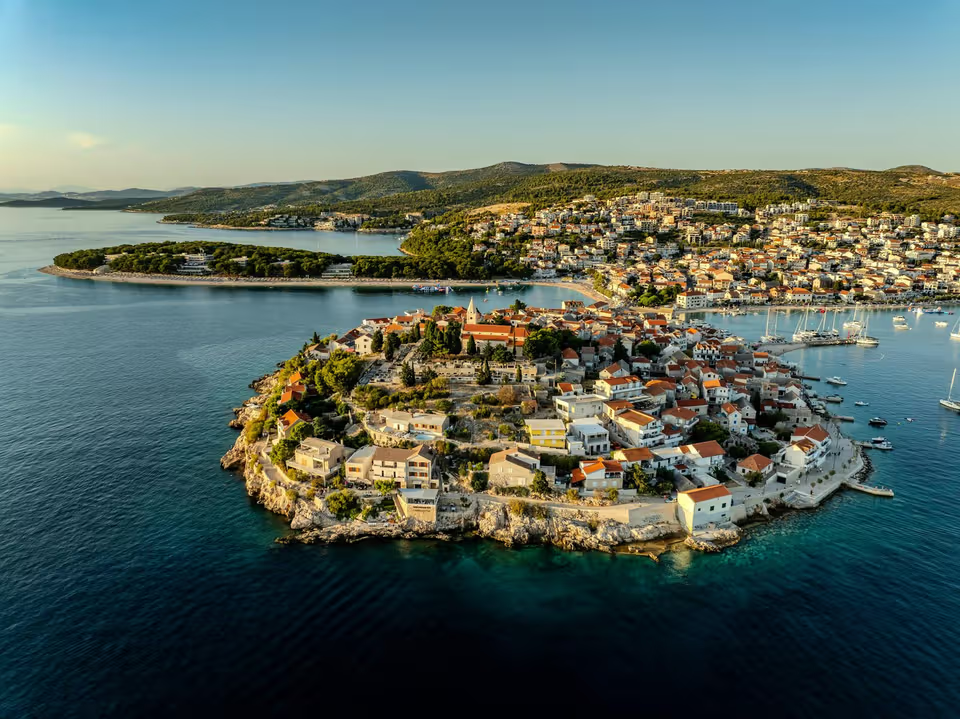
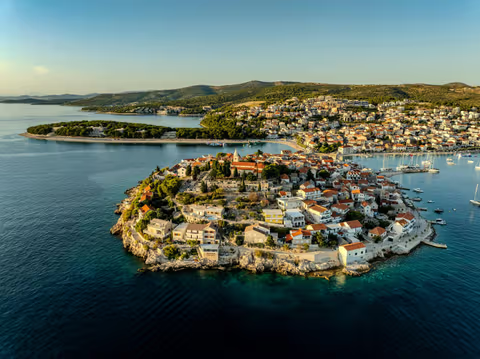
Sixteen tiered turquoise lakes at Plitvice, the Krka waterfalls, the Kornati and Mljet archipelagos. Eight national parks that transform a journey through walled cities into one of water and forest.

Hotels
Plitvice Boutique Hotel · Etno selo Plitvica Selo
Must-see
Plitvice at dawn · Krka · Kornati by yacht
Best time
May, June, September and October

Signature experiences

Moments to remember

Private access, guides born in the place and a rhythm designed around you.

Practical

The essentials before you travel

Information verified by our travel designers, updated for 2026.

Money

Currency
Euro (EUR) since January 2023. The former kuna is no longer in circulation (verify the exchange rate before travel).
Cards
Visa and Mastercard accepted in 95% of businesses. American Express has limited coverage outside international hotels.
Cash
Essential for local ferries, markets, tips and rural konobas. Carry small-denomination notes: €5, €10 and €20.
ATMs
Available in all cities. Avoid the blue Euronet machines: use Erste, Zagrebačka, OTP or PBZ for better exchange rates.
Currency exchange
Unnecessary for Europeans. For Latin American travellers, withdraw at a bank ATM with a multi-currency Wise or Revolut card.
Gratuities
10% in restaurants if the service was good. Between €20 and €40 per day for a private guide and driver, in cash.

Visa

Schengen
Croatia has been part of the Schengen Area since January 2023. A traveller arriving from Spain, France or Germany passes without a new border check.
Latin America
Colombians, Mexicans, Argentinians and most South Americans do not require a tourist visa.
Length of stay
Up to 90 days within any 180-day period for visa-exempt nationalities.
ETIAS
The European electronic travel authorisation for visa-exempt nationalities, expected to cost €7 and valid for three years. Its entry into force has been postponed: verify before travel.
Passport
Valid for at least three months beyond your planned departure date. Carry a digital copy and your first hotel reservation.

Health

Vaccinations
Croatia does not require mandatory vaccinations from Latin America or Spain. Be up to date on MMR, tetanus and hepatitis A and B.
Tick-borne encephalitis
For continental forest areas of the Velebit in spring and summer, consider the tick-borne encephalitis vaccine.
Water
Tap water is potable and of excellent quality throughout the country · among the best urban water in Europe.
Insurance
Not required for entry, but essential for CocoVolare trips. Ensure coverage includes evacuation, repatriation and nautical accidents if you plan to sail.
Pharmacies
Ljekarne are plentiful and professional, many with English-speaking pharmacists, and some open 24 hours in Zagreb and Split.

Transport

Ferries
Jadrolinija is the national ferry company; Krilo operates fast catamarans. Book ahead in August · routes sell out online.
Domestic flights
Croatia Airlines connects Zagreb with Split, Dubrovnik, Pula and Zadar on legs of 45 to 75 minutes.
Private driver
The CocoVolare standard for days in Split, Plitvice and Dubrovnik: saves two to three hours of logistics per day.
Car hire
Recommended for Istria, Slavonia and the connection to Plitvice. Drop the car on arrival in Dubrovnik: the old town is pedestrian-only.
Apps
Uber and Bolt operate in Zagreb, Split, Dubrovnik, Rijeka, Pula and Zadar. WhatsApp is the universal means of communication with guides and hotels.

Language

Official language
Croatian, a South Slavic language and a strong identity marker since independence.
English
Solid in hotels, restaurants and retail. Italian is useful in Istria and along the coast.
Spanish
Less common: CocoVolare prioritises guides and drivers with strong Spanish for Latin American clients where relevant.
Useful phrases
Dobar dan (good day) · hvala (thank you) · molim (please) · oprostite (excuse me) · živjeli (cheers).
A tip
Four words in Croatian open doors. Croatians size up a newcomer and open up generously when they sense genuine interest.

Etiquette

Yugoslavia
Never call a Croatian Yugoslav. The memory of the 1990s war is very much alive: a Croatian is Croatian.
The war
Do not offer opinions on the war or on Bosnia, Serbia or Kosovo unless invited. Listen if someone shares their experience.
Dress code
No swimwear in Dubrovnik's walled old town or in Hvar Town: there is an ordinance with fines. In churches, cover shoulders and knees.
Toasting
Say živjeli with eye contact as you clink glasses. Not looking at the other person when toasting is considered bad manners.
Punctuality
Croatia keeps time. Do not be late for a reservation and do not queue-jump. No haggling: prices are fixed.

Climate

When to travel and why

Croatia is best experienced in shoulder season: from late May to June and all of September. The chart shows all twelve months with estimated cost, temperature and iconic festivals. Marked in gold, the windows we recommend experiencing Croatia with us .

Most recommended month June · warm sea, long days, no crowds
Best value vs. experience May · opening of the shoulder season
Once-in-a-lifetime window October · white truffle season in Istria

The climate, month by month · Dubrovnik

Reference city: Dubrovnik Best season Temperature °C Relative rainfall
10° 15° 20° 25° 30° 35° Jan: 7° – 12°C · 98 mm 12° Jan: 98 mm Jan Feb: 7° – 13°C · 93 mm 13° Feb: 93 mm Feb Mar: 9° – 15°C · 90 mm 15° Mar: 90 mm Mar Apr: 11° – 18°C · 89 mm 18° Apr: 89 mm Apr May: 15° – 22°C · 68 mm 22° May: 68 mm May Jun: 19° – 27°C · 44 mm 27° Jun: 44 mm Jun Jul: 22° – 30°C · 26 mm 30° Jul: 26 mm Jul Aug: 22° – 30°C · 38 mm 30° Aug: 38 mm Aug Sep: 19° – 26°C · 84 mm 26° Sep: 84 mm Sep Oct: 15° – 22°C · 110 mm 22° Oct: 110 mm Oct Nov: 11° – 17°C · 140 mm 17° Nov: 140 mm Nov Dec: 8° – 13°C · 123 mm 13° Dec: 123 mm Dec

Highlights of the year: Jul · Dubrovnik FestAug · Dubrovnik FestOct · Istria truffles

May–June and September–October are Croatia at its best: warm sea, open terraces and walls without queues. July and August add heat, cruise ships and peak prices; from November to March, half the coast hibernates.

When to go · season & budget

Seasons & estimated cost CocoVolare recommends High Mid Low
Jan: Low season · ≈$450 per person/day Jan Feb: Low season · ≈$450 per person/day Feb Mar: Low season · ≈$480 per person/day Mar Apr: Mid season · ≈$570 per person/day Apr May: Mid season · ≈$660 per person/day $660May Jun: High season · ≈$750 per person/day $750Jun Jul: High season · ≈$870 per person/day Jul Aug: High season · ≈$870 per person/day Aug Sep: High season · ≈$720 per person/day $720Sep Oct: Mid season · ≈$570 per person/day $570Oct Nov: Low season · ≈$480 per person/day Nov Dec: Low season · ≈$510 per person/day Dec

In our recommended dates, the estimated cost ranges from $570 to $750 per person/day (Premium level, international flights not included).

Investment

What it costs, no fine print

Croatia is no longer the Adriatic's cheap secret, but it still outperforms Italy or the French Riviera: the same turquoise sea, villas and private islands for a fraction. The yacht (by the day or by the week) is where budget turns into memory.

Experience levels · guide budget

Euro (EUR) · 1 USD ≈ 0.92 EUR USD · per person/day
Boutique essential Boutique essential: $320 USD · per person/day $320 Stone-built boutique hotels inside the old towns, fast ferries between islands and family konobas serving the day's catch. Premium Premium: $600 USD · per person/day $600 Five-star hotels overlooking the Adriatic, a private speedboat to the Elafiti or Hvar and wine tastings on peninsulas like Pelješac. Signature Signature: $1,100 USD · per person/day $1,100 A crewed yacht through the archipelago, private historic villas, a chef on board and moorings at islands the ferries never reach.
Seafood dinner with a sea view USD 60–110Dubrovnik city walls (admission) USD 35Private boat day around the Elafiti USD 600–1,200 per groupOyster tasting in Ston USD 40–70Airport–old town transfer USD 45–60

Indicative 2026 values per person, excluding international flights. Every CocoVolare quote is tailored to season, hotels and travel pace.

Signature itineraries

Six Croatias · choose yours

Zero templates: every itinerary is rewritten 100% to your measure. Prices per person in double occupancy, boutique category, international flights not included.

5 days · 4 nights · Dalmatia

Croatia Essence

Split → Trogir → Hvar → Dubrovnik

Croatia distilled to its essence · compact yet perfectly paced

  • Diocletian's Palace and its Roman underground chambers with a private cultural guide
  • UNESCO-listed medieval Trogir and the Cathedral of Saint Lawrence
  • Hvar Town and the Pakleni Islands by private speedboat, swimming at Palmižana

FromUSD 2,100

7 days · 6 nights · Mainland and coast

Balanced Croatia

Zagreb → Plitvice → Split → Hvar → Dubrovnik

Continental capital, turquoise water and a walled coast

  • Continental Zagreb: the Dolac market, Gornji grad and a contemporary tasting dinner at Noel
  • The Plitvice Lakes with a local guide, on the wooden walkways without queues
  • Diocletian's Palace in Split and a day trip to medieval Trogir

FromUSD 3,400

10 days · 9 nights · Four regions

Deep Croatia

Zagreb → Istria → Plitvice → Split → Hvar → Dubrovnik

Four Croatias in one journey · with room to breathe

  • Continental Zagreb with museums, the Dolac market and a chef's tasting dinner
  • Istria: Rovinj, hilltop villages and a truffle hunt with trained dogs
  • Plitvice Lakes in quiet hours and a day trip to Šibenik and Krka

FromUSD 5,600

14 days · 13 nights · Mainland, islands and the Balkans

Extended Croatia

Zagreb → Slavonia → Istria → Plitvice → sailing yacht → Dubrovnik

Mainland, Pannonian plains, islands by sailing yacht and silence

  • Zagreb and Pannonian Slavonia with a graševina tasting at Iločki Podrumi
  • Truffle Istria and hilltop villages, plus Plitvice
  • Six days aboard a private yacht through Brač, Hvar, Vis, Korčula and Mljet

FromUSD 9,200

10 days · 9 nights · Romance

Adriatic Honeymoon

Split → Hvar → sailing islands → Dubrovnik

Beginning the rest of your life above the Adriatic

  • Suite upgrade overlooking the walled city in Dubrovnik
  • Private villa with infinity pool and dedicated staff on Hvar
  • Privatised yacht with dedicated crew through central Dalmatia

FromUSD 7,800

8 days · 7 nights · Private yacht

Dalmatian Islands by Sailing Yacht

Split → Brač → Hvar → Vis → Korčula → Mljet

The Adriatic as it should be read: from the water

  • Privatised yacht with captain, first mate and chef on board
  • Anchoring in empty Pakleni coves and swimming at Stiniva
  • Blue Cave at Biševo and diving among Roman wrecks off Vis

FromUSD 6,400

None of them fits? We design your own. WhatsApp →

Gastronomy

The flavors of Croatia

Croatian cuisine is four cuisines in conversation. The Austro-Hungarian continental, the Italian-souled Istrian, the Mediterranean Dalmatian and the Slavonian Pannonian. Where four traditions share a single table.

Noel

Donji grad · Zagreb

The capital's Michelin-starred restaurant. Bruno Vokal's contemporary Croatian cuisine, with a tasting menu and native wine pairings. The finest table on the continental side.

Pelegrini

Cathedral · Šibenik

Michelin star facing the Renaissance cathedral. Rudolf Štefan reinterprets Dalmatian produce, with one of the most serious Croatian wine lists in the country.

Restaurant Monte

Old town · Rovinj

Croatia's first Michelin star. High-end Istrian cuisine with truffle, seafood and local produce in the Venetian heart of Rovinj.

360 Dubrovnik

On the walls · Dubrovnik

Fine-dining table set directly on the old harbour's city walls. Adriatic produce menu with direct views over the illuminated walled city.

Konoba Matejuška

Veli Varoš · Split

An unfussy Dalmatian konoba in Split's fishermen's quarter. Fish brodet, pasticada with gnocchi and plavac mali from Pelješac.

Zigante

Livade · Istria

The temple of Istrian truffle, beside the Motovun forest. A multi-course truffle menu and a shop stocked with products from the September-to-December harvest.

Calendar

Dates worth traveling for

A well-chosen date turns a trip into a memory. We design your itinerary around the moment that matters most to you.

Rijeka Carnival · Jan · Feb

One of the largest carnivals in Central Europe, with traditional masks in Kastav and festivities on the island of Lastovo.

Almond Blossom · March

The Dalmatian coast is covered in almond blossom, especially beautiful on the islands of Brač, Hvar and Korčula.

Za Križen Procession · Easter

The Holy Thursday night-time procession between six villages on the island of Hvar, a UNESCO Intangible Heritage.

Dubrovnik Summer Festival · Jun–Aug

Theatre and classical music in the walled squares, with intimate concerts in the courtyard of the Rector's Palace.

Lavender Bloom in Hvar · Late June

The fields of Velo Grablje and Brusje turn purple in the last week of June and the first of July.

Sinjska Alka · 1st Sun. August

A baroque equestrian tournament in Sinj, unique in Europe: one lance, one target, a thousand years of Dalmatian pride. UNESCO Heritage.

White Truffle Season in Istria · Oct–Dec

The hunt with trained dogs in the forests around Motovun, Buzet and Livade · the gastronomic highlight of the year.

Advent in Zagreb · December

Zagreb's Christmas market, voted Europe's best several times, with ice skating, fritule pastries and mulled wine through to 7 January.

CocoVolare recommends

What we would tell a friend

Advice from our travel designers: what we book first, what we avoid, and the details that turn a good trip into an unforgettable one.

01

The walls are walked at 8:00 or at 17:00

Dubrovnik receives up to three cruise ships a day, and between 10:00 and 15:00 the old town overflows. Climb the walls in the first hour or at dusk, when the stone turns golden and the groups have sailed away. We check the cruise calendar when building your day.

02

June and September are worth two Augusts

The sea is just as warm, prices drop up to 40% and you get a table without booking weeks ahead. If you can choose, shift your dates: shoulder-season Croatia is the one that wins hearts.

03

The yacht is the correct map

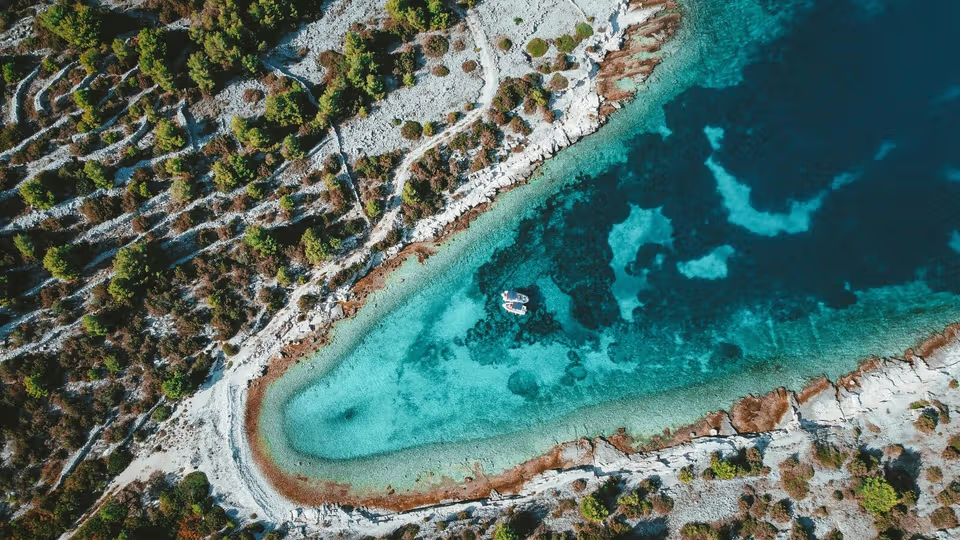
Croatia has over a thousand islands and the ferries dictate schedules, not wishes. A private boat (by the day from Dubrovnik or Split, or by the week with crew) turns the Adriatic into your itinerary: nameless coves, lunches at anchor and the next island whenever you say.

04

Croatia is now Schengen: count your days

Since 2023 it belongs to the Schengen area and uses the euro. Colombians need no visa, but days in Croatia count toward the 90-in-180 limit of the rest of Schengen; plan ahead if combining with Italy or Spain. The ETIAS authorization is coming soon: we verify it for you.

05

Sleep inside the walls only if you love stairs

The old town is magical at dawn, but it means hauling luggage up steep alleys and early church bells. Ploče, ten minutes on foot, offers old-town views, beaches and full-service hotels. We choose by your style, not by the postcard.

06

Ston and Pelješac: the detour your glass will thank

An hour from Dubrovnik, Ston farms the Adriatic's best oysters beneath 14th-century walls, and Pelješac produces the Plavac Mali reds Croatians keep for themselves. It's the perfect long lunch en route to Korčula.

In motion

Croatia, live

Testimonials

What our travelers say

★ ★ ★ ★ ★

“We entered the Dubrovnik walls at seven in the morning, the stone still damp and not a cruise ship in sight. CocoVolare had timed it to the minute. Two hours later the city was a different place entirely. That difference in timing changed everything.”

Mariana Restrepo

Bogotá · Honeymoon · 10 nights

★ ★ ★ ★ ★

“The sailing yacht had a captain, a first mate and a cook who knew our names by day two. We anchored in empty coves and set our own pace. No cruise ship could ever have been this.”

Javier Mendoza

Mexico City · Couples' journey · 8 nights

★ ★ ★ ★ ★

“Our Split guide opened Diocletian's Palace layer by layer: the Roman wall, the Romanesque church, the Venetian loggia · all within a hundred metres. I thought it was a ruin. It's a living city, and he proved it to us.”

Andrés Lozano

Medellín · Cultural journey · 12 nights

FAQ

Frequently asked questions

Do I need a visa to enter Croatia?

Croatia has been part of the Schengen Area since January 2023. Travellers from Colombia, Mexico, Argentina and most of South America do not need a visa for tourist stays of up to 90 days in any 180-day period. Spanish nationals are also exempt. When it comes into force, the ETIAS electronic travel authorisation will be required · the expected cost is €7. Immigration rules change: verify before travel.

What is the best time to visit Croatia?

The shoulder season · late May to June and all of September · delivers the best balance: warm sea, long days, every restaurant open and no tourist saturation. July and August are peak season with sustained heat and giant cruise ships in Dubrovnik; advisable only aboard a well-planned private yacht. The first fortnight of October is perfect for Istria, with the white truffle season at its peak.

How many days do I need to see Croatia?

Five days cover Split, an island and Dubrovnik in compact but coherent form. Seven to ten days add Zagreb, the Plitvice Lakes and Istria. Fourteen days allow for Slavonia or an extension to Montenegro. CocoVolare designs itineraries from five to twenty-one days, tailored to pace, profile and season.

What currency is used in Croatia?

Croatia adopted the euro (EUR) in January 2023. The former kuna is no longer in circulation. Visa and Mastercard work in 95% of businesses; it is worth carrying small-denomination cash for local ferries, markets, tips and rural konobas. Withdraw at bank ATMs (Erste, Zagrebačka, OTP) and avoid the blue Euronet machines with inflated fees.

Is it safe to travel to Croatia?

Yes. Croatia ranks among the safest countries in Europe: low crime rates, rare pickpocketing even in tourist areas and peaceful urban life in Zagreb, Split and Dubrovnik. The real precautions are minor: bring water shoes for rocky coves, watch for motorbike traffic on the islands in summer and observe Croatia's strict zero-tolerance policy on drink-driving, with frequent roadside checks.

How much does a trip to Croatia cost?

A boutique ten-day trip, excluding international flights, falls in the comfort band between USD 4,900 and 8,600 per person in double occupancy. CocoVolare signature itineraries start from USD 2,100 per person for five days. The Croatian summer experiences sharp annual price adjustments driven by cruise-ship demand: every quote is calibrated to your actual travel window.

Is a private yacht worth it in Croatia?

Croatia is one of the three finest charter sailing destinations in the world, alongside the British Virgin Islands and Greece. A private crewed yacht · as opposed to a mass cruise ship carrying hundreds of passengers · lets you anchor in empty coves, set your own pace and have a chef on board. Costs range from EUR 8,000 to 35,000 per week for groups of four to twelve, depending on the vessel.

How do you avoid the crowds in Dubrovnik?

The walled city receives cruise ships with three thousand passengers between 10am and 4pm in July and August. The structural solution: buy the Dubrovnik Pass the day before, enter the city walls at 7:30am when they open or after 6pm, and spend a minimum of two nights to make the most of both dawn and dusk. CocoVolare also coordinates private off-hours access before official opening.

Do I need vaccinations for Croatia?

Croatia does not require mandatory vaccinations for entry from Latin America or Spain. It is advisable to be up to date on MMR, tetanus and hepatitis A and B. For continental forest areas of the Velebit in spring and summer, the tick-borne encephalitis vaccine is worth considering. Tap water is potable throughout the country.

Is it better to start the trip in Zagreb or Split?

Flight logistics from Latin America and Spain usually land first in Zagreb, the main hub. For a complete itinerary, flying into Zagreb and out of Dubrovnik · an open jaw · saves repeated backtracking. If the journey is purely coast and islands, Split has the best summer air connections and ferry links to the finest Dalmatian islands.

Is Croatia a good destination for foodies?

Yes, and one of the most underrated in Europe. Croatian cuisine is four traditions in conversation: the Austro-Hungarian continental, truffle-and-fresh-pasta Istrian, fish-and-peka Dalmatian, and paprika-and-kulen Slavonian. The country has several Michelin-starred restaurants and a generation of young chefs reinterpreting tradition without folklorising it.

Can I travel to Croatia with children?

Yes · it is a genuinely family-friendly destination. Manageable distances, widespread English and modern European infrastructure. For children, fewer walled city walks and more nature: the short circuit at Plitvice, a boat ride at Krka, a beach day in Bol with kayaking. For teenagers: rafting on the Cetina, climbing in Paklenica and introductory diving off Vis. Hotels with pools and family-specialist guides available.

What does a CocoVolare trip to Croatia include?

Itinerary design from scratch, domestic flights and ferries where applicable, boutique hotels with breakfast, a private crewed yacht, private transfers with a dedicated driver, certified cultural guides, signature experiences, off-hours site access, park entries and 24/7 concierge. Every journey is tailored to your profile, dates and budget, with a free quote delivered within 24 hours.

Croatia

No molds, made to measure

Tell us what excites you and we will design a tailor-made proposal in under 24 hours, with a dedicated travel designer.