Germany · CocoVolare

Europe · Boutique

Germany

The heart of Europe

G ermany entered the curious traveller's map through Berlin and stayed for everything else. Few European destinations combine dense history, creative modernity and accessible nature so well.

The essence

A country that reads in layers

G ermany entered the curious traveller's map through Berlin and stayed for everything else. Few European destinations combine dense history, creative modernity and accessible nature so well. The country works, the trains run on time, the cities have a human scale and between Berlin and the Alps there is a cultural universe that fits neatly into a well-designed journey. It is a curator's destination: it works when someone applies genuine judgement, far from autopilot and the sealed coach. The right sequence of cities, the ICE trains in the right order, boutique hotels in real neighbourhoods and a guide who comes from the community. Done that way, Germany is traversed rather than visited.

3,200 registered bread varieties in the country
+320 Michelin-starred restaurants
16 federal states, each with its own character
1990 the country's reunification, on 3 October

Regions

The 5 faces of Germany

Berlin · Germany 01 · Capital

3–4 nights

Berlin

The city that rewrites itself

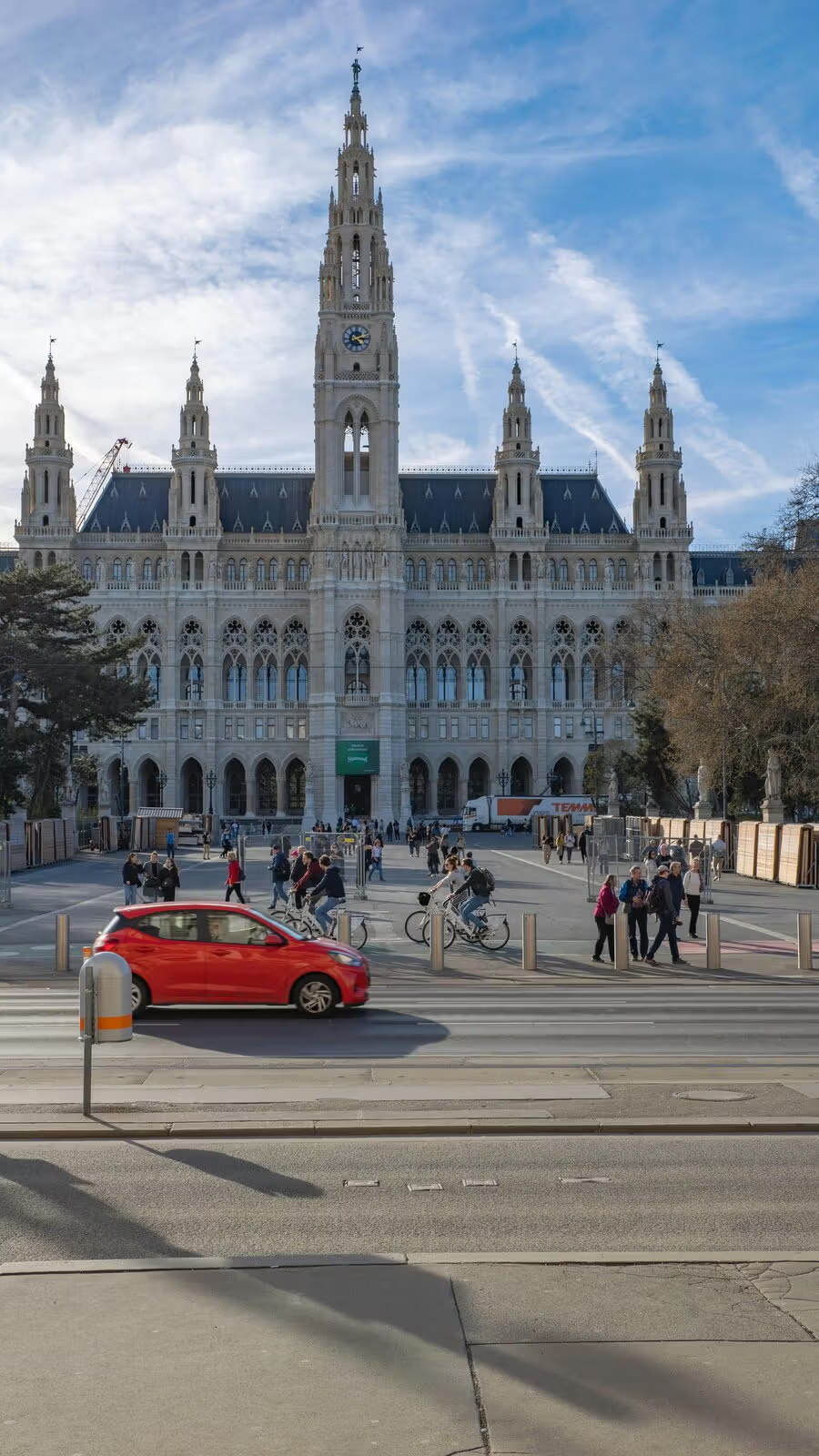
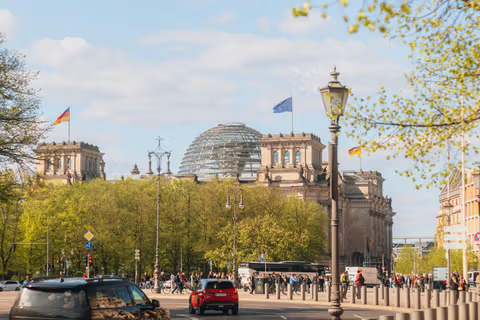
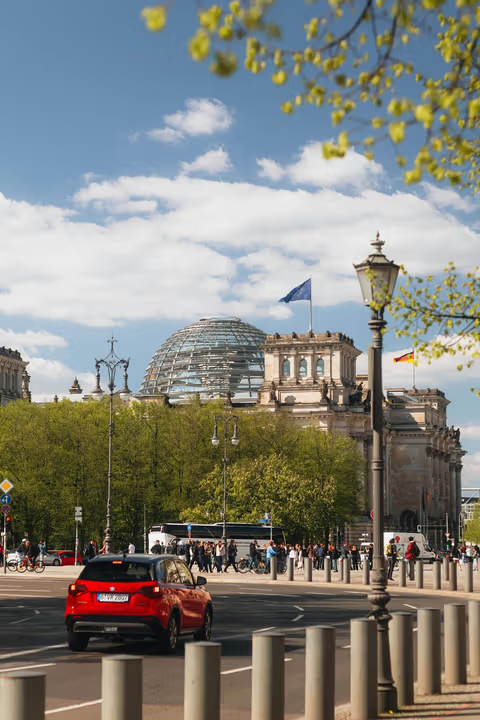
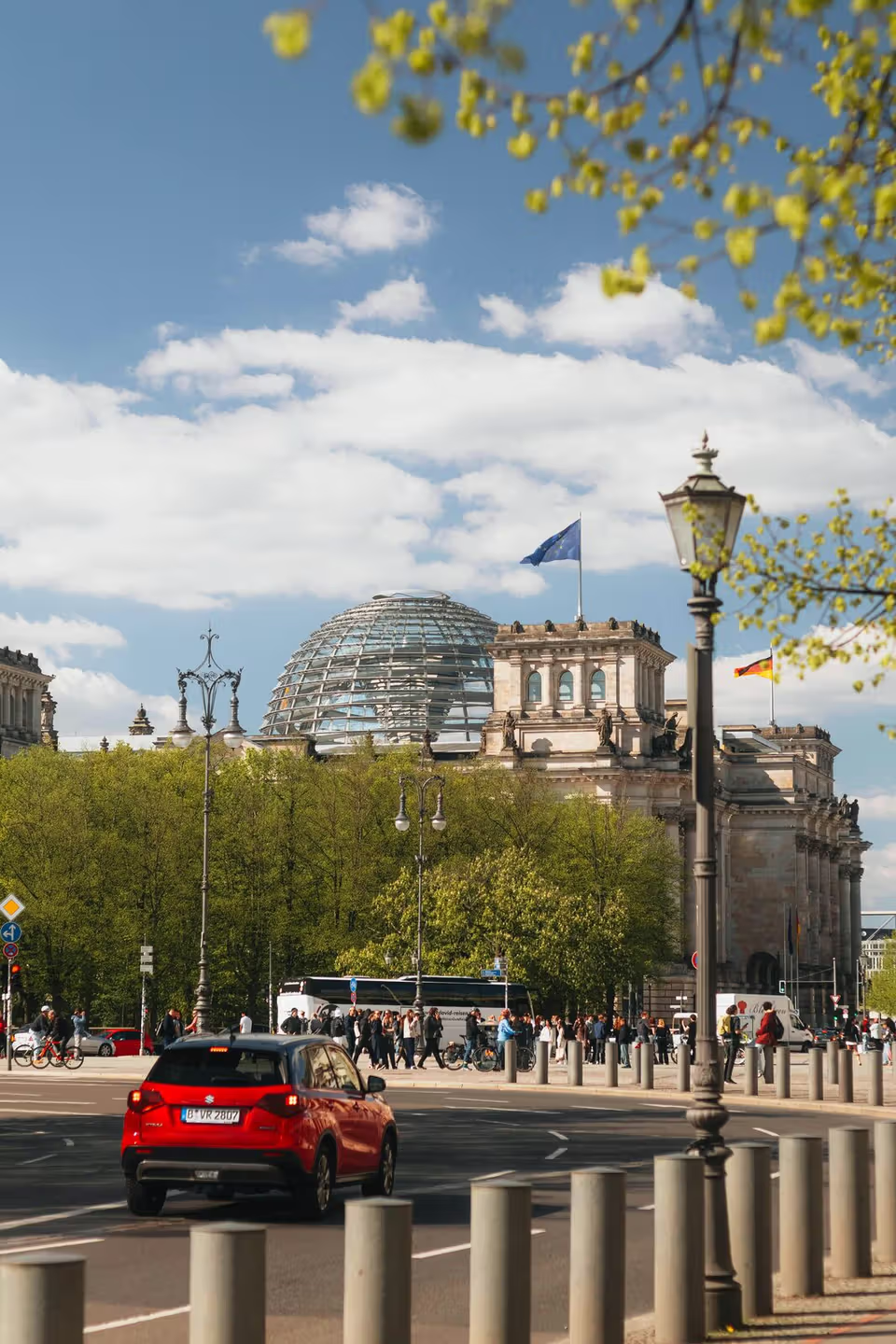
Berlin's beauty is unconventional: its power lies in how history seeps through its seams. The Reichstag with its glass dome, Museum Island, the trail of the Wall, bunkers turned into clubs and the finest art scene in Europe.

Hotels
Hôtel de Rome · Adlon Kempinski · Soho House
Must-see
Reichstag · Museum Island · East Side Gallery
Best time
May to September · terraces and long light
Bavaria and Munich · Germany 02 · Alps

3–5 nights

Bavaria and Munich

Alpine Germany

Bavaria is orderly, prosperous and proud. Munich pairs breweries dating to 1589 with cutting-edge technology. Surrounding it: Neuschwanstein Castle, the Bavarian Alps, glacial lakes and the Romantic Road of medieval villages.

Hotels
Bayerischer Hof · Vier Jahreszeiten · Schloss Elmau
Must-see
Neuschwanstein · Englischer Garten · Marienplatz
Best time
May–June and October · winter for skiing
The Black Forest · Germany 03 · Forest

2–3 nights

The Black Forest

Forests and imperial thermal baths

Dense forests, lakes such as the Titisee, picturesque villages and the imperial spa town of Baden-Baden with its 1877 Friedrichsbad thermal baths. In Baiersbronn, two adjacent three-Michelin-star restaurants make the region a culinary capital.

Hotels
Brenners Park-Hotel · Bareiss · Traube Tonbach
Must-see
Friedrichsbad · Triberg · Baiersbronn
Best time
May to October · golden autumn · winter for thermal baths
The Rhine Valley · Germany 04 · Castles

2–4 nights

The Rhine Valley

Castles and Riesling vineyards

The UNESCO Middle Rhine stretch between Koblenz and Mainz: clifftop castles, Riesling vineyards and villages like Bacharach and Rüdesheim. Best explored by boutique vessel, with private tastings at historic Benedictine wine cellars.

Hotels
Rhine castle-hotels · boutique ship A-ROSA
Must-see
Marksburg · Rüdesheim · Riesling tasting
Best time
May to October · September for the harvest
Hamburg and the North · Germany 05 · Port

2–3 nights

Hamburg and the North

The northern port

Hamburg is Hanseatic, rainy and understated, with more bridges than Venice. Red-brick warehouses of the UNESCO Speicherstadt, a twenty-first-century Philharmonic built on a former grain silo, and the Reeperbahn where the Beatles played. Close by, the Baltic coast.

Hotels
Fairmont Vier Jahreszeiten · The Westin Elbphilharmonie
Must-see
Elbphilharmonie · Speicherstadt · Fischmarkt
Best time
May to September · long northern days

Signature experiences

Moments to remember

Private access, guides born in the place and a rhythm designed around you.

Practical

The essentials before you travel

Information verified by our travel designers, updated for 2026.

Money

Currency
The euro (EUR). No exchange controls: you may enter and leave with up to EUR 10,000 in cash without declaration.
Cash
Paradoxically, Germany is more cash-friendly than its neighbours. Bring EUR 100 to EUR 150 in small notes from the airport.
Cash only
Many bakeries, markets, taxis, small cafés and regional breweries only accept cash or local debit cards (Girocard). Look for "Nur Bar".
Cards
Visa and Mastercard accepted at hotels, mid-to-upper restaurants and supermarkets. American Express, less universally.
ATMs
Best rates at Deutsche Bank, Commerzbank or Sparkasse machines rather than airport exchange desks. Notify your bank of your travel dates.
Tipping
5–10% at restaurants, stated to the server when paying · not left on the table. Round up for taxis and EUR 1–2 per bag.

Visa

Schengen Area
Germany is part of Schengen: tourist stays of up to 90 days are permitted in any 180-day period.
Latin America
Colombians, Mexicans, Argentinians and most South Americans do not require a tourist visa.
ETIAS
From 2025, visa-exempt nationals must obtain ETIAS authorisation: an online process costing around EUR 7, valid for three years.
Passport
Valid with at least two blank pages. Immigration rules change: always verify before travel.
Documents
First accommodation booking, international insurance and return flight to hand. Insurance is compulsory for those who do require a visa.

Health

No mandatory vaccines
No vaccinations are required to enter Germany from Latin America or Spain.
Recommended
Tetanus, diphtheria, hepatitis A and B and MMR up to date, as standard travel preparation.
Ticks
For hiking in Bavarian or Saxon forests from spring to summer, consider the TBE (FSME) vaccine and check skin after walks.
Healthcare
Excellent. Charité in Berlin, Klinikum rechts der Isar in Munich. Pharmacies (Apotheke) are identified by the red Gothic "A".
Insurance
Essential: a minor emergency costs EUR 200–500 and inpatient surgery can reach EUR 10,000. Tap water is safe to drink throughout the country.

Transport

ICE trains
Deutsche Bahn connects cities by high-speed train: Berlin to Munich in 4 hours centre to centre. Book a Sparpreis fare in advance and save up to 60%.
City transport
Metro (U-Bahn), suburban rail (S-Bahn), tram and bus are reliable. Always validate your ticket at the machines: travelling unvalidated carries a EUR 60 fine.
Private driver
The CocoVolare standard for castle days and rural stretches. Saves two to three hours of logistics per day.
Apps
Uber operates in Berlin, Munich, Hamburg, Frankfurt and beyond. FreeNow is the local taxi alternative with national coverage.
Car hire
An international licence is required for road trips. The environmental sticker (Umweltplakette) is compulsory in urban centres. Petrol is expensive.

Language

Official language
German. Each federal state also has its own dialect and character.
English
Functional for around 60% of the urban adult population and 90% of the tourism sector. Small towns can have stretches without English.
Six words
Danke (thank you) · Bitte (please) · Guten Tag (good day) · Tschüss (bye) · Entschuldigung (excuse me) · Prost (cheers).
In Bavaria
Grüß Gott is the traditional southern greeting. In the north and Berlin, Hallo is universal.
The detail
Learning five words of German transforms the encounter: the stereotype of the unfriendly German dissolves the moment there is even a minimal communicative bridge.

Etiquette

Punctuality
Not a virtue · an expectation. Arriving ten minutes late for a restaurant reservation is reason enough to lose the table.
Sundays
Almost everything closes: shops, supermarkets, hairdressers. Only cafés, restaurants, museums and on-duty bakeries are open. Plan shopping for Saturday.
Volume
On public transport, people speak quietly. A conversation at a standard Latin American volume level will attract corrective glances.
Toasting
Toast by making eye contact with each person individually. According to superstition, failing to do so brings seven years of bad luck in love.
History
Do not joke about 1933–1945, and the Nazi salute · even ironically · is a criminal offence. Germany's historical sensitivity is genuine and serious.

Climate

When to travel and why

Germany is at its best from May to October, with long days and open terraces. The chart shows all twelve months with estimated cost, temperature and iconic festivals. Marked in gold, the windows we recommend experiencing Germany with us .

Most recommended month September · warm, golden, less crowded
Best value vs. experience May · mild weather and everything in bloom
Once-in-a-lifetime window December · the Christmas markets

The climate, month by month · Berlin

Reference city: Berlin Best season Temperature °C Relative rainfall
-5° 15° 25° Jan: -2° – 3°C · 42 mm Jan: 42 mm Jan Feb: -1° – 5°C · 33 mm Feb: 33 mm Feb Mar: 1° – 9°C · 40 mm Mar: 40 mm Mar Apr: 4° – 14°C · 37 mm 14° Apr: 37 mm Apr May: 9° – 19°C · 53 mm 19° May: 53 mm May Jun: 12° – 22°C · 68 mm 22° Jun: 68 mm Jun Jul: 14° – 24°C · 55 mm 24° Jul: 55 mm Jul Aug: 14° – 24°C · 58 mm 24° Aug: 58 mm Aug Sep: 10° – 19°C · 45 mm 19° Sep: 45 mm Sep Oct: 6° – 14°C · 37 mm 14° Oct: 37 mm Oct Nov: 2° – 8°C · 43 mm Nov: 43 mm Nov Dec: 0° – 4°C · 55 mm Dec: 55 mm Dec

Highlights of the year: Feb · BerlinaleSep · OktoberfestOct · OktoberfestDec · Xmas markets

Avoid November and February, the greyest months of the year. December is cold, but the Christmas markets more than make up for it.

When to go · season & budget

Seasons & estimated cost CocoVolare recommends High Mid Low
Jan: Low season · ≈$480 per person/day Jan Feb: Low season · ≈$480 per person/day Feb Mar: Mid season · ≈$570 per person/day Mar Apr: Mid season · ≈$600 per person/day Apr May: Mid season · ≈$630 per person/day $630May Jun: High season · ≈$720 per person/day $720Jun Jul: High season · ≈$750 per person/day $750Jul Aug: High season · ≈$750 per person/day $750Aug Sep: High season · ≈$780 per person/day $780Sep Oct: Mid season · ≈$600 per person/day $600Oct Nov: Low season · ≈$510 per person/day Nov Dec: High season · ≈$750 per person/day $750Dec

In our recommended dates, the estimated cost ranges from $600 to $780 per person/day (Premium level, international flights not included).

Investment

What it costs, no fine print

Germany is luxury of the rational kind: five-star hotels cost less than in Paris or London and high-speed trains replace domestic flights. Designed well, your budget stretches further than you would expect.

Experience levels · guide budget

Euro (EUR) · 1 USD ≈ 0.92 EUR USD · per person/day
Boutique essential Boutique essential: $350 USD · per person/day $350 4-star boutique hotels in real neighborhoods, second-class ICE trains and honest market-driven dining. Premium Premium: $600 USD · per person/day $600 Five-star icons like the Bayerischer Hof, first-class rail and one signature experience every day. Signature Signature: $1,000 USD · per person/day $1,000 Suites at the Adlon or Schloss Elmau, private driver, Michelin tables and after-hours access.
Dinner with wine USD 60–120Maß of beer at a biergarten USD 7–9Daily transport ticket (Berlin) USD 11Museum Island admission USD 22Airport–hotel transfer USD 60–90Kaffee und Kuchen (coffee and cake) USD 9–12

Indicative 2026 values per person, excluding international flights. Every CocoVolare quote is tailored to season, hotels and travel pace.

Signature itineraries

Six Germanys · choose yours

Zero templates: every itinerary is rewritten 100% to your measure. Prices per person in double occupancy, boutique category, international flights not included.

5 days · 4 nights · Capitals

Germany Essence

Berlin → Munich → Neuschwanstein

Germany distilled · compact but perfectly coherent

  • Berlin with the Reichstag, Brandenburg Gate and the Holocaust Memorial
  • Private after-hours visit to Museum Island with a dedicated curator
  • First-class ICE transfer to Munich and the historic Marienplatz

FromUSD 2,300

7 days · 6 nights · Three cities

Balanced Germany

Berlin → Dresden → Munich

Three cities, three ways of reading the country

  • Berlin with the Reichstag, Museum Island and the Wall walk
  • Baroque Dresden: the Zwinger, the rebuilt Frauenkirche and the Semperoper
  • Munich with its historic centre, biergarten and the Pinakotheken

FromUSD 3,500

10 days · 9 nights · Five regions

Deep Germany

Berlin → Dresden → Munich → Black Forest → Hamburg

Five Germanys in one journey · with room to breathe

  • Three days in Berlin: Mitte, Museum Island and the trail of the Wall
  • Baroque Dresden and Munich with Neuschwanstein and Ludwig II's castles
  • The Black Forest with the Friedrichsbad thermal baths and three-Michelin-star cuisine

FromUSD 6,000

14 days · 13 nights · Capitals, Rhine and North

Extended Germany

Berlin → Dresden → Munich → Black Forest → Rhine → Hamburg

Capitals, forests, Rhine castles and the Hanseatic north

  • The deep itinerary: Berlin, Dresden, Munich and the Black Forest
  • Three-night boutique cruise along the Middle Rhine between Koblenz and Mainz
  • Clifftop castles, Riesling vineyards and a private cellar tasting

FromUSD 9,000

10 days · 9 nights · Romance

German Honeymoon

Berlin → Dresden → Bavaria → Schloss Elmau

Beginning the rest of your life among castles and the Alps

  • Suite upgrade with a view or terrace in every city
  • Private dinner in Dresden's Frauenkirche tower at sunset
  • Dawn photography session at Neuschwanstein before opening time

FromUSD 7,500

8 days · 7 nights · Christmas

Christmas Markets and the Romantic Road

Nuremberg → Dresden → Rothenburg → Munich

Glühwein, medieval villages and five centuries of tradition

  • The Christkindlesmarkt of Nuremberg, one of the most famous in the country
  • Dresden's Striezelmarkt, the oldest Christmas market, dating to 1434
  • Rothenburg ob der Tauber at dawn, without groups, with a medieval historian

FromUSD 4,200

None of them fits? We design your own. WhatsApp →

Gastronomy

The flavors of Germany

From the brewery sausage to the three-Michelin-star tasting menu. German cuisine has long carried an unfair reputation, but it is a federal mosaic with more than 320 Michelin-starred tables · a regional larder that becomes memory.

Rutz

Mitte · Berlin

Three Michelin stars with contemporary German cuisine and sommelier Billy Wagner. One of the capital's great tables, with a Riesling pairing.

Tantris

Schwabing · Munich

A historic icon from 1971, renovated, with two Michelin stars. Contemporary cuisine inside 1970s architecture that is now heritage in its own right.

The Table by Kevin Fehling

HafenCity · Hamburg

Three Michelin stars with a single table wrapping around the open kitchen, seating twenty. North Sea produce and precision technique.

Nobelhart und Schmutzig

Friedrichstraße · Berlin

One Michelin star with a strict local manifesto: Brandenburg produce, no black pepper or lemon. One of the most interesting tables in central Europe.

Restaurant Bareiss

Baiersbronn · Black Forest

Three Michelin stars by chef Claus-Peter Lumpp, deep in the forest. Refined German cuisine in its most stable and precise expression.

Augustiner-Keller

Arnulfstraße · Munich

Biergarten with 5,000 seats under chestnut trees. A Maß of Augustiner Hell, Schweinshaxe and pretzels. The honest Bavarian brewery · no folklore for tourists.

Calendar

Dates worth traveling for

A well-chosen date turns a trip into a memory. We design your itinerary around the moment that matters most to you.

Cologne Karneval · February

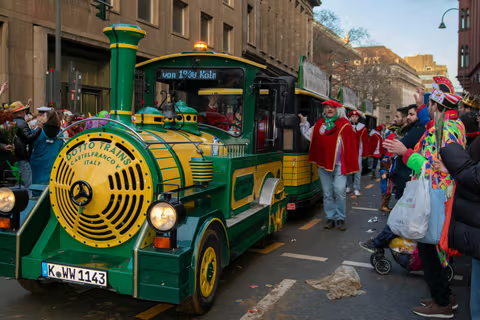
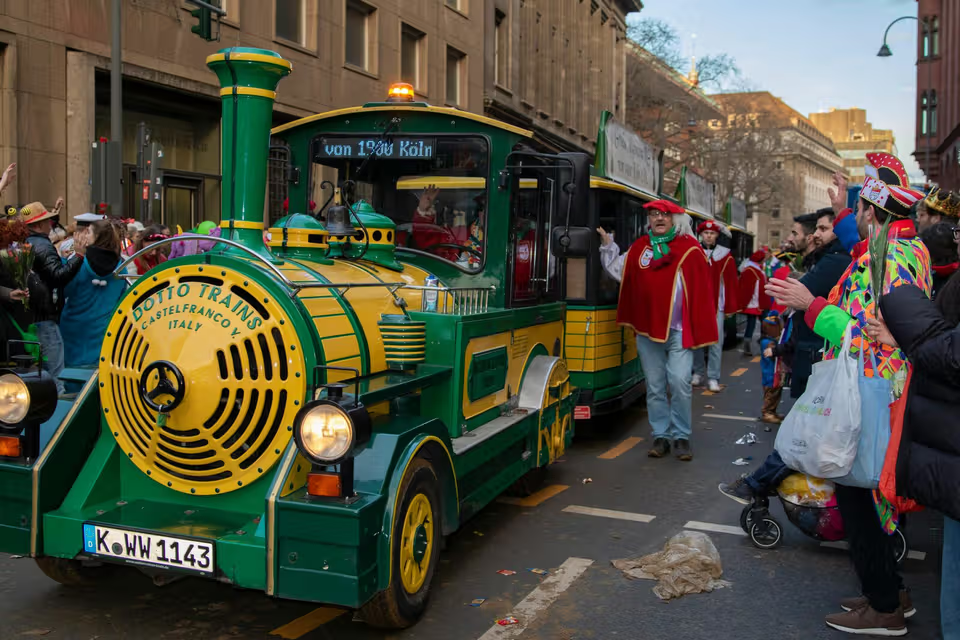
The Rhineland carnival of Cologne, Düsseldorf and Mainz, with Rosenmontag as the centrepiece, in the week before Ash Wednesday.

Berlinale · Feb · Mar

The Berlin International Film Festival · one of the world's great events · fills the capital with premieres and stars at the end of winter.

Spargelzeit · Apr–Jun

The white asparagus season, until 24 June. Every German restaurant publishes its Spargelkarte: a seasonal gastronomic ritual not to be missed.

Bayreuth Festival · Jul–Aug

The Wagnerian temple built by Richard Wagner in 1876, where only his operas are performed. Tickets with a waiting list of years.

Oktoberfest · Sep–Oct

The world's most famous beer festival, in Munich. Best on a weekday and at opening time, with a table reserved months in advance.

German Unity Day · 3 October

Germany celebrates the 1990 reunification. The national holiday rotates its host city each year, with a major civic and cultural programme.

Frankfurt Book Fair · October

The Frankfurter Buchmesse · the world's largest book fair · turns the financial capital into the global publishing capital for a week.

Christmas Markets · Nov–Dec

From 25 November to 23 December. Nuremberg, Dresden, Munich and Cologne: glühwein, Stollen and five centuries of tradition.

CocoVolare recommends

What we would tell a friend

Advice from our travel designers: what we book first, what we avoid, and the details that turn a good trip into an unforgettable one.

01

Book the Reichstag before you pack

Access to the glass dome is free, but online slots sell out weeks ahead and there is no walk-up entry. We lock it in the moment your itinerary is confirmed; if you travel independently, register as soon as you have dates.

02

Neuschwanstein is won at dawn

Leave Munich at 6:30 with a driver and take the first entry of the day, ideally on a Tuesday or Wednesday. By 11:00 the buses arrive and the wait can top three hours; at dawn, the castle and the mist over the Alpsee are yours alone.

03

Plan the German Sunday on Saturday

On Sundays almost all retail closes: shops, supermarkets, neighborhood pharmacies. Do your shopping on Saturday and keep Sunday for museums, biergartens and riverside walks, exactly what the Germans do.

04

Cash in your pocket, always

Bakeries, markets, taxis and regional breweries still run on 'Nur Bar', cash only. Carry 100 to 150 EUR in small bills from day one and spare yourself the surprise of a bill your card cannot pay.

05

In Berlin, Mitte yes; Alexanderplatz no

Stay in Mitte near the Gendarmenmarkt or in Charlottenburg: neighborhoods with real life, cafés and museums on foot. Alexanderplatz looks central on the map, but at night it is a noisy, soulless esplanade.

06

Oktoberfest books out in April

Tent tables sell out six months ahead, and without a table there is no seated service. Go on a weekday before 15:00: same festival, half the crowd, and the locals are still in a good mood.

In motion

Germany, live

Testimonials

What our travelers say

★ ★ ★ ★ ★

“We reached Neuschwanstein at dawn, before the gates had opened. Not a single coach in sight · just the two of us, the castle and the mist rising off the Alpsee. CocoVolare had timed it to the minute. That photograph hangs framed in our living room.”

Mariana Restrepo

Bogotá · Honeymoon · 10 nights

★ ★ ★ ★ ★

“The guide who led us along Bernauer Straße didn't give us a postcard · he told us the story of the division as someone who had lived through it. Berlin stopped being a city of photographs and became a history class you walk. That's not something you find at just any agency.”

Javier Mendoza

Mexico City · Cultural journey · 12 nights

★ ★ ★ ★ ★

“We'd imagined the Rhine cruise as something massive and it turned out to be the opposite: a twelve-cabin ship, a Riesling tasting in a monastery wine cellar and the castles drifting slowly past the window. We arrived in Bacharach at sunset · just us.”

Andrés Lozano

Medellín · Couple's journey · 14 nights

FAQ

Frequently asked questions

Do I need a visa to enter Germany?

Travellers from Colombia, Mexico, Argentina and most of South America do not need a Schengen visa for tourist stays of up to 90 days in any 180-day period. From 2025, visa-exempt nationals must obtain ETIAS authorisation · an online electronic permit costing around EUR 7, valid for three years. Your passport must be valid with at least two blank pages.

What is the best time to visit Germany?

May to October is the prime window: mild weather, long days and open terraces. June delivers days that stretch until 10pm. September adds golden colour and Oktoberfest. December is ideal for the Christmas markets. November and February are the greyest months of the year.

How many days do I need to see Germany?

Five days cover Berlin and Munich with a castle · compact but coherent. Seven to ten days add Dresden and the Black Forest. Fourteen days allow for the Rhine Valley and Hamburg. CocoVolare designs itineraries from five to twenty-one days, tailored to pace, profile and season.

What currency is used in Germany?

The euro (EUR). Visa and Mastercard are accepted at hotels, mid-to-upper restaurants and supermarkets, but many bakeries, small cafés, markets and taxis only accept cash or local debit cards. Carry between EUR 100 and EUR 150 in small notes from the airport.

Is it safe to travel to Germany?

Yes, Germany is one of Europe's safest destinations. Violent crime is low even in popular neighbourhoods. Standard caution applies against pickpockets at the main train stations of Berlin, Frankfurt and Munich. For solo female travellers it is one of the best European destinations.

How much does a trip to Germany cost?

A boutique ten-day trip, excluding international flights, falls in the comfort band between USD 5,150 and USD 8,700 per person in double occupancy. CocoVolare signature itineraries start from USD 2,300 per person for five days. Every quote is adjusted to your actual travel window.

Is it worth visiting Neuschwanstein Castle?

Yes · it is Ludwig II's castle that inspired Disney. The key is to book tickets in advance and, if possible, to go on a Tuesday or Wednesday morning. Without a booking in high season, the queue can be three hours long. CocoVolare coordinates a private driver and priority access to avoid the tour buses.

Is a Rhine cruise worth it?

Yes, with a boutique vessel. Mass-market ships carry 150 to 200 passengers to Rüdesheim at lunchtime. A boutique ship of eight to twenty cabins takes you to Bacharach at dusk, with a private Riesling tasting in a wine cellar. That difference, multiplied over several days, is a different journey entirely.

Is it better to start with Berlin or Munich?

Starting in Berlin provides the contemporary historical context before the Bavarian castles, and that gives the journey more depth. Flight logistics from Latin America and Spain can land in either city at similar cost, so the order is determined by your flight and your interests.

How do you get around within Germany?

Germany has one of the best rail networks in Europe. ICE high-speed trains connect cities centre to centre: Berlin to Munich in four hours. CocoVolare books first class with advance fares and coordinates a private driver for castle days and rural stretches.

Is Germany a good destination for foodies?

Yes · and one of the most underrated. Beyond Bavaria's honest breweries, Germany has more than 320 Michelin-starred restaurants, second only to France and Japan. Baiersbronn in the Black Forest has two adjacent three-star restaurants. Berlin is a laboratory of migrant and auteur cuisines.

What does a CocoVolare trip to Germany include?

Itinerary design from scratch, first-class ICE trains, boutique hotels with breakfast, private driver for castles and rural stretches, expert local guides, signature experiences, site admissions and 24/7 concierge. Every trip is designed to your profile, dates and budget, with a quote within 24 hours.

Germany

No molds, made to measure

Tell us what excites you and we will design a tailor-made proposal in under 24 hours, with a dedicated travel designer.