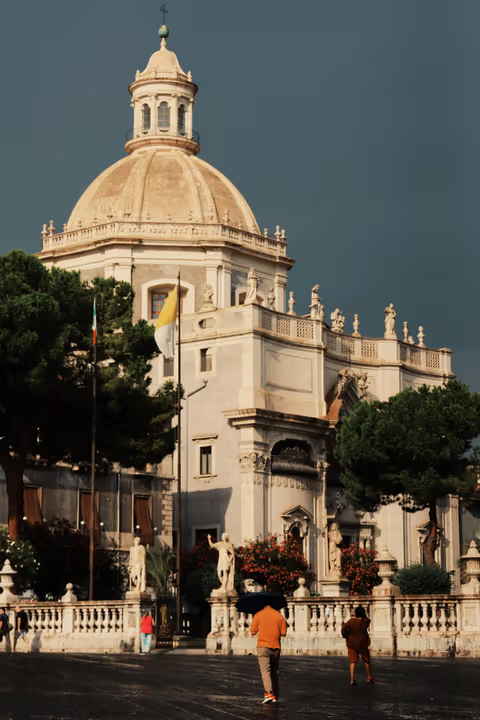
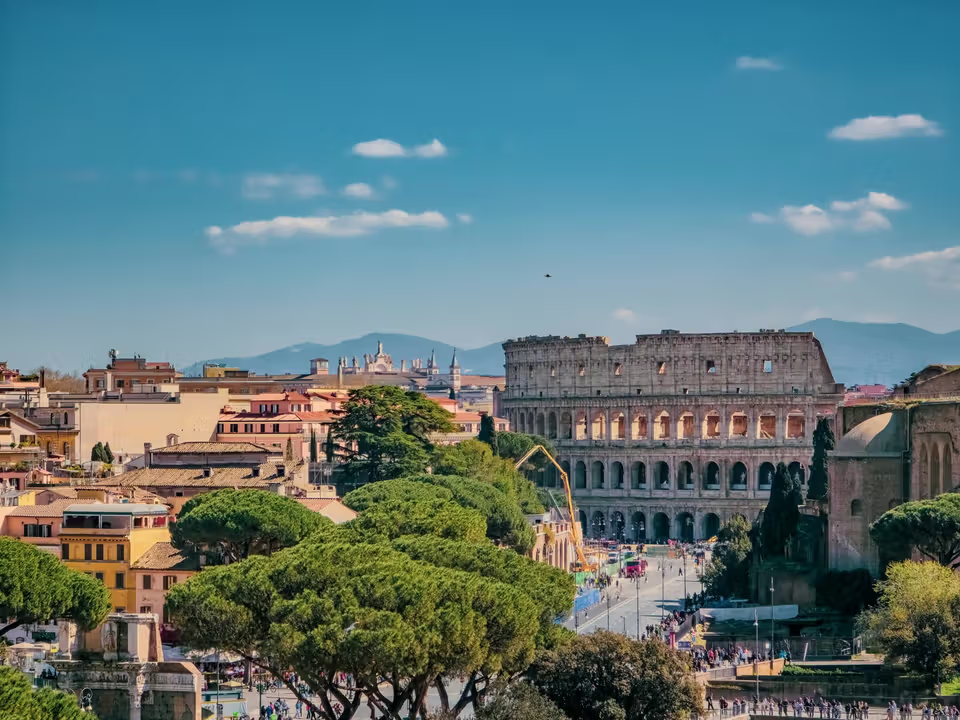
Italy · CocoVolare

Europe · Boutique

Italy

The country you always come back to

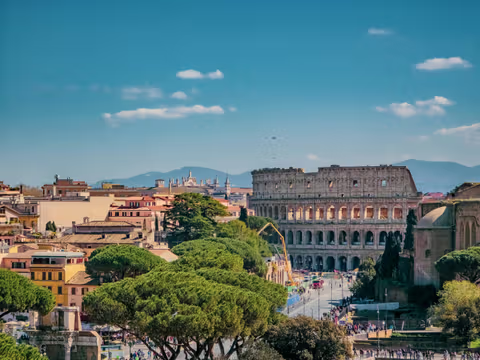
I taly is famous for the obvious and for what you discover late. The obvious: Rome and its Colosseum, Michelangelo's David in Florence, the canals of Venice, Neapolitan pizza, coffee as ritual.

The essence

A country that reads region by region

I taly is famous for the obvious and for what you discover late. The obvious: Rome and its Colosseum, Michelangelo's David in Florence, the canals of Venice, Neapolitan pizza, coffee as ritual. What you discover late is that the country doesn't end there: Matera with its caves inhabited nine thousand years ago, the island of Procida with confetti-coloured houses, the trulli of Alberobello, the cliffs of Cinque Terre. Italy is the combination of three factors that rarely coincide: a visible historical continuity, a hyper-regional cuisine defended with neighbourhood pride, and a human scale that shows in its crafts. It works when someone curates it with discernment, far from autopilot and the sealed package. The right seasonal window, the right hotels, a guide with a PhD in art history. Done that way, Italy delivers the journey you want to repeat.

60 UNESCO sites · the highest number on the planet
20 regions, each with its own cuisine and dialect
300 km/h the Frecciarossa train between the major cities
753 BC founding of Rome, a capital inhabited without pause

Regions

The 5 faces of Italy

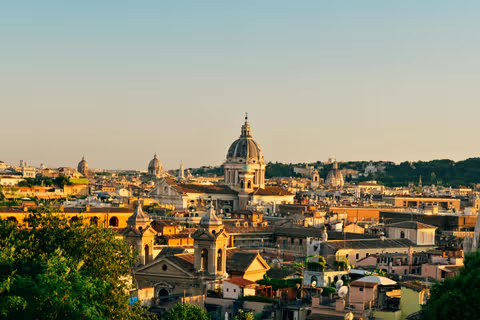
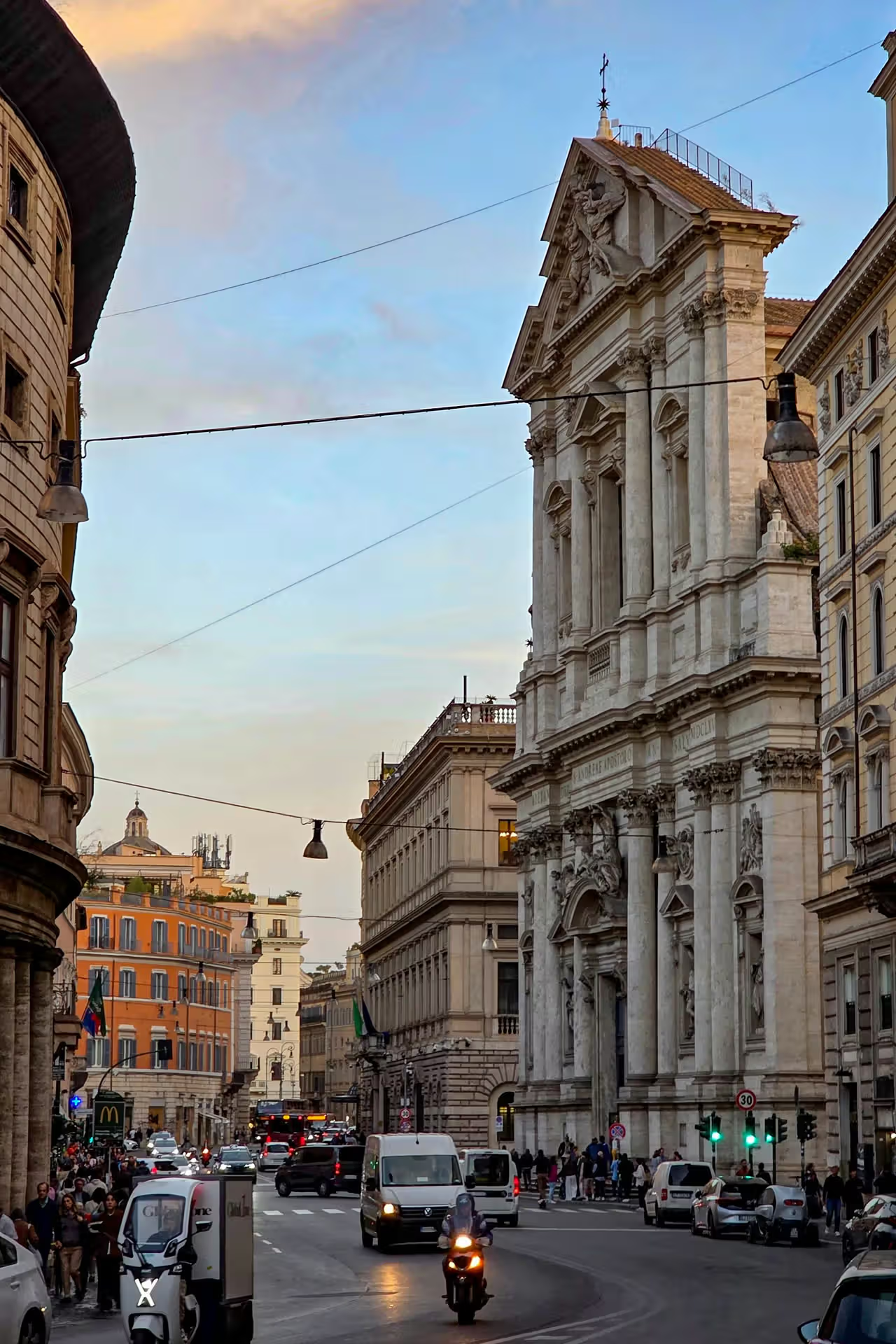
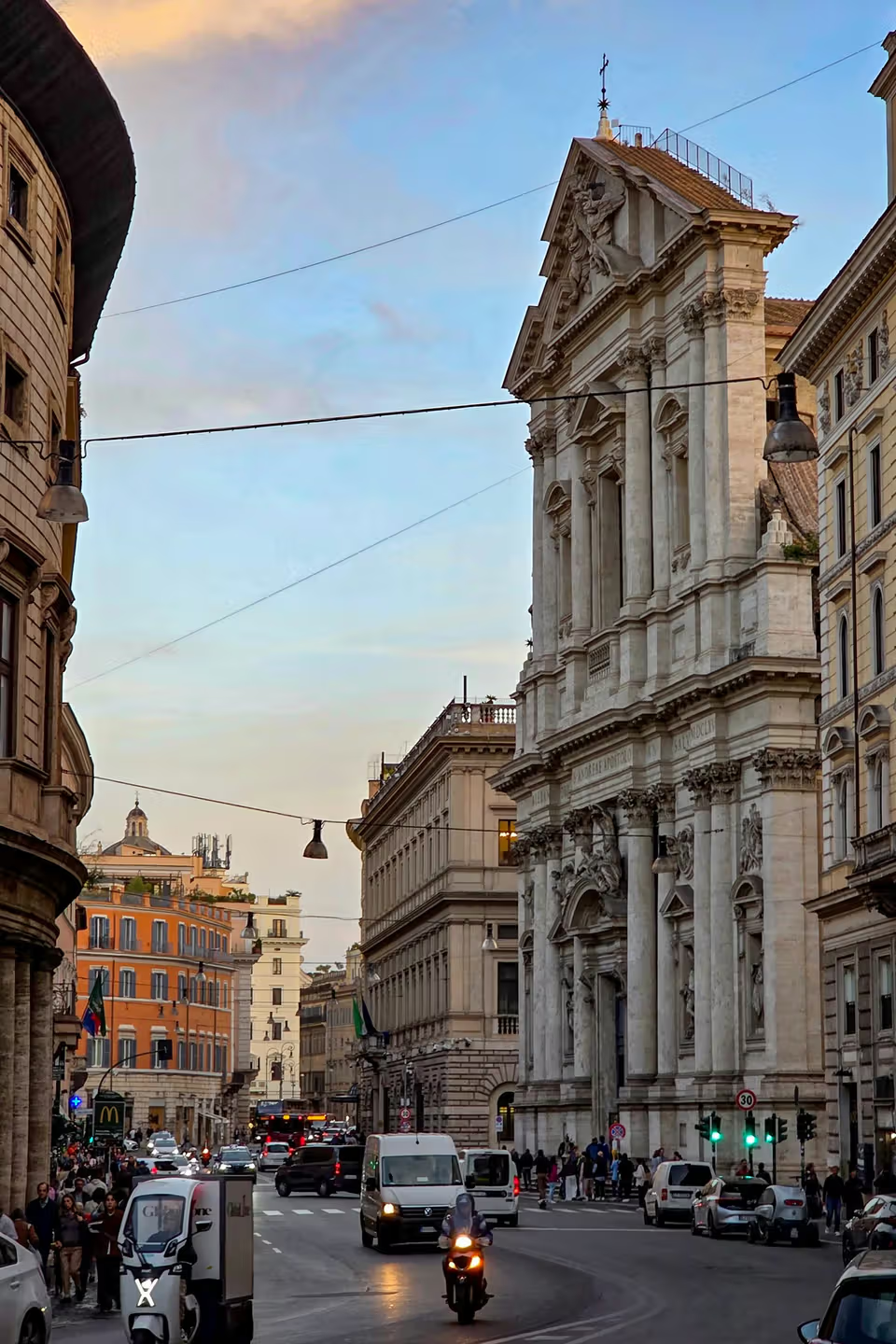
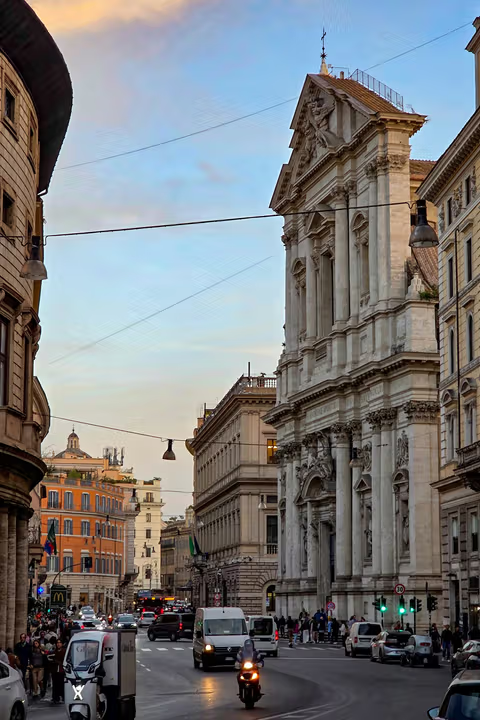
Rome and Lazio · Italy 01 · Capital

3–4 nights

Rome and Lazio

The palimpsest city

Rome is deciphered more than visited. A city where every street carries three millennia: a Roman temple beneath a Baroque church, a Renaissance palace built with stones from the Colosseum. It doesn't yield quickly, but those who give it time never forget it.

Hotels
Hotel de Russie · JK Place Roma · Palazzo Manfredi
Must-see
Colosseum & Forum · Vatican · Borghese Gallery · Trastevere
Best time
April to June · September to October
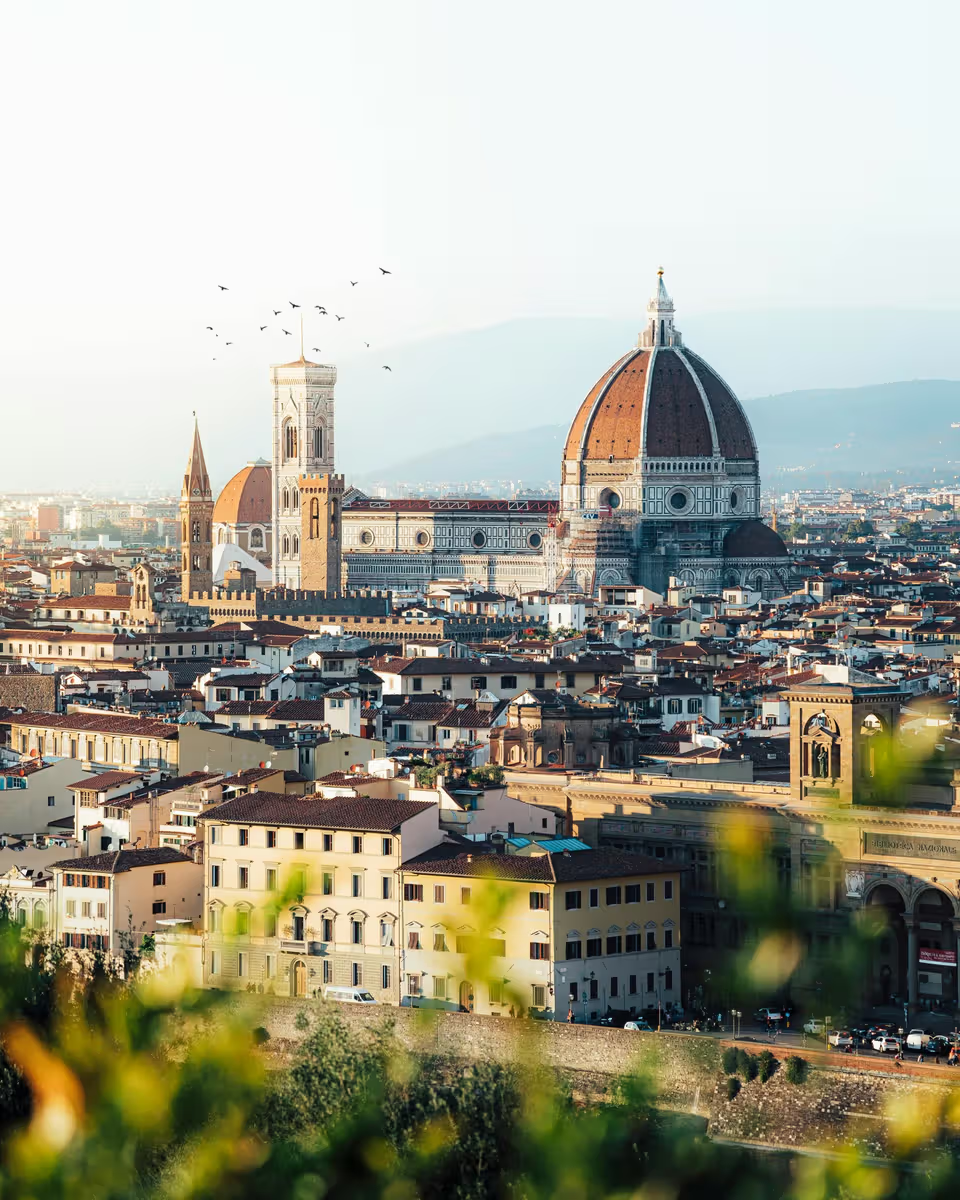
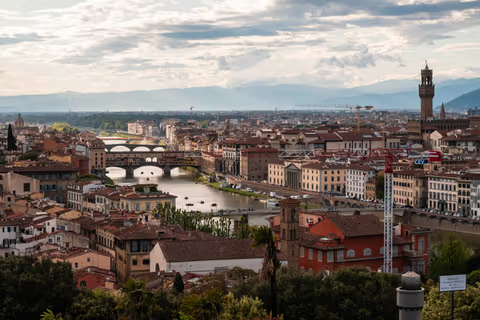
Florence and Tuscany · Italy 02 · Renaissance

3–4 nights

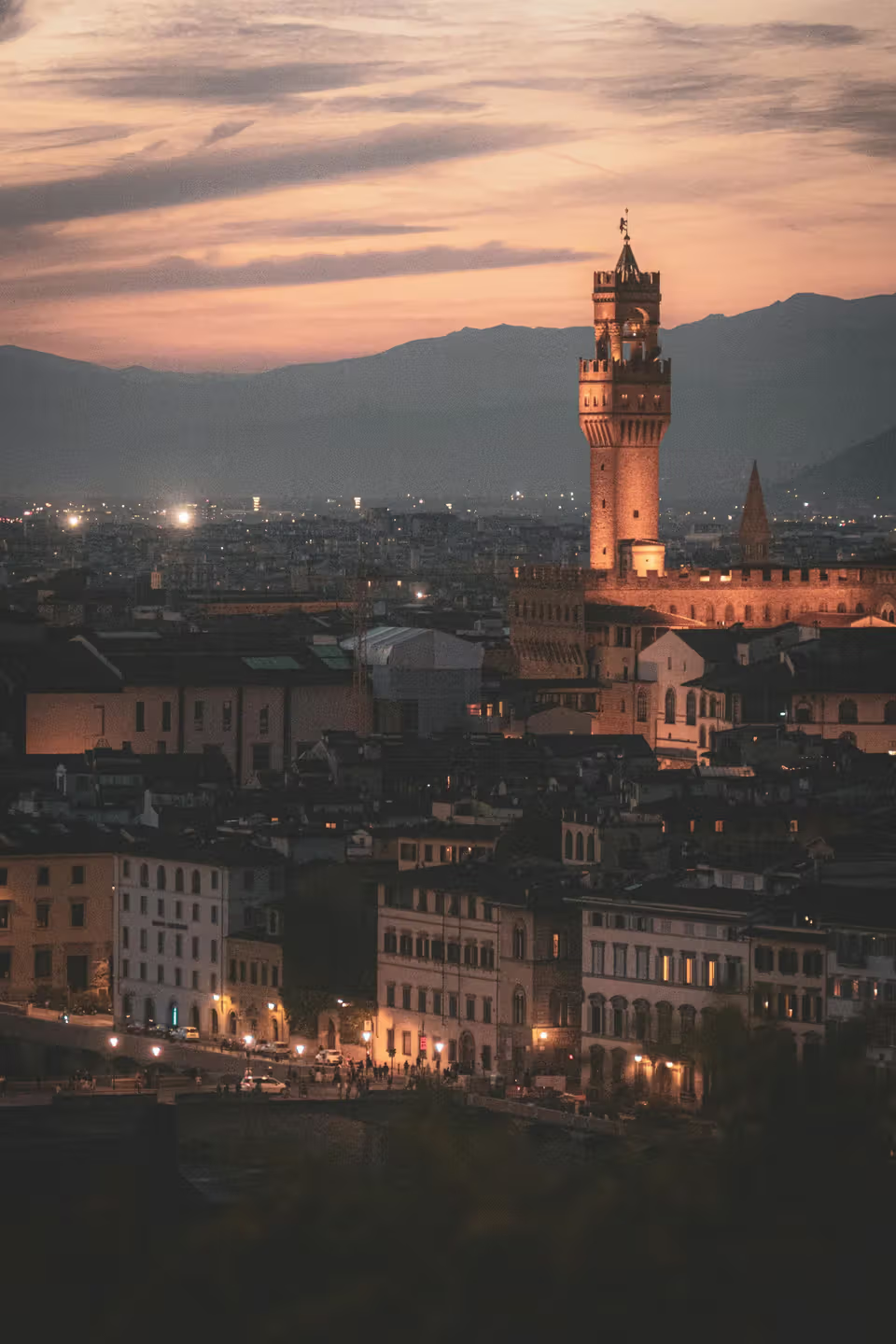
Florence and Tuscany

The Renaissance at human scale

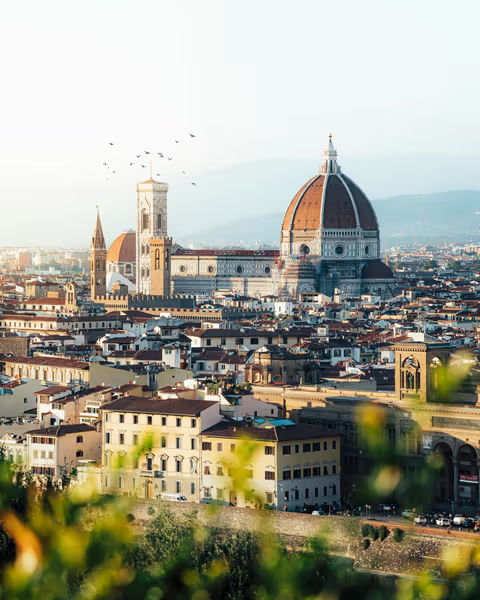
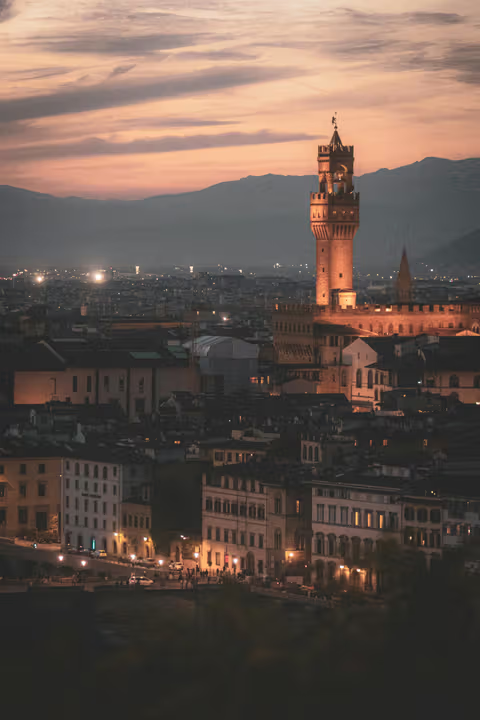
A small city with the world's highest cultural density per square metre. The Renaissance was born here between 1401 and 1500. You can cover it on foot in a day and need three lifetimes to understand it. Around it, Tuscany of cypresses, vineyards and agriturismos.

Hotels
Villa Cora · Portrait Firenze · Borgo San Felice
Must-see
Uffizi · the David · Brunelleschi's dome · Chianti
Best time
April to June · September to October
Venice and the Veneto · Italy 03 · Water

2–3 nights

Venice and the Veneto

The impossibility on the water

Venice is navigated more than understood. A merchant republic that dominated the Mediterranean for six centuries: 118 islands, 400 bridges, no cars. Those who walk with a map get lost; those who walk without one find it. Nearby, Verona and the lagoon.

Hotels
Aman Venice · Gritti Palace · Hotel Cipriani
Must-see
St Mark's Square · Doge's Palace · gondola · Burano
Best time
February to May · late September to November
The South and the Amalfi Coast · Italy 04 · South

3–5 nights

The South and the Amalfi Coast

The Mediterranean in its purest form

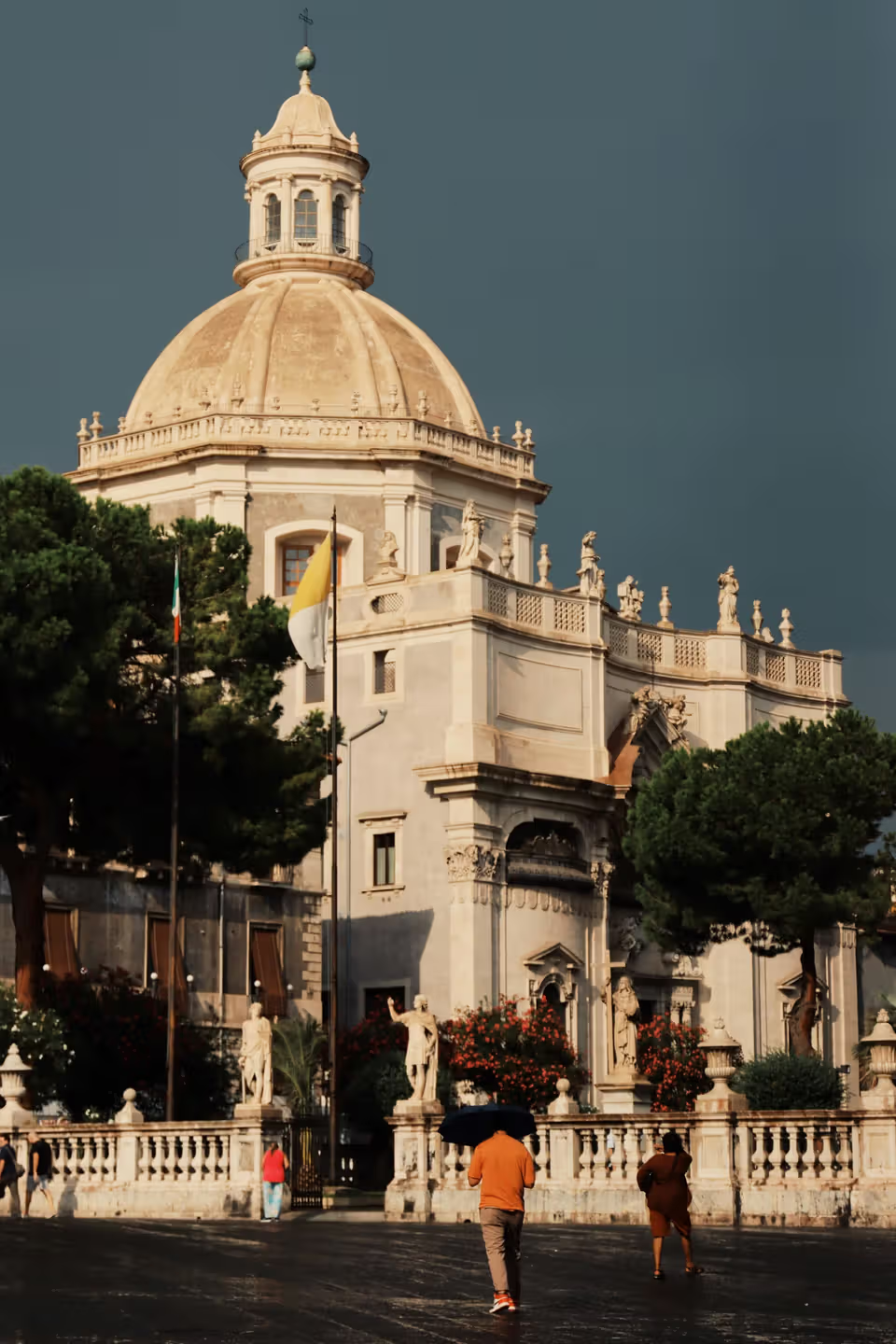
Naples and its original pizza, Pompeii frozen by Vesuvius, the Amalfi Coast between Positano, Amalfi and Ravello, Capri and the Faraglioni. Further south, Sicily with its five cultural layers and Puglia with the trulli of Alberobello.

Hotels
Le Sirenuse · Belmond Caruso · Borgo Egnazia
Must-see
Pompeii · Positano · Ravello · Etna · Matera
Best time
May to June · September to October
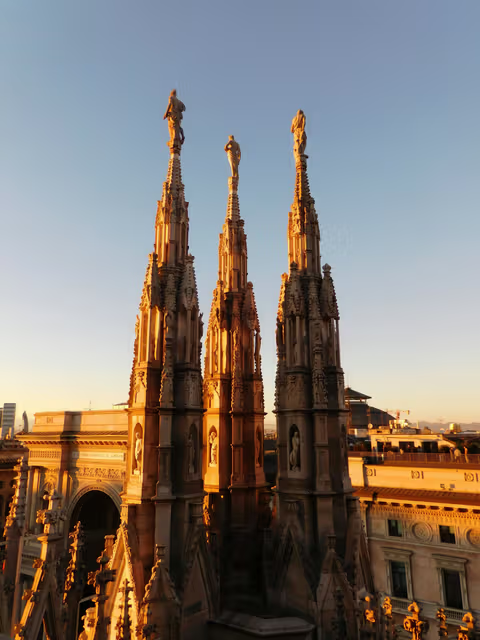
The North and the Lakes · Italy 05 · North

2–4 nights

The North and the Lakes

Fashion, lakes and Alpine peaks

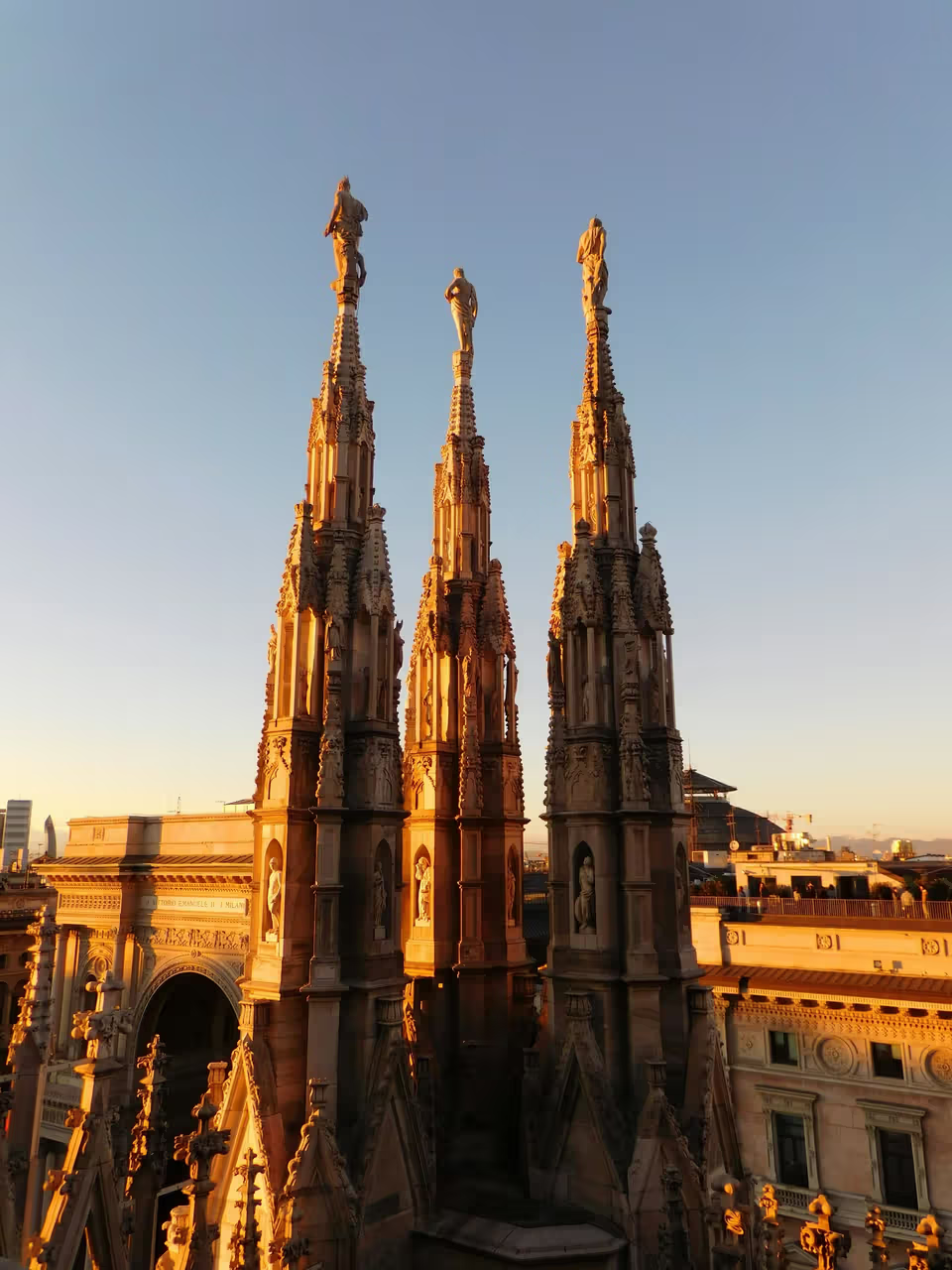
Milan, the economic and fashion capital, with its marble Duomo and Leonardo's Last Supper. Lake Como and Lake Garda with historic villas and ferries between villages. And the Dolomites · the jewel of the Italian Alps · for skiing and hiking.

Hotels
Bulgari Milano · Grand Hotel Tremezzo · Adler Lodge
Must-see
Duomo · Last Supper · Lake Como · Cortina
Best time
May to October · December to March in the mountains

Signature experiences

Moments to remember

Private access, guides born in the place and a rhythm designed around you.

Practical

The essentials before you travel

Information verified by our travel designers, updated for 2026.

Money

Currency
Euro (EUR). Notes from €5 to €200, coins from 1 cent to €2.
Cards
Visa and Mastercard accepted at virtually all hotels, restaurants and shops. American Express has more limited coverage.
Cash
Carry between €100 and €200 per person for markets, small taxis, tips and village trattorias.
ATMs
Use Italian bank ATMs (Intesa Sanpaolo, UniCredit, BNL). Avoid Euronet and Travelex: high fees.
Contactless
Apple Pay and Google Pay work excellently in urban areas. Wise or Revolut cards offer the best exchange rates.
Coperto
The cover charge (€2 to €4 per person) is already on the bill. An additional tip is optional, 5–10% if the service was good.

Visa

Latin America
Colombians, Mexicans, Argentinians, Chileans and Peruvians do not require a visa for tourist stays of up to 90 days in the Schengen area.
ETIAS
When it comes into force, the ETIAS authorisation will be required · a quick online process before travel. Verify before you go.
Passport
Valid for at least three months beyond your planned departure from the Schengen area.
Spain
National identity document or passport. No additional immigration formality within Schengen.
Documents
First accommodation voucher, international insurance and return ticket to hand at immigration control.

Health

Vaccinations
Italy does not require compulsory vaccinations for travellers from Latin America or Spain. An up-to-date basic vaccination calendar is recommended.
Insurance
Not legally mandatory for visa-exempt nationalities, but CocoVolare always recommends it with international medical coverage.
Healthcare system
Among the best in the world. Public hospitals treat emergencies; insurance allows access to private clinics.
Pharmacies
Identified by the illuminated green cross. The pharmacist advises on basic medicines. There is a 24-hour on-call pharmacy in each neighbourhood.
Water
Tap water is safe to drink throughout the country. Rome has public drinking fountains (nasoni) with fresh water.

Transport

High-speed train
The Frecciarossa and Italo connect Rome, Florence, Venice, Milan and Naples at 300 km/h. Booking 60 days ahead gives the best fares.
Regional train
Slower and cheaper. Always validate your ticket in the yellow machines before boarding: automatic €50 fine otherwise.
Car
Ideal for Tuscany, Umbria, Puglia and Sicily. Watch out for ZTL zones (limited traffic areas) in historic centres: camera-enforced fines.
Domestic flights
ITA Airways, Ryanair and Easyjet connect north and south. Useful for long legs such as Milan–Catania.
Taxis and apps
White metered taxis. FreeNow and ItTaxi in cities. Uber operates in a limited capacity in Milan and Rome only.

Language

Official language
Italian. Modern Italian is based on the 14th-century Tuscan fixed by Dante, Petrarch and Boccaccio.
English
Functional in hotels, city restaurants and tourist sites. More limited in small towns in the south.
Spanish
Surprisingly well understood thanks to shared Latin roots. Speaking slowly helps.
Useful vocabulary
Buongiorno (good morning) · grazie (thank you) · permesso (excuse me) · il conto (the bill) · scusi (sorry).
Our approach
CocoVolare prioritises guides fluent in English and, for art and archaeology, guides with a PhD in art history.

Etiquette

Coffee
A cappuccino is only for breakfast. After lunch, order an espresso or macchiato. Ordering it later is a giveaway you're a tourist.
At table
Pasta is not cut with a knife. Parmesan is not requested on fish or seafood pasta. Bread is for the antipasti and the scarpetta.
Meal times
Lunch runs from 12:30 to 14:30 and dinner from 19:30 to 22:30. Arriving at 6:30pm for dinner marks you as a tourist.
Churches
Shoulders and knees covered for both men and women. St Peter's and Florence's Duomo enforce this strictly.
Dress
Italians dress with care. Avoid shorts and flip-flops away from the beach. Do not walk in swimwear through coastal historic centres.

Climate

When to travel and why

Italy is best experienced from mid-April to June and from September to mid-October, in the shoulder seasons. The chart shows all twelve months with estimated cost, temperature and iconic festivals. Marked in gold, the windows we recommend experiencing Italy with us .

Most recommended month May · optimal climate, golden light, museums without absurd queues
Best value vs. experience September · harvest season and softer prices
Month to avoid August · extreme heat and trattorias closed

The climate, month by month · Rome

Reference city: Rome Best season Temperature °C Relative rainfall
10° 20° 30° Jan: 3° – 12°C · 67 mm 12° Jan: 67 mm Jan Feb: 4° – 13°C · 73 mm 13° Feb: 73 mm Feb Mar: 6° – 16°C · 58 mm 16° Mar: 58 mm Mar Apr: 8° – 18°C · 81 mm 18° Apr: 81 mm Apr May: 12° – 23°C · 53 mm 23° May: 53 mm May Jun: 16° – 28°C · 34 mm 28° Jun: 34 mm Jun Jul: 18° – 31°C · 19 mm 31° Jul: 19 mm Jul Aug: 19° – 31°C · 37 mm 31° Aug: 37 mm Aug Sep: 16° – 27°C · 73 mm 27° Sep: 73 mm Sep Oct: 12° – 22°C · 113 mm 22° Oct: 113 mm Oct Nov: 8° – 16°C · 115 mm 16° Nov: 115 mm Nov Dec: 5° – 13°C · 81 mm 13° Dec: 81 mm Dec

Highlights of the year: Feb · Venice CarnivalApr · Easter in RomeJul · Palio di SienaSep · Tuscan harvestOct · Alba truffles

From April to June and September to October, Italy is in its best light: terraces, harvest season and shorter queues. August is hot in the cities and half the country closes for holidays.

When to go · season & budget

Seasons & estimated cost CocoVolare recommends High Mid Low
Jan: Low season · ≈$560 per person/day Jan Feb: Low season · ≈$575 per person/day Feb Mar: Mid season · ≈$665 per person/day Mar Apr: High season · ≈$805 per person/day $805Apr May: Mid season · ≈$770 per person/day $770May Jun: High season · ≈$875 per person/day $875Jun Jul: High season · ≈$945 per person/day Jul Aug: High season · ≈$945 per person/day Aug Sep: Mid season · ≈$770 per person/day $770Sep Oct: Mid season · ≈$665 per person/day $665Oct Nov: Low season · ≈$595 per person/day Nov Dec: Mid season · ≈$735 per person/day Dec

In our recommended dates, the estimated cost ranges from $665 to $875 per person/day (Premium level, international flights not included).

Investment

What it costs, no fine print

Italy charges for what the rest of the world tries to imitate: the table, the light, the art and the way of living. The budget stretches when neighbourhoods are chosen well and bookings are made early; the big price swings come from the season, not the country.

Experience levels · guide budget

Euro (EUR) · 1 USD ≈ 0.92 EUR USD · per person/day
Boutique essential Boutique essential: $400 USD · per person/day $400 Boutique hotels in historic centres, Frecciarossa trains and trattorias where the locals actually eat. Premium Premium: $700 USD · per person/day $700 Five-star hotels with a view, reserved access to the Uffizi and the Vatican and one signature experience a day. Signature Signature: $1,200 USD · per person/day $1,200 Suites at the Hotel de Russie or Tuscan villas, a private driver, Michelin tables and after-hours visits.
Trattoria dinner with wine USD 50–90Reserved entry to the Uffizi or Vatican USD 30–45Frecciarossa train Rome–Florence (Business) USD 60–90Espresso standing at the bar USD 1.50Aperitivo with a spritz USD 12–18Private driver through Tuscany, full day USD 450–650

Indicative 2026 values per person, excluding international flights. Every CocoVolare quote is tailored to season, hotels and travel pace.

Signature itineraries

Six Italies · choose yours

Zero templates: every itinerary is rewritten 100% to your measure. Prices per person in double occupancy, boutique category, international flights not included.

5 days · 4 nights · Classic triangle

Italy Essence

Rome → Florence → Venice

The classic triangle · compact but perfectly paced

  • The Colosseum and Roman Forum with a PhD guide in Roman history in golden light
  • Early Vatican access before opening time · the Sistine Chapel without groups
  • The Uffizi Gallery and Brunelleschi's dome in Florence

FromUSD 3,500

7 days · 6 nights · Rome, Tuscany and Venice

Balanced Italy

Rome → Chianti → Florence → Venice

The classic triangle with a breath of rural Tuscany

  • Deep Rome: the Colosseum, Vatican, Borghese Gallery and Forum with an archaeologist
  • Private Chianti Classico tasting at a historic cantina with a sommelier
  • Florence with the Uffizi and a leather workshop in the Oltrarno

FromUSD 5,200

10 days · 9 nights · Five regions

Deep Italy

Rome → Tuscany → Amalfi Coast → Venice

Classical civilisation, Mediterranean nature and water · with room to breathe

  • Three days in Rome: the Colosseum, Vatican, Borghese Gallery and a palazzo dinner
  • Brunello tasting in Montalcino and the Val d'Orcia with Pienza and Montepulciano
  • A private sailing boat along the Amalfi Coast and the Terrace of Infinity at Ravello

FromUSD 8,500

14 days · 13 nights · North to south

Extended Italy

Rome → Tuscany → Amalfi → Puglia or Sicily → Venice

The whole country: classical civilisation, Mediterranean coast and the deep south

  • The deep journey: Rome, Tuscany, the Amalfi Coast and Venice
  • Puglia with masserias, the trulli of Alberobello and Baroque Lecce
  • Or Sicily with Etna, Syracuse and Ortigia with an archaeologist, and Baroque Noto

FromUSD 13,000

12 days · 11 nights · Romance

Italian Honeymoon

Venice → Tuscany → Amalfi Coast

Beginning the rest of your life among canals, vineyards and the Tyrrhenian Sea

  • Suite upgrade at every hotel, with views of the Grand Canal or the sea
  • Private gondola at dusk through the inner canals and an aperitivo on a bragozzo
  • Tuscan agriturismo with an olive oil treatment spa

FromUSD 11,000

8 days · 7 nights · Gastronomy

Italian Flavours Route

Bologna → Tuscany → Rome → Naples

Twenty regional cuisines · table by table

  • Emilia-Romagna cheese and charcuterie tour: parmigiano, prosciutto, balsamic
  • Brunello tasting at a historic cellar and olive oil at a frantoio
  • Gastronomic tour of Testaccio in Rome with neighbourhood Roman cooking

FromUSD 6,200

None of them fits? We design your own. WhatsApp →

Gastronomy

The flavors of Italy

Italian cuisine doesn't exist as a single thing · twenty regional cuisines exist, sharing some techniques and differing in everything else. From Roman carbonara to Bolognese ragù, from Ligurian pesto to Neapolitan pizza. Here, produce, season and simplicity rule.

Roscioli

Centro Storico · Rome

An exceptional salumeria, restaurant and wine cellar. Italy's finest charcuterie and the four sacred Roman pastas in their definitive form.

Osteria Francescana

Modena · Emilia-Romagna

Massimo Bottura's three Michelin stars. Italy doing what it does best, unapologetically. One of the great tables of the world.

Enoteca Pinchiorri

Centro Storico · Florence

Three Michelin stars and one of Europe's most legendary wine cellars, housed in a Florentine Renaissance palace.

Quadri

St Mark's Square · Venice

The Alajmo Group's Michelin-starred restaurant facing the basilica, in the historic café of 1775.

Da Michele

Forcella · Naples

The historic Neapolitan pizzeria from Eat, Pray, Love. Only marinara and margherita, fermented dough and an oven at 485 degrees.

Trattoria Sostanza

Centro · Florence

Open since 1869. Bistecca alla fiorentina from Chianina beef and the iconic pollo al burro. The essential Tuscan trattoria.

Calendar

Dates worth traveling for

A well-chosen date turns a trip into a memory. We design your itinerary around the moment that matters most to you.

Venice Carnival · February

Ten days of handcrafted masks, dances in palazzo and gondola processions across the lagoon, in the full atmosphere of the Settecento.

Easter in Rome · April

Holy Week in Rome with papal celebrations at the Vatican. The art cities in their finest spring light.

Infiorata of Spello · June

For Corpus Christi, entire streets of Spello and Genzano are carpeted with intricate flower-petal designs. A night of labour, a day of wonder.

Palio di Siena · 2 Jul · 16 Aug

The bareback horse race around the Piazza del Campo between the city's rival neighbourhoods. An emotional intensity unmatched anywhere in Europe.

Opera at the Arena di Verona · Jun–Sep

The open-air opera season at Verona's Roman amphitheatre, and at the Baths of Caracalla in Rome. A summer of music.

Grape harvest in Tuscany · Sep–Oct

The vendemmia in Tuscany, Piedmont and the Veneto. Participation is possible at many estates. The finest gastronomic season of the year.

White truffle of Alba · Oct–Dec

The Fiera del Tartufo Bianco in Alba, Piedmont: a worldwide white truffle auction and gastronomy of the highest order.

Alpine Christmas markets · December

The presepi of Rome, the Christmas markets of Bolzano and Trento, and guaranteed snow in the Dolomites.

CocoVolare recommends

What we would tell a friend

Advice from our travel designers: what we book first, what we avoid, and the details that turn a good trip into an unforgettable one.

01

Uffizi and Vatican: reserved entry or nothing

Timed tickets sell out weeks ahead in high season, and the unreserved queue can top three hours in the sun. We lock them in the moment your itinerary is confirmed, ideally first thing in the morning or on a night visit.

02

Coffee is drunk standing, at a third of the price

The same espresso costs EUR 1.50 at the bar and EUR 5 seated on a famous square: not a scam, just the price of the scenery. Do as the Italians do, caffè al banco in the morning, and save the table with a view for aperitivo hour.

03

August is for the coast, not the cities

Around Ferragosto, Rome and Florence empty of locals and fill with heat, and many neighbourhood trattorias close for the holidays. If August is your only window, design the trip towards the Amalfi Coast, Puglia or the northern lakes.

04

Where the menu has photos, you don't go in

The golden rule of the Italian table: a short menu, written daily and in Italian. Dine from 8pm, order the house wine without fear, and distrust any restaurant with a host hunting tourists at the door.

05

The train beats the car between cities

Rome–Florence in ninety minutes, Florence–Venice in two hours: the Frecciarossa arrives centre to centre with no tolls or parking. Save the chauffeured car for what truly needs it, the Tuscan hills, Chianti and the Amalfi Coast.

06

ZTL: the fine that reaches Colombia months later

Historic centres are camera-monitored limited-traffic zones, and every improper entry generates a fine the rental company forwards to your home with a surcharge. If you drive, park outside the walls; better still, don't drive in the cities at all.

In motion

Italy, live

Testimonials

What our travelers say

★ ★ ★ ★ ★

“We entered the Sistine Chapel before opening time, almost alone. The guide let us stand in silence looking up at the ceiling for twenty minutes. Then we saw the queues outside and understood what CocoVolare had made possible.”

Mariana Restrepo

Bogotá · Honeymoon · 12 nights

★ ★ ★ ★ ★

“Our Uffizi guide had a PhD in art history. He didn't recite dates · he taught us how to look at a Botticelli. We left the museum transformed, not overwhelmed. That difference changed everything.”

Javier Mendoza

Mexico City · Couple's journey · 10 nights

★ ★ ★ ★ ★

“I thought the Rome–Florence–Venice triangle would feel predictable. With the Frecciarossa between cities, the right hotels and a gondola at dusk through the inner canals, it was anything but.”

Andrés Lozano

Medellín · Cultural journey · 7 nights

FAQ

Frequently asked questions

Do I need a visa to enter Italy?

Travellers from Colombia, Mexico, Argentina, Chile, Peru and most of South America do not need a visa for tourist stays of up to 90 days in the Schengen area. When it comes into force, the ETIAS authorisation will be required · a quick online process before travel. Your passport must have at least three months of validity remaining beyond your planned departure from Schengen. Immigration rules change: verify before you travel.

What is the best time to visit Italy?

The best window runs from mid-April to late June and from September to mid-October: mild temperatures, long days, golden light and fewer crowds than in July and August. March and November are the second-best option, ideal for Rome and Florence. August is the month to avoid: Italians take their holidays, many trattorias close and the heat in the south exceeds 38 degrees.

How many days do I need to see Italy?

Five days cover the Rome–Florence–Venice triangle in a compact but coherent way. Seven to ten days add Tuscany and the Amalfi Coast. Fourteen days allow for Sicily or Puglia. CocoVolare designs itineraries from five to twenty-one days depending on pace, profile and season. For slow travel, we recommend ten days concentrated in two regions.

Is the Frecciarossa train worth it between cities?

Yes. The Frecciarossa connects Rome, Florence, Venice, Milan and Naples at 300 km/h, city-centre to city-centre, with no airport hassle. Rome to Florence in ninety minutes. Booking sixty days in advance brings fares from €19. Italo is the private competitor with similar quality. CocoVolare manages tickets in Executive class.

What currency is used in Italy?

The euro (EUR). Visa and Mastercard are accepted at virtually all hotels, restaurants and shops; American Express has more limited coverage. It is worth carrying between €100 and €200 in cash per person for markets, small taxis and village trattorias. Use Italian bank ATMs · Intesa Sanpaolo or UniCredit · and avoid Euronet and Travelex.

Is it safe to travel to Italy?

Yes, Italy is a safe country for tourists. The real risk is pickpocketing in busy areas of Rome, Milan, Florence, Venice and Naples, especially on the metro and trams. Violent robbery is rare and the homicide rate is very low. CocoVolare prioritises boutique hotels with in-room safes, night staff and secure locations, as well as private transfers.

How much does a boutique trip to Italy cost?

The realistic minimum for a ten-day boutique trip, excluding international flights, is around USD 3,500 per person in double occupancy: four-star boutique hotels at negotiated rates, the Frecciarossa between cities and private guides by session. CocoVolare signature itineraries start from USD 3,500 per person for five days. Every quote is adjusted to your actual travel window.

Do I need vaccinations to travel to Italy?

Italy does not require any compulsory vaccinations for travellers from Latin America or Spain. It is recommended to be up to date with the standard calendar: tetanus, diphtheria, hepatitis A and B. The COVID-19 vaccine is no longer an entry requirement. Travel insurance is not legally mandatory for visa-exempt nationalities, but CocoVolare always recommends it with international medical coverage of at least €100,000.

Why do I need to book museums so far in advance?

The Uffizi, the Borghese Gallery and Leonardo's Last Supper fill their quotas weeks in advance: the Borghese limits entry to two-hour sessions and the Last Supper admits only thirty people every fifteen minutes. CocoVolare books four to six months ahead and coordinates early-access entry before opening time · the only real way to avoid the crowds.

Is Italy a good destination for foodies?

Yes · among the best in the world. Italian cuisine does not exist in the singular: twenty regional cuisines exist, one per region, and within each region one per valley. Carbonara only in Rome, ragù in Bologna, pesto in Liguria, pizza in Naples. CocoVolare designs flavour routes with parmigiano producers, Brunello tastings and pizza tours with real pizzaioli.

Can I travel to Italy with children?

Yes, with a tailored design. For families it is better to do fewer museums per day and more storytelling: a guide who narrates the Colosseum as a gladiator tale, a Neapolitan pizza class in a wood-fired oven, a treasure hunt through the Uffizi. We recommend boutique apartments with a kitchen, Tuscan estates with farm animals and gelato as a daily ritual.

How do I avoid pickpocketing in Italian cities?

Pickpocketing is the most common incident for tourists in Rome, Milan, Florence, Venice and Naples, especially on the metro and trams. Keep your phone away, your bag closed in front of you in crowded areas and nothing of value in back pockets. CocoVolare uses private transfers that reduce time on public transport and selects hotels in safe areas.

What does a CocoVolare trip to Italy include?

Itinerary design from scratch, the Frecciarossa train and domestic flights where applicable, boutique hotels with breakfast, private transfers with a driver and water taxi in Venice, expert local guides and PhD art history guides, early museum access, signature experiences, site admissions and 24/7 concierge. Every trip is designed from scratch to your profile.

Italy

No molds, made to measure

Tell us what excites you and we will design a tailor-made proposal in under 24 hours, with a dedicated travel designer.