Asia · Boutique

Japan

Entering a different operating system

A rriving in Japan is like stepping into a different operating system. The language you expected; the surprise is the invisible order. What sets it apart from other Asian destinations is the care, more than the list of monuments.

The essence

A country best read slowly

A rriving in Japan is like stepping into a different operating system. The language you expected; the surprise is the invisible order. What sets it apart from other Asian destinations is the care, more than the list of monuments. A driver who cleans the taxi tyres between passengers. A cook who apologises because his tempura took forty seconds longer than intended. A ryokan where the bathroom slippers are different from the hallway ones. For a CocoVolare traveller, that level of attention is the standard of the house. Japan is a curated destination: it works when someone shapes it with discernment, far from the sealed package. The right seasonal window, the right cities in the right order, the right ryokan and a private bilingual guide who opens doors that never appear in search engines.

6,800+ islands · four main inhabited ones
320 km/h the Shinkansen bullet train, running since 1964
25 UNESCO World Heritage Sites
84+ years life expectancy · among the highest on earth

Regions

The 5 faces of Japan

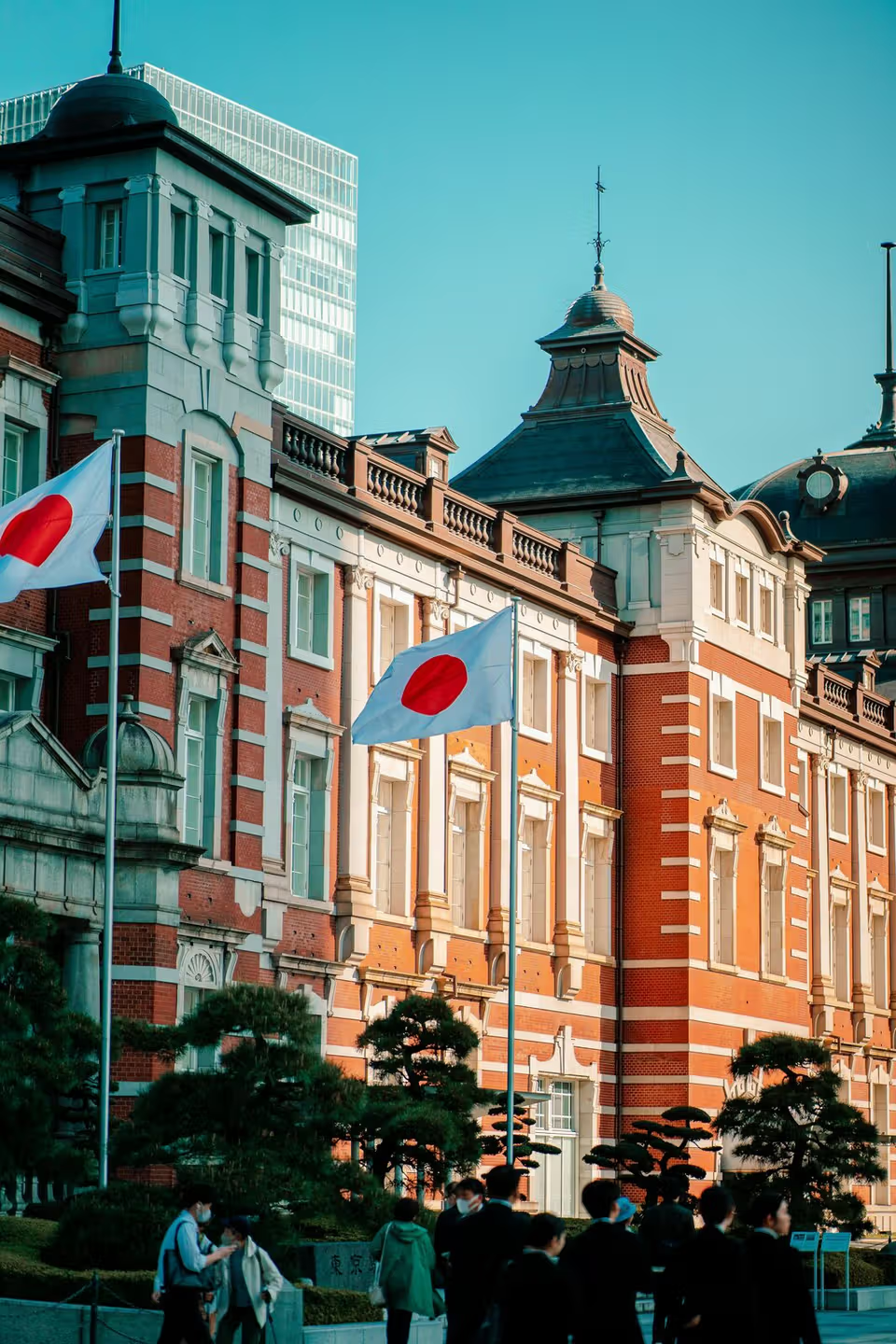
Tokyo · Japan 01 · Capital

4–5 nights

Tokyo

Twenty-three cities stitched together by trains

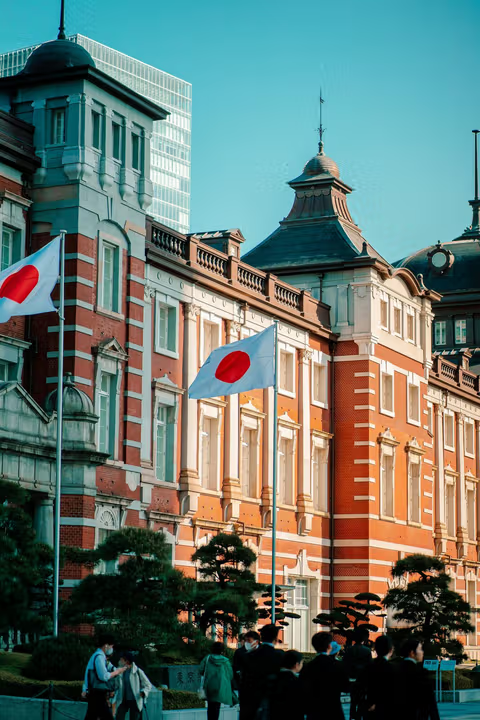
Tokyo is twenty-three cities stitched together by trains that arrive to the second. Thirty-seven million people who move through it without raising their voice on the carriage. Contemporary art, world-class gastronomy and neighbourhoods that each feel like a small country.

Hotels
Aman Tokyo · Hoshinoya Tokyo · Park Hyatt
Must-see
Sensō-ji · Meiji Shrine · Shibuya Sky
Best time
March to May · October to November
Kyoto · Japan 02 · Imperial

3–5 nights

Kyoto

A thousand years as the imperial capital

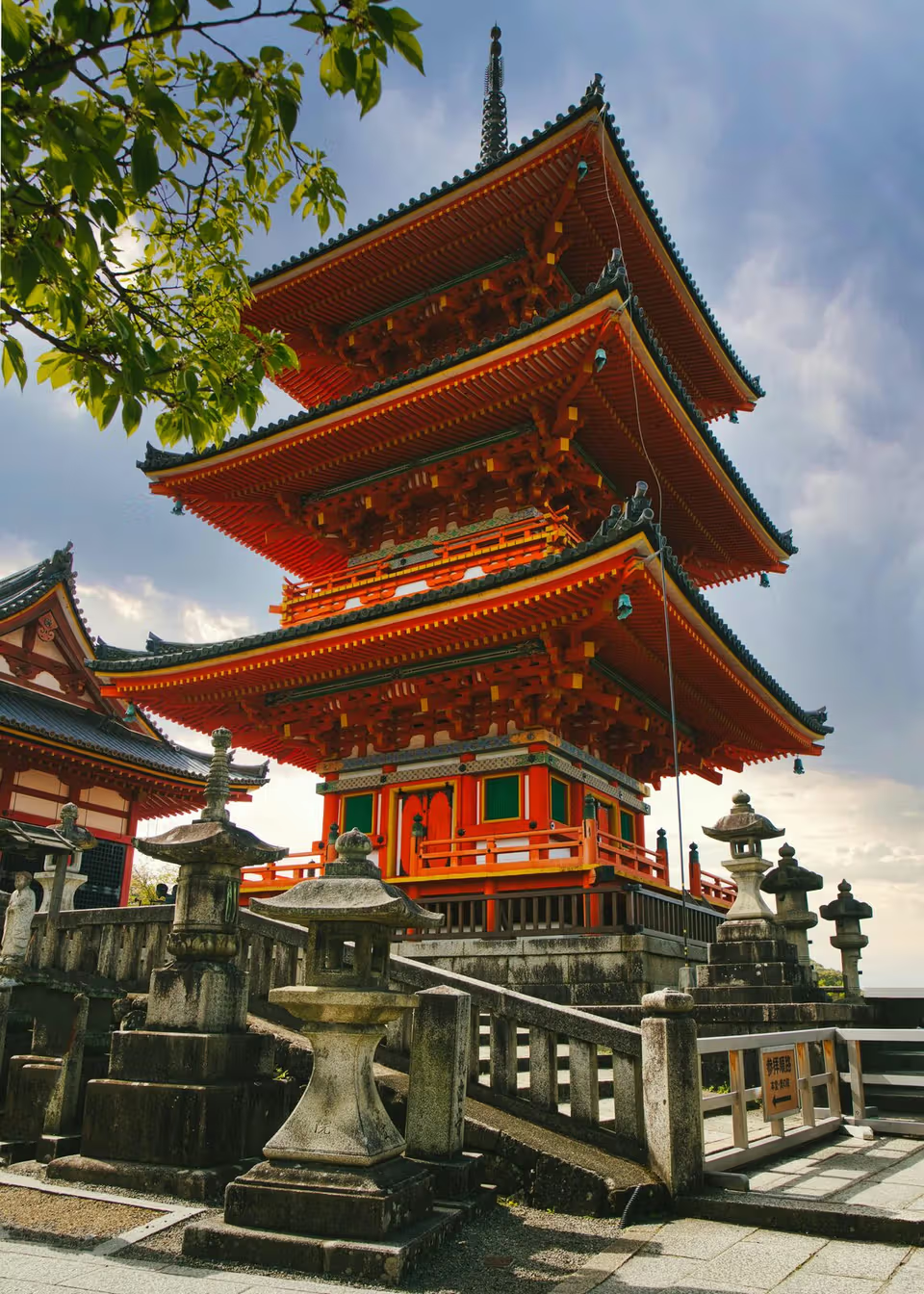
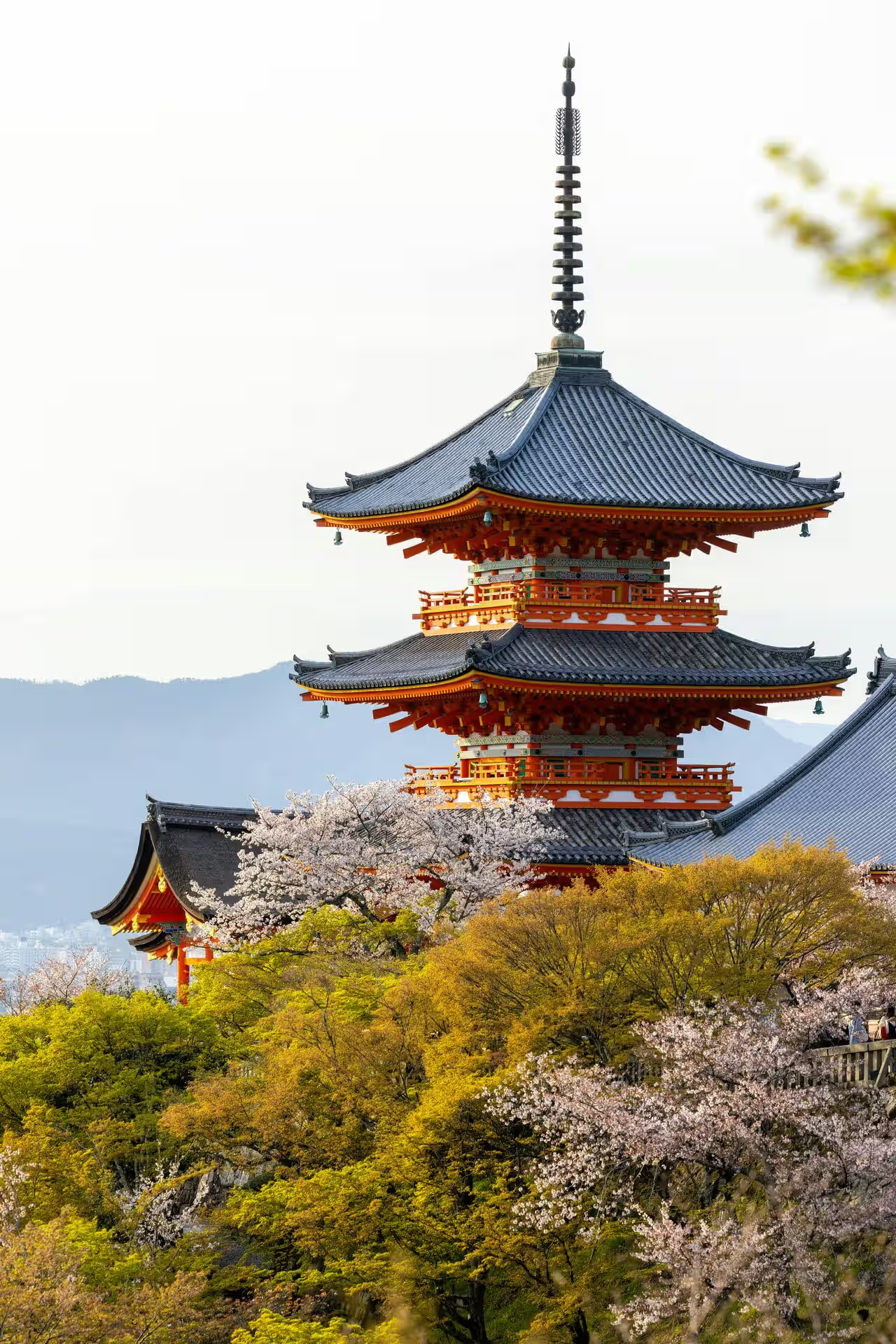
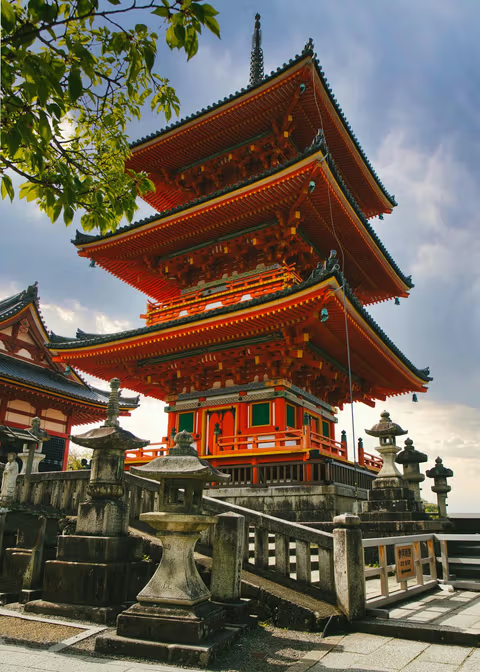
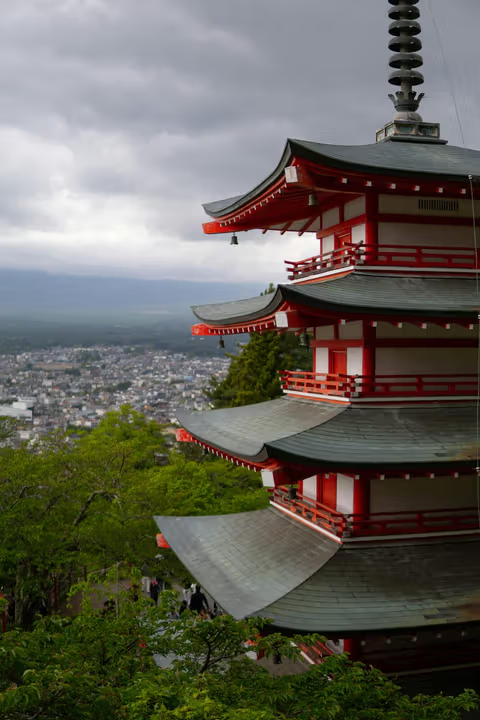
Kyoto is crossed on tiptoe rather than walked through. The imperial capital from 794 to 1868, it preserves 1,600 Buddhist temples, 400 Shinto shrines and 17 UNESCO sites. A city that survived the bombing raids of 1945 and takes its role as custodian of heritage seriously.

Hotels
Tawaraya · Hoshinoya Kyoto · Aman Kyoto
Must-see
Fushimi Inari · Kinkaku-ji · Arashiyama
Best time
Sakura in April · momiji in November
Osaka · Japan 03 · Kitchen

2–3 nights

Osaka

The country's kitchen

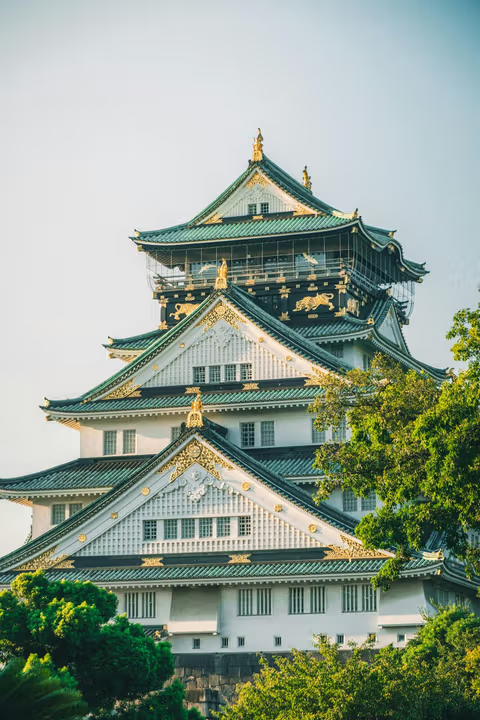
While Tokyo negotiates and Kyoto prays, Osaka eats. Locals have their own word for their life philosophy: kuidaore · to eat oneself into ruin. Less formality, more laughs on the train and a perfect base for Nara and Kobe.

Hotels
Conrad Osaka · St. Regis · Boutique hotel in Hommachi
Must-see
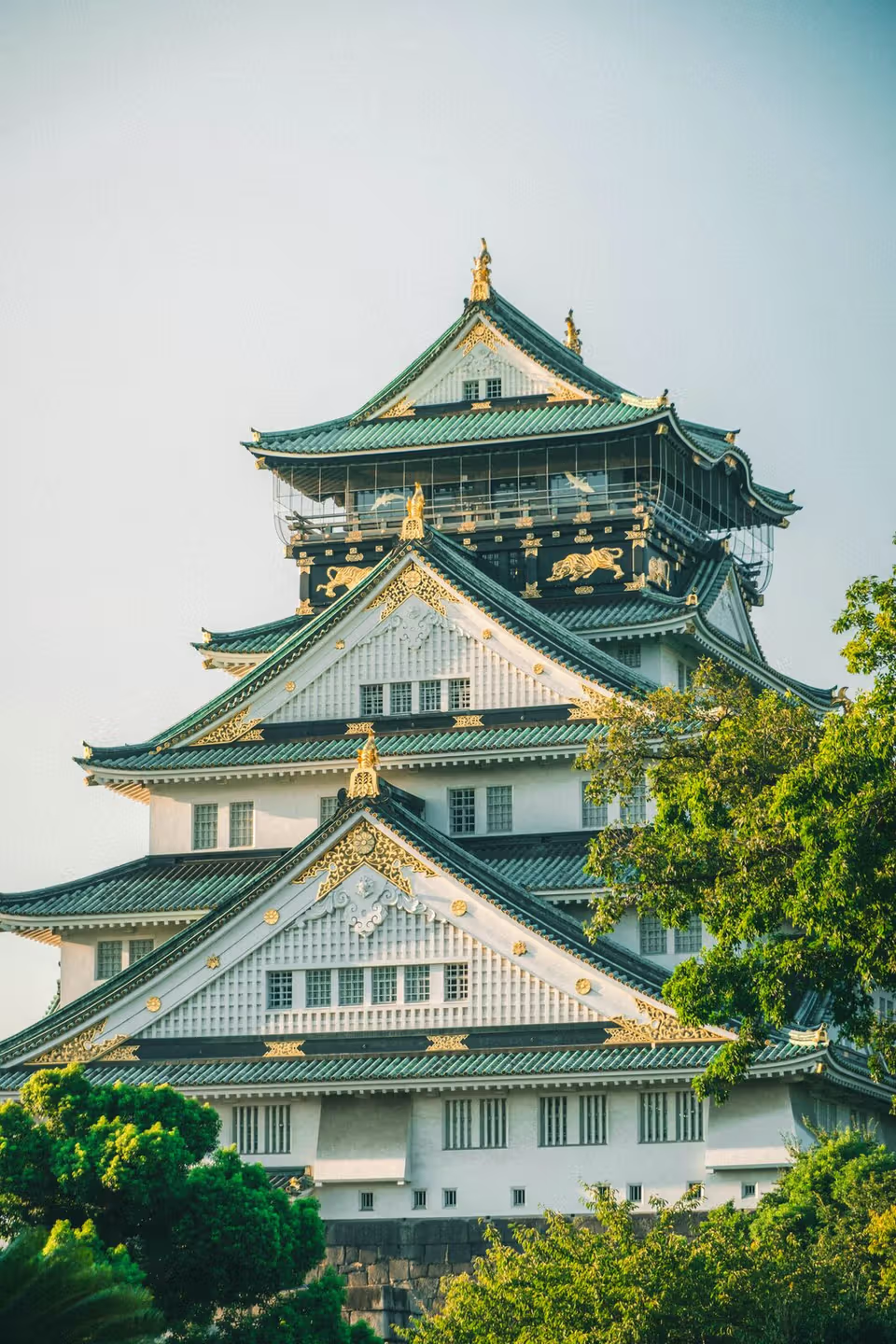
Dōtonbori · Osaka Castle · Kuromon Market
Best time
March to May · October to November
Hakone and Mount Fuji · Japan 04 · Onsen

1–2 nights

Hakone and Mount Fuji

Onsen, ryokan and the sacred mountain

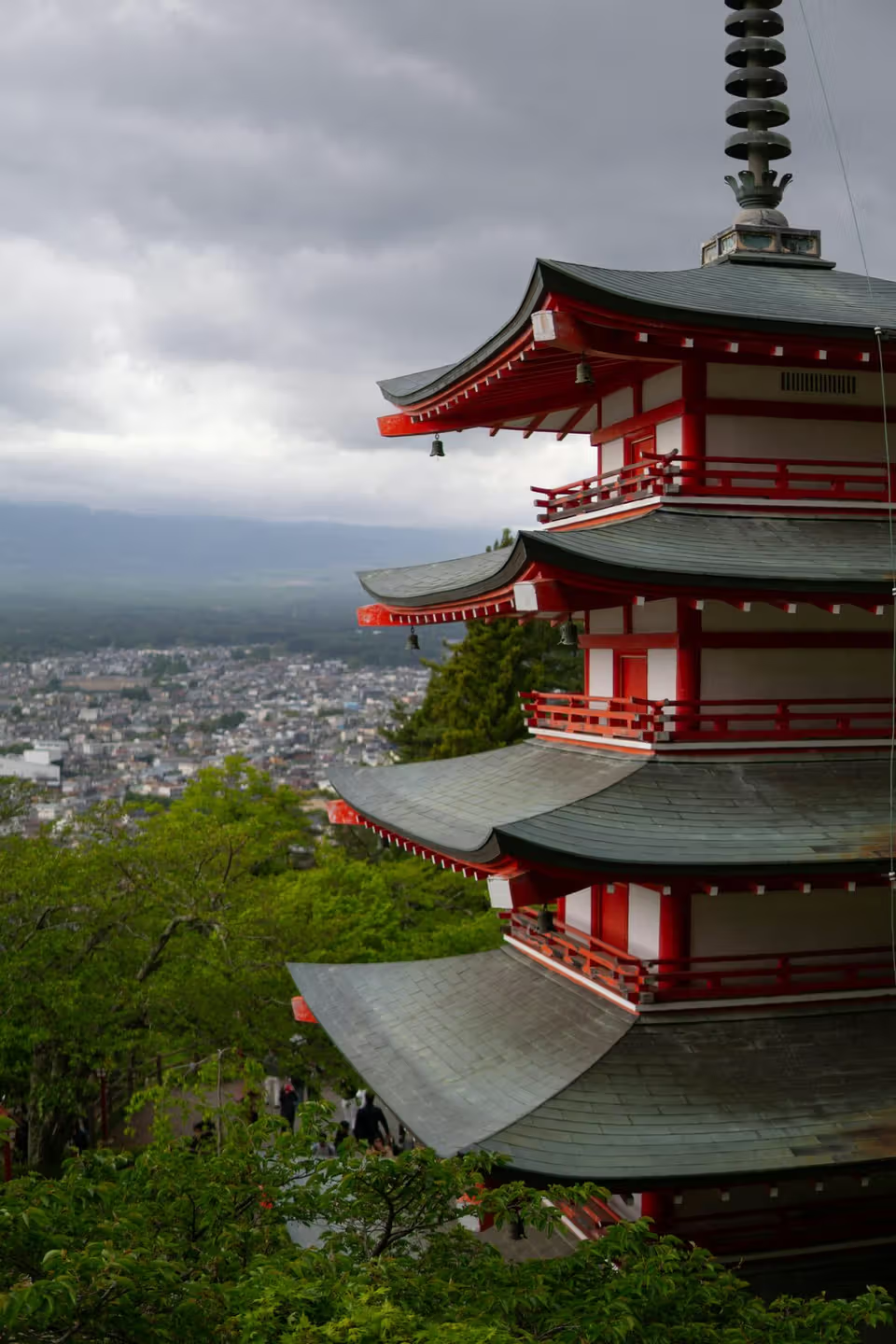
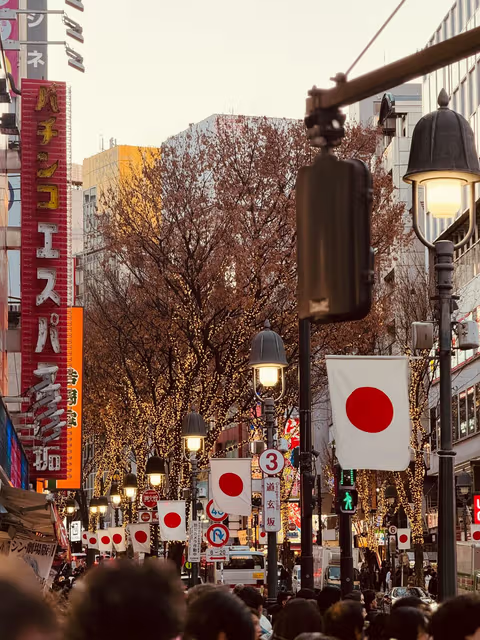
An hour and a half from Tokyo on the Romancecar. Hot springs, open-air museums, ryokan with private ofuro and, on clear days, views of Mount Fuji from Lake Ashi. The essential pause a first trip to Japan needs.

Hotels
Gora Kadan · Hoshinoya Hakone · Hakone Ginyu
Must-see
Rotenburo onsen · Open-Air Museum · Lake Ashi
Best time
October to February · clearest views of Fuji
Kanazawa and the Alps · Japan 05 · Alps

2–3 nights

Kanazawa and the Alps

The city of gold and the alpine villages

Kanazawa preserves an intact geisha chaya quarter, Kenroku-en garden and a living craft tradition in gold leaf and lacquerware. From here, Takayama and the gasshō-zukuri villages of Shirakawa-go, a UNESCO World Heritage Site.

Hotels
Hyatt Centric Kanazawa · Ryokan Asadaya · Honjin Hiranoya
Must-see
Kenroku-en · Higashi Chaya · Shirakawa-go
Best time
April to June · October to November

Signature experiences

Moments to remember

Private access, guides born in the place and a rhythm designed around you.

Practical

The essentials before you travel

Information verified by our travel designers, updated for 2026.

Money

Currency
Japanese yen (JPY, ¥). Reference exchange rate close to 150 JPY per USD (verify before travel).
Cash
Still essential in small izakaya, rural markets, temples and taxis. Carry between 100 and 200 USD in yen from day one.
Cards
Visa and Mastercard work in hotels, major restaurants and konbini. American Express has limited coverage.
ATMs
7-Eleven and Japan Post ATMs accept international cards around the clock at a competitive rate. Avoid airport currency exchange counters.
IC card
Suica, Pasmo or ICOCA: prepaid cards for the metro, buses, konbini and vending machines.
Tipping
Not practised. Leaving notes on the table is considered impolite. Impeccable service is included in the bill.

Visa

Latin America
Colombians, Mexicans, Argentinians and most Spanish-speaking Latin Americans do not require a tourist visa.
Length of stay
The entry stamp grants 90 days, not easily extendable without a specific visa.
Spain
Spanish nationals also do not require a tourist visa to enter Japan.
Passport
Must be valid for at least six months at entry. A fingerprint scan and photograph are taken at the airport on arrival.
Documents
Itinerary, first nights of confirmed accommodation and outbound flight to hand in case immigration asks.

Health

Vaccinations
Japan does not require any mandatory vaccinations for entry from Latin America or Europe.
Insurance
Essential with international medical coverage: hospital care is excellent but expensive for uninsured visitors.
Water
Tap water is potable throughout the country and has a neutral taste.
Seasonal
Heat stroke risk in July and August; cedar pollen from February to April. Bring masks if you are allergic.
Onsen and tattoos
Many traditional onsen still prohibit visible tattoos. CocoVolare arranges tattoo-friendly alternatives or ryokan with private ofuro.

Transport

Shinkansen
The bullet train connects Kagoshima to Hokkaido at up to 320 km/h with record punctuality. The backbone of any domestic itinerary.
JR Pass
Only worthwhile if your itinerary includes three or more long-distance journeys. Prices rose in 2023: CocoVolare calculates the best option for each client at no charge.
Green Car
The Shinkansen equivalent of first class: wide seats and quiet. The upgrade is worth every yen.
Luggage
Use the takkyubin service to send bags between hotels: bullet train carriages have limited luggage space.
Apps
Google Maps and Navitime for transport. Activate an eSIM on landing; Suica or ICOCA covers the rest.

Language

Official language
Japanese. Tourist signage carries good written English; average spoken English is low.
Outside major cities
English is very limited. Google Translate with camera and conversation mode solves 90% of exchanges.
Useful phrases
Sumimasen (excuse me) · arigatō gozaimasu (thank you) · oishii (delicious) · onegaishimasu (please).
At the table
Itadakimasu before eating; gochisōsama deshita when you finish.
Our approach
CocoVolare works with private bilingual Spanish–Japanese guides in Tokyo, Kyoto, Osaka and Hokkaido.

Etiquette

Bowing
The standard greeting is a gentle bow · no physical contact. Hugs and cheek kisses are not the norm.
Removing shoes
Shoes come off at ryokan, temples and traditional restaurants. Bring clean socks and easy-to-remove footwear.
Silence
On public transport, keep voices low and set your phone to silent. Phone calls on trains are not done.
Chopsticks
Never stand them vertically in rice or pass food chopstick to chopstick · both gestures evoke funeral rites.
Rubbish
Public bins are almost non-existent. Carry your waste back to the hotel or a konbini.

Climate

When to travel and why

Japan is a long country, from subarctic Hokkaido to subtropical Okinawa · generalisations mislead. The chart shows all twelve months with estimated cost, temperature and iconic festivals. Marked in gold, the windows we recommend experiencing Japan with us .

Most recommended month April · cherry blossoms in Tokyo and Kyoto
Best value vs. experience May · fresh green and stable weather
Once-in-a-lifetime window November · kōyō, the maple's red foliage

The climate, month by month · Tokyo

Reference city: Tokyo Best season Temperature °C Relative rainfall
10° 20° 30° Jan: 2° – 10°C · 52 mm 10° Jan: 52 mm Jan Feb: 2° – 11°C · 56 mm 11° Feb: 56 mm Feb Mar: 5° – 14°C · 118 mm 14° Mar: 118 mm Mar Apr: 10° – 19°C · 125 mm 19° Apr: 125 mm Apr May: 15° – 23°C · 138 mm 23° May: 138 mm May Jun: 19° – 26°C · 168 mm 26° Jun: 168 mm Jun Jul: 23° – 30°C · 154 mm 30° Jul: 154 mm Jul Aug: 24° – 31°C · 168 mm 31° Aug: 168 mm Aug Sep: 20° – 27°C · 210 mm 27° Sep: 210 mm Sep Oct: 15° – 22°C · 198 mm 22° Oct: 198 mm Oct Nov: 9° – 17°C · 93 mm 17° Nov: 93 mm Nov Dec: 4° – 12°C · 51 mm 12° Dec: 51 mm Dec

Highlights of the year: Feb · Snow and onsenMar · SakuraApr · SakuraJul · MatsuriNov · Kōyō

The two golden windows are the sakura, from late March to mid-April, and November's kōyō foliage. Avoid the tsuyu rainy season from June to mid-July, and the humid heat of August.

When to go · season & budget

Seasons & estimated cost CocoVolare recommends High Mid Low
Jan: Low season · ≈$655 per person/day Jan Feb: Mid season · ≈$760 per person/day Feb Mar: High season · ≈$1,040 per person/day $1,040Mar Apr: High season · ≈$1,120 per person/day $1,120Apr May: Mid season · ≈$880 per person/day $880May Jun: Low season · ≈$680 per person/day Jun Jul: Mid season · ≈$800 per person/day Jul Aug: Mid season · ≈$840 per person/day Aug Sep: Mid season · ≈$760 per person/day Sep Oct: High season · ≈$960 per person/day $960Oct Nov: High season · ≈$1,000 per person/day $1,000Nov Dec: Mid season · ≈$800 per person/day Dec

In our recommended dates, the estimated cost ranges from $880 to $1,120 per person/day (Premium level, international flights not included).

Investment

What it costs, no fine print

Japan is expensive where it matters and cheap where it surprises: the historic ryokan and the omakase counter cost real money, but the best ramen of your life is ten dollars. The yen's devaluation has made the country more accessible than in the previous decade.

Experience levels · guide budget

Japanese yen (JPY) · 1 USD ≈ 150 JPY USD · per person/day
Boutique essential Boutique essential: $450 USD · per person/day $450 Well-located boutique hotels, ordinary-class Shinkansen and the best neighbourhood cooking on the planet. Premium Premium: $800 USD · per person/day $800 Park Hyatt or a ryokan with private onsen, Green Car on the bullet train and a bilingual private guide in every city. Signature Signature: $1,400 USD · per person/day $1,400 Aman Tokyo and historic ryokan such as Tawaraya, benchmark omakase counters, an ozashiki with geiko and door-to-door private transfers.
Ramen at a neighbourhood counter USD 8–12High-end sushi omakase USD 200–400Ryokan night with kaiseki (per person) USD 500–900Shinkansen Tokyo–Kyoto in Green Car USD 130Kyoto temple admissions USD 3–8Bilingual private guide, full day USD 400–600

Indicative 2026 values per person, excluding international flights. Every CocoVolare quote is tailored to season, hotels and travel pace.

Signature itineraries

Six Japans · choose yours

Zero templates: every itinerary is rewritten 100% to your measure. Prices per person in double occupancy, boutique category, international flights not included.

5 days · 4 nights · Tokyo and Kyoto

Japan Essence

Tokyo → Shinkansen → Kyoto

Japan distilled to its essence · compact yet perfectly paced

  • Tradition and modernity in Tokyo: Asakusa at dawn and architecture along Omotesandō
  • Nozomi Shinkansen in Green Car from Tokyo to Kyoto in just over two hours
  • Fushimi Inari before opening hours, with no one in frame, with a private guide

FromUSD 3,500

7 days · 6 nights · Metropolis and onsen

Balanced Japan

Tokyo → Hakone → Kyoto

Three rhythms, three ways of reading the country

  • Three days in Tokyo: traditional Asakusa and Ueno, contemporary art and neighbourhood life
  • Night in a boutique Hakone ryokan with private ofuro and kaiseki served in the room
  • Hakone Open-Air Museum and a cruise on Lake Ashi with views of Fuji

FromUSD 5,200

10 days · 9 nights · Four regions

Deep Japan

Tokyo → Hakone → Kanazawa → Kyoto

Four Japans in one journey · with room to breathe

  • Three days of deep Tokyo, with a focus on less touristy neighbourhoods
  • Ryokan and open-air art in Hakone, with onsen at the foot of Fuji
  • Kanazawa: Kenroku-en garden, Higashi Chaya geisha district and gold leaf

FromUSD 8,500

14 days · 13 nights · Metropolis, tradition and art

Extended Japan

Tokyo → Hakone → Kanazawa → Takayama → Kyoto → Hiroshima

Four faces of the country · without rushing a page

  • The deep itinerary: Tokyo, Hakone, Kanazawa and Kyoto
  • Takayama and the gasshō-zukuri villages of Shirakawa-go, UNESCO World Heritage
  • Naoshima, the island museum of the Inland Sea with works by Tadao Ando and Yayoi Kusama

FromUSD 13,500

10 days · 9 nights · Romance

Japanese Honeymoon

Tokyo → Hakone → Kyoto

Beginning the rest of your life among cherry blossoms and silence

  • Suite upgrade in every city, at Aman Tokyo and historic Kyoto ryokan
  • Ryokan with private open-air ofuro in Hakone, overlooking the valley
  • Private ozashiki with geiko and maiko at a Gion ochaya, with translation

FromUSD 11,000

7 days · 6 nights · Gastronomy

Japanese Flavours Route

Tokyo → Kyoto → Osaka

The journey's backbone is the table

  • A market morning at Toyosu with a professional chef and a private sashimi lunch
  • Omakase at a benchmark chef's counter and yakitori over binchōtan charcoal
  • Kaiseki in a century-old Kyoto townhouse and a tea ceremony with a master

FromUSD 7,200

None of them fits? We design your own. WhatsApp →

Gastronomy

The flavors of Japan

From a bowl of ramen at two in the morning to a fifteen-course kaiseki sequence. Washoku is a UNESCO Intangible Cultural Heritage of Humanity. For CocoVolare travellers, gastronomy is the spine of the journey.

Den

Jingumae · Tokyo

Two Michelin stars. Zaiyu Hasegawa's contemporary kaiseki · wit and precision in equal measure. Reserve three months ahead.

Sushi Saito

Akasaka · Tokyo

Three Michelin stars. A seven-seat counter and reservations only through select hotels. The counter few ever reach.

Kikunoi

Higashiyama · Kyoto

Three Michelin stars. Yoshihiro Murata's kaiseki · a seasonal sequence delivered with architectural precision.

Hyōtei

Nanzenji · Kyoto

Three Michelin stars. Founded in 1837 as a teahouse for pilgrims · fifteen generations of kaiseki cuisine.

Hajime

Edobori · Osaka

Three Michelin stars. Hajime Yoneda's contemporary Japanese-French cuisine · one of Osaka's defining tables.

Mizuno

Dōtonbori · Osaka

One Michelin star. Okonomiyaki since 1945: Osaka's popular cooking elevated without losing its neighbourhood soul.

Calendar

Dates worth traveling for

A well-chosen date turns a trip into a memory. We design your itinerary around the moment that matters most to you.

Sakura · Mar–Apr

Cherry blossoms in the final week of March and the first week of April in Tokyo and Kyoto. The country's most photographed natural event.

Sapporo Yuki Matsuri · February

Monumental snow and ice sculptures in Odori Park. The compelling reason to visit Hokkaido in winter.

Golden Week · 29 Apr–5 May

A string of national holidays. Heavy domestic demand on trains and hotels: a window to plan carefully, not improvise.

Gion Matsuri · July

One of the world's oldest festivals, with over a thousand years of tradition. Yamaboko floats declared a UNESCO Heritage treasure.

Sumida Fireworks · July

A tradition since 1733. More than twenty thousand fireworks over the Sumida River in an hour and a half, yukatas on every corner.

Awa Odori and Nebuta · August

Japan's largest dance festival in Tokushima and the giant illuminated floats of Aomori's Nebuta festival.

Kōyō · Oct–Nov

The Japanese maple's red foliage at its peak. Nocturnal temple illuminations in Kyoto, with reservations required months ahead.

Ski and onsen season · Dec–Mar

Legendary dry powder snow in Niseko and Hakuba, and open-air rotenburo onsen beneath the snow. January and February are optimal.

CocoVolare recommends

What we would tell a friend

Advice from our travel designers: what we book first, what we avoid, and the details that turn a good trip into an unforgettable one.

01

Kyoto's ryokan book out six to twelve months ahead

Tawaraya and Hiiragiya hold a handful of rooms and a clientele that returns every year; for sakura and kōyō, the calendar closes a full year out. We handle the booking and the correspondence with houses that have no interface in Spanish or English.

02

Here, tipping offends

In Japan impeccable service is included, and leaving notes on the table embarrasses the person who served you. The one exception is the kokorozuke, a symbolic envelope at some traditional ryokan; we guide you case by case so the gesture lands right.

03

Tattoos and onsen are planned before the trip

Many traditional hot-spring baths still ban visible tattoos, whatever the size. If you carry ink, we solve it at the itinerary-design stage: tattoo-friendly onsen, private baths by the hour or a ryokan with its own in-room ofuro.

04

Sakura is stalked, never promised

Peak bloom shifts every year, and a single week's difference changes the entire landscape. That is why we design those trips with margin: early-April dates, several cities on the route and plan Bs like Kanazawa, where the blossom arrives a few days later.

05

Your luggage travels alone with takkyubin

The bullet train has little room for large suitcases, and nobody climbs station stairs with two bags. The takkyubin service forwards them hotel to hotel overnight for a few dollars: you travel with a daypack and Japan flows.

06

Sidestep Golden Week

From 29 April to 5 May the whole country travels at once: packed trains, doubled hotel rates and Kyoto's temples overflowing. If your dates fall there, shift the trip by a week, or design it towards corners the holiday never reaches.

In motion

Japan, live

Testimonials

What our travelers say

★ ★ ★ ★ ★

“We arrived at Fushimi Inari at six in the morning. There was absolutely no one: just the tunnel of red torii climbing the mountain and the sound of our own footsteps. CocoVolare had calculated it to the minute. That one hour changed the whole trip.”

Mariana Restrepo

Bogotá · Honeymoon · 10 nights

★ ★ ★ ★ ★

“We spent one night in a Hakone ryokan, with a private ofuro and the kaiseki dinner served course by course in the room. I thought I understood hospitality. Japan taught me another word for it: omotenashi. You never forget it.”

Javier Mendoza

Mexico City · Couple's journey · 10 nights

★ ★ ★ ★ ★

“Our bilingual guide didn't give us a postcard tour · he opened up Kyoto to us. He took us to temples before opening hours, explained the difference between a shrine and a temple, and showed us how to enter an onsen properly. That is not something you find at just any travel agency.”

Andrés Lozano

Medellín · Cultural journey · 14 nights

FAQ

Frequently asked questions

Do I need a visa to enter Japan?

Japan maintains visa exemption for more than 70 countries, including all of Spanish-speaking Latin America and Spain. On arrival, a fingerprint scan and photograph are taken at the airport and the entry stamp grants 90 days, not easily extendable without a specific visa. Your passport must be valid for at least six months. Immigration rules change · verify before you travel.

What is the best time to visit Japan?

Late March to mid-April for the sakura, and mid-October to late November for the kōyō, the maple's red foliage. The whole of May offers fresh green and stable weather. January and February are ideal for snow and onsen in Hokkaido. June to mid-July is best avoided due to the tsuyu rainy season, and August in Tokyo and Osaka due to the heat.

How many days do I need to experience Japan?

Five days cover Tokyo and Kyoto in a compact but coherent way. Seven to ten days add Hakone and Kanazawa. Fourteen days allow for Takayama, Shirakawa-go, Naoshima, Hiroshima and Miyajima. CocoVolare designs itineraries from five to twenty-one days, tailored to pace, profile and season.

Is it worth staying in a traditional ryokan?

Yes · and it is a significant part of the journey. A ryokan offers a tatami room, private ofuro, kaiseki dinner served in the room and a yukata robe. It is the difference between sleeping in Japan and sleeping Japan. Historic ryokan such as Tawaraya or Hiiragiya book up three to four months out: CocoVolare manages reservations and communicates with ryokan that have no interface in English.

What currency is used in Japan?

The Japanese yen (JPY, ¥). Visa and Mastercard work in hotels, major restaurants and konbini, but many small izakaya, temples and rural markets remain cash-only. Carry between 100 and 200 USD in yen from day one. ATMs at 7-Eleven and Japan Post accept international cards around the clock at a competitive rate.

Is Japan safe to travel to?

Japan is one of the safest countries in the world. Crime against visitors is very low, public transport is safe at night and there are police kōban booths in every neighbourhood. The real risks are natural: earthquakes, with buildings built to strict codes, typhoons between August and October and extreme summer heat. Good travel insurance is essential.

How much does a trip to Japan cost?

A boutique ten-day trip, excluding international flights, sits in the comfort band between USD 6,000 and 10,500 per person in double occupancy. CocoVolare signature itineraries start from USD 3,500 per person for five days. The yen's weakness in recent years has made Japan more accessible than at any point in the previous decade.

Is the Japan Rail Pass worth it?

Only if your itinerary includes three or more long-distance Shinkansen journeys. Since October 2023 the price rose by around 70%, so it is no longer automatic. Regional passes or individual tickets are often more efficient. CocoVolare does the calculation for each client at no charge.

Do you tip in Japan?

No. Tipping is not practised in Japan and leaving notes on the table can cause offence. Impeccable service is included in the bill. The one exception is the kokorozuke · a symbolic envelope that in some traditional ryokan is given to your dedicated staff member at the start of the stay. CocoVolare advises on this case by case.

Does English get you far in Japan?

Written English on tourist signage is good; average spoken English is low, especially outside Tokyo, Kyoto and Osaka. Google Translate with camera and conversation mode resolves most exchanges. CocoVolare provides private bilingual guides for the key experiences on the journey.

Is Japan a good destination for foodies?

Tokyo holds more Michelin-starred restaurants than any other city in the world. Kyoto is the home of traditional kaiseki and Osaka of popular cooking. Gastronomy is the backbone of a Japan trip. CocoVolare designs routes with chef's counter reservations managed months in advance.

Can I travel to Japan with children?

Yes, and it is very comfortable: exceptional cleanliness, safety, smooth transport and family rooms. For families with teenagers, Akihabara, science museums and the Studio Ghibli Museum are consistent favourites. Only some highly formal kaiseki restaurants prefer guests over twelve. CocoVolare designs family itineraries with a pace adapted to the group.

What does a CocoVolare trip to Japan include?

Itinerary design from scratch, Shinkansen in Green Car where applicable, boutique hotels and ryokan with breakfast, private bilingual guides, signature experiences, chef reservations managed in advance, private transfers and 24/7 concierge. Every journey is built to your pace, profile, dates and budget.

Japan

No molds, made to measure

Tell us what excites you and we will design a tailor-made proposal in under 24 hours, with a dedicated travel designer.