Spain · CocoVolare

Europe · Boutique

Spain

A country that reinvents itself every two hundred kilometres

S pain is the world's second most visited country and yet it still accommodates a truly bespoke journey. The reason is geographical: seventeen autonomous communities and a cultural density that reinvents itself every two hundred kilometres.

The essence

A country that fits perfectly into a bespoke journey

S pain is the world's second most visited country and yet it still accommodates a truly bespoke journey. The reason is geographical: seventeen autonomous communities and a cultural density that reinvents itself every two hundred kilometres. What works in Seville makes no sense in San Sebastián. What is eaten in Galicia is not what is eaten in Murcia. The light of Cádiz is not the light of Asturias. Compared to Italy or France, Spain wins by a very particular combination: the highest density of Michelin-starred restaurants per capita in southern Europe, the most walkable museum district on the continent, the most extensive high-speed rail network in Europe, and a long-table hospitality that Latin American travellers recognise from the very first lunch. It is a country that rewards both the first-time visitor and the seasoned one returning for the fifth.

17 autonomous communities · each one a distinct journey
280+ Michelin-starred restaurants
49 UNESCO World Heritage Sites
4,000 km of AVE high-speed rail · Europe's most extensive network

Regions

The 5 faces of Spain

Madrid and central Spain · Spain 01 · Capital

3–4 nights

Madrid and central Spain

The capital that never sleeps and always rewards

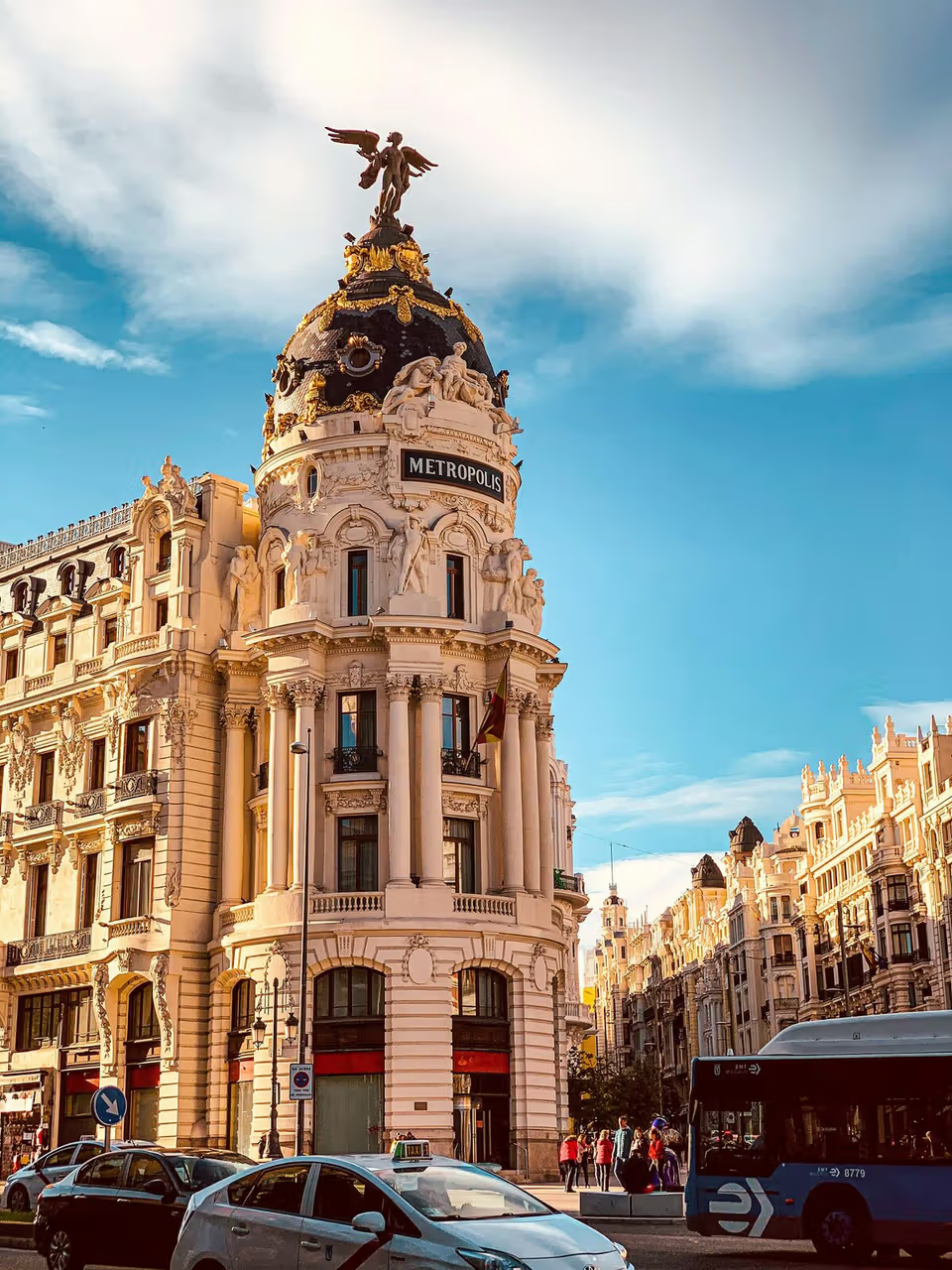
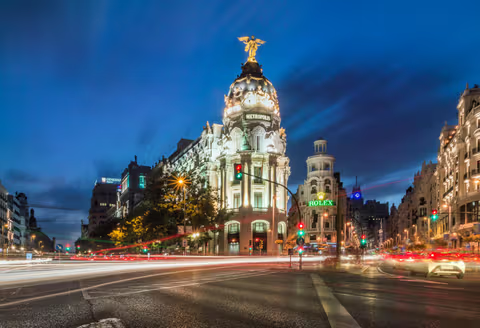
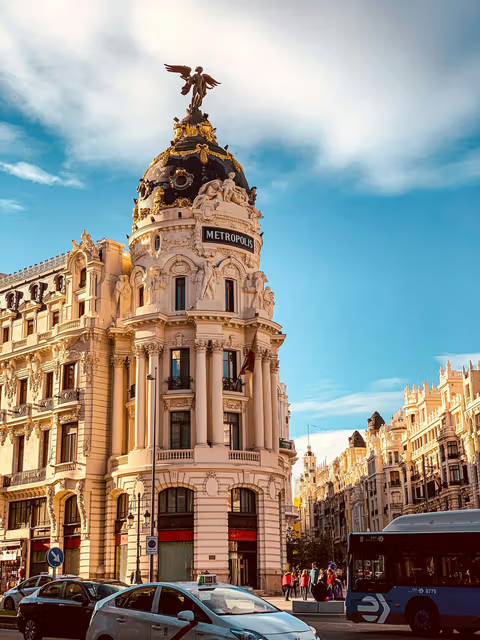
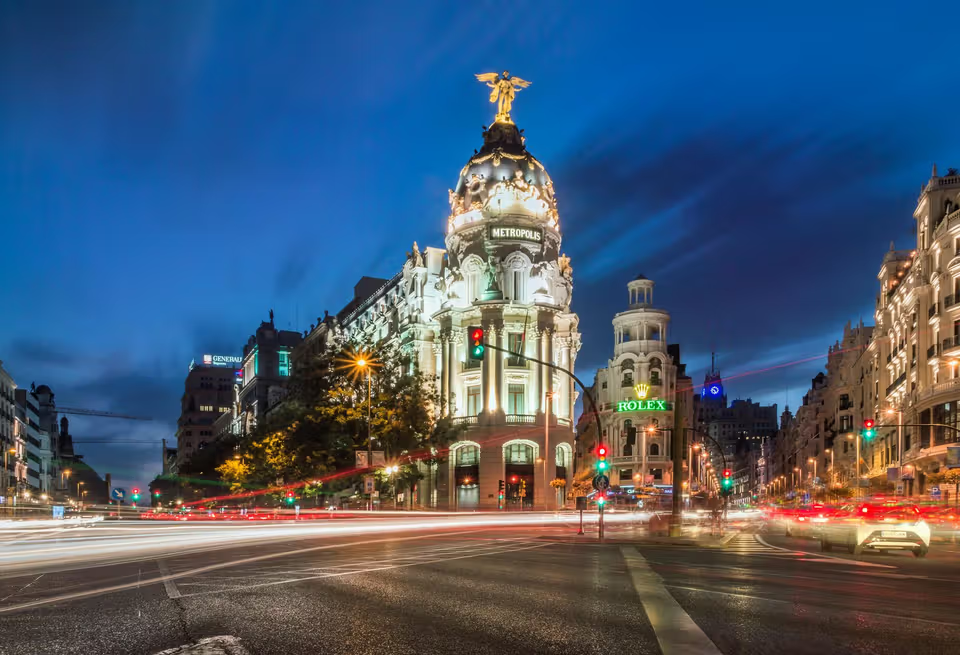
Madrid doesn't give itself up on the first day · it unlocks on the third. The Art Triangle within fifteen minutes' walk, the country's finest network of traditional taverns and AVE connections to almost every region. Toledo, Segovia and Salamanca are less than an hour away.

Hotels
Mandarin Oriental Ritz · Hotel Único Madrid · Urso
Must-see
Museo del Prado · Royal Palace · Reina Sofía
Best time
May, June and September · Castilian light
Barcelona and Catalonia · Spain 02 · Modernisme

3–4 nights

Barcelona and Catalonia

Sea, mountains and Gaudí

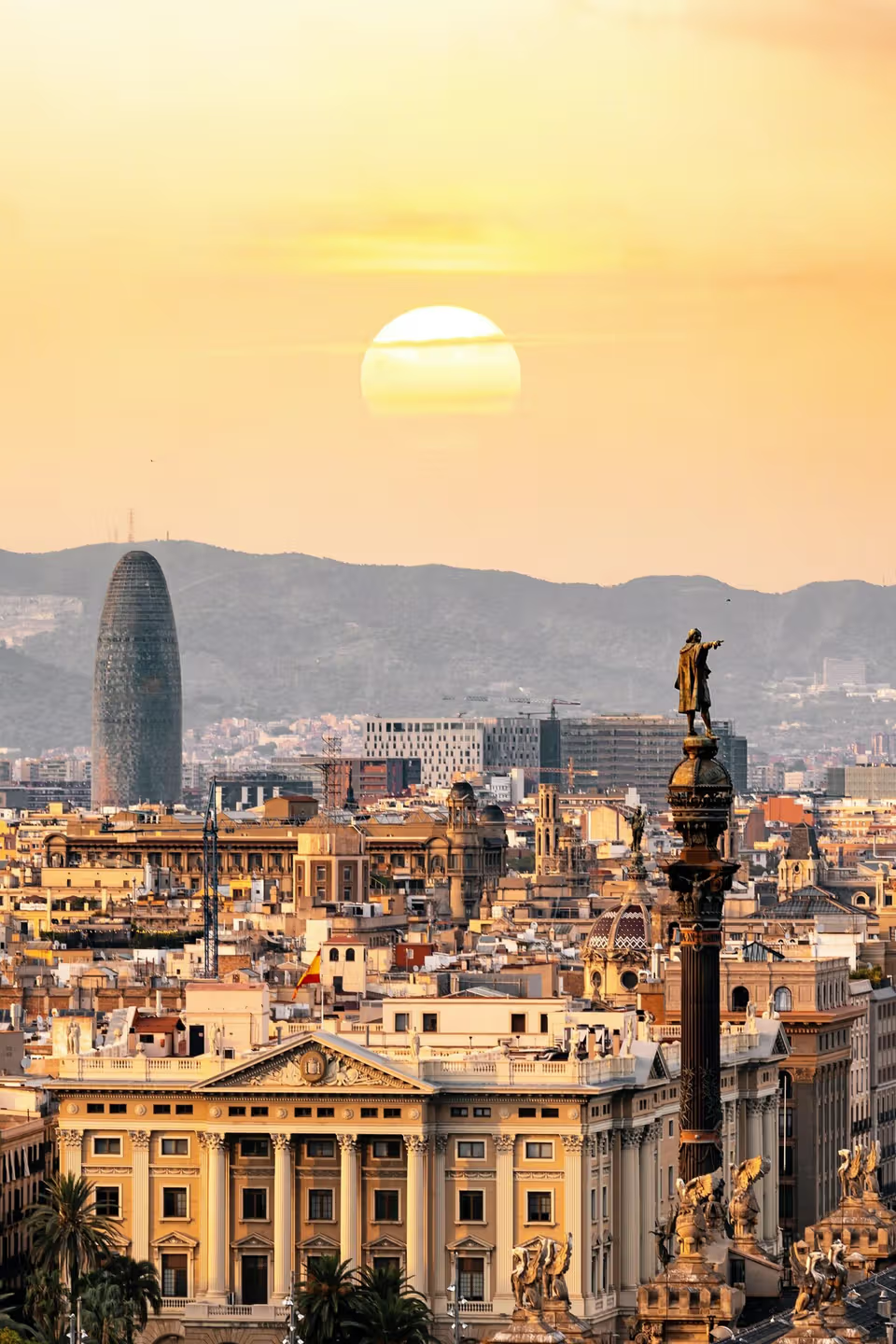
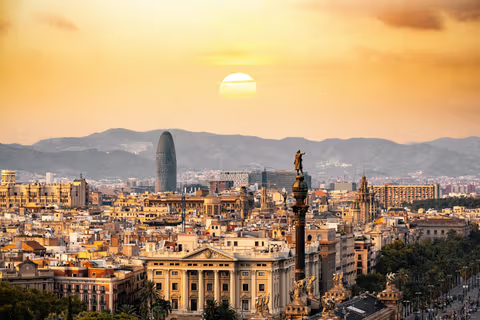
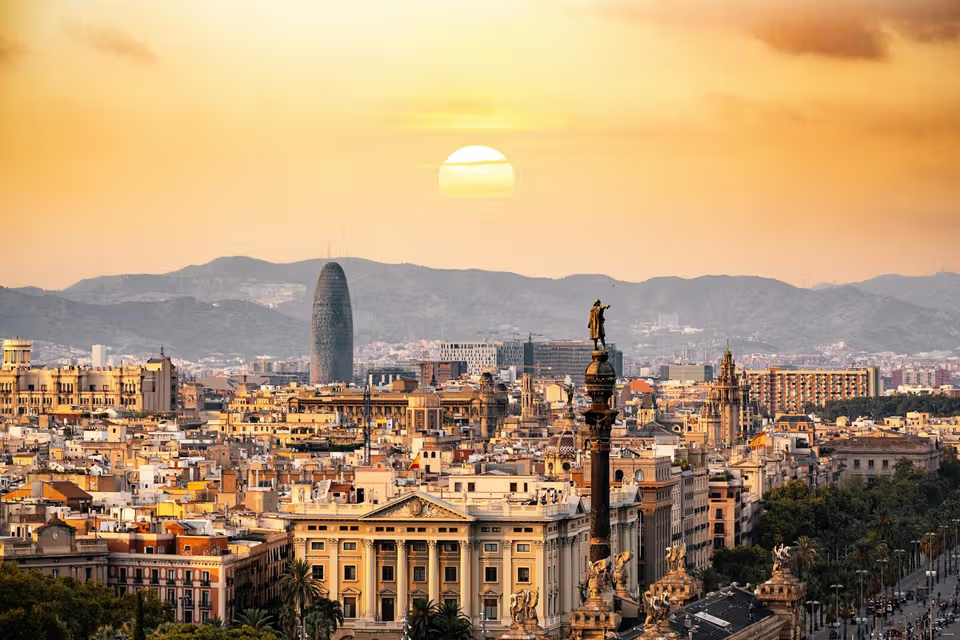
A Mediterranean city stretched between the flat grid of the Eixample and the soaring towers of Gaudí. Modernisme, technically dazzling cuisine in the tradition of El Bulli and Dalí's Costa Brava two hours away. Disfrutar was named the world's best restaurant in 2024.

Hotels
Mandarin Oriental · Casa Fuster · Hotel Arts
Must-see
Sagrada Família · Park Güell · Casa Batlló
Best time
May, June and September · Mediterranean light
Andalusia · Spain 03 · South

3–4 nights

Andalusia

Light, shadow and al-Andalus

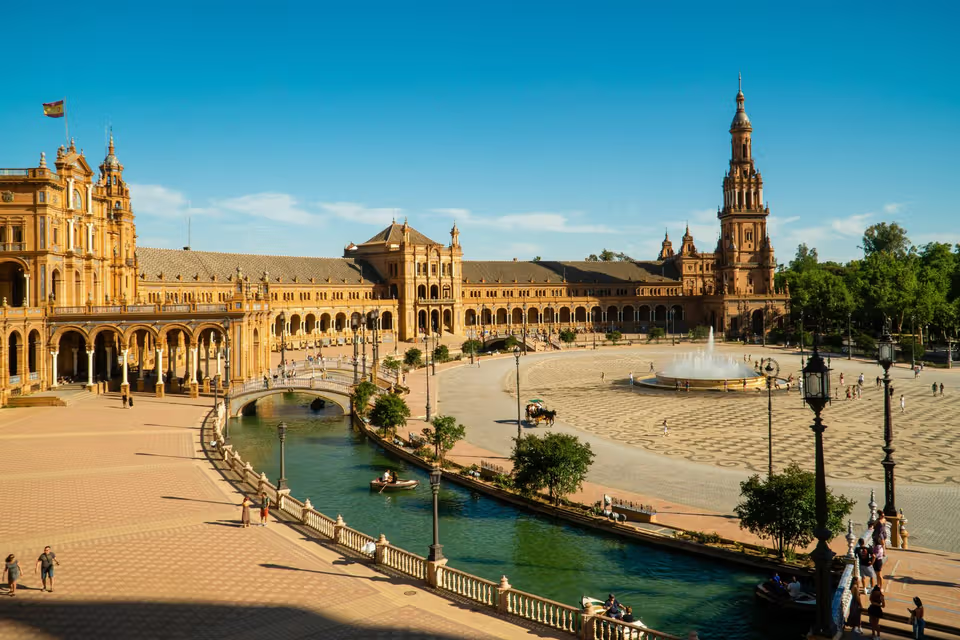
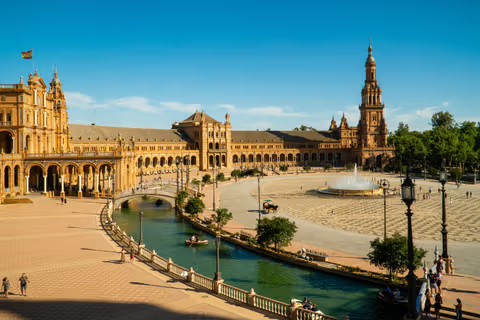
Soulful flamenco Seville, the Mosque-Cathedral of Córdoba, the Alhambra as the last great Nasrid palace and the white villages of Cádiz. The south that is walked slowly, eaten at the bar and lived in the courtyard.

Hotels
Hotel Alfonso XIII · Parador de Granada · EME Catedral
Must-see
Alhambra · Royal Alcázar · Mosque-Cathedral of Córdoba
Best time
March to June and October · avoid July–August
Basque Country and the north · Spain 04 · North

2–3 nights

Basque Country and the north

The gastronomic summit of the country

San Sebastián, the pintxo capital, with three three-Michelin-star restaurants in its surroundings. Bilbao and its post-industrial reinvention around the Guggenheim. La Rioja wine country and the Picos de Europa. The green north with its long, unhurried table.

Hotels
Hotel María Cristina · Marqués de Riscal · Mercer Rioja
Must-see
Old town pintxos · Guggenheim · La Rioja wineries
Best time
May to September · mild Atlantic climate
Valencia and the Levante · Spain 05 · Levante

2 nights

Valencia and the Levante

The birthplace of paella

Valencia balances tradition and modernity: the City of Arts and Sciences, the fertile huertas, the Albufera wetlands where orthodox Valencian paella was born and the city's urban beaches. The Mediterranean at its most lived-in and least touristy.

Hotels
Caro Hotel · Palacio Vallier · boutique hotels of El Carmen
Must-see
City of Arts and Sciences · Albufera · Central Market
Best time
April to June and September · March for Las Fallas

Signature experiences

Moments to remember

Private access, guides born in the place and a rhythm designed around you.

Practical

The essentials before you travel

Information verified by our travel designers, updated for 2026.

Money

Currency
Euro (EUR). Notes from €5 to €200; the €500 note has very restricted circulation and is often refused.
Cards
Accepted at 95% of establishments, including small bars. Visa and Mastercard are universal; Amex has more limited coverage. Contactless is the dominant payment method.
Cash
Carry between €50 and €150 for markets, tips and small villages. Withdraw from an ATM with a multi-currency card (Revolut, Wise, N26) to minimise fees.
Currency exchange
Avoid tourist exchange booths near Sol or Las Ramblas: rates are up to 12% worse than an ATM withdrawal.
Tipping
Never obligatory. €1–2 at a tapas bar, 5–10% at a mid-range restaurant, 10–15% at a Michelin-starred restaurant if service was outstanding.
Mobile payments
Apple Pay and Google Pay work at any contactless terminal. Bizum is the local peer-to-peer system, but requires a Spanish bank account.

Visa

Latin America
Colombians, Mexicans, Argentinians and most Latin Americans do not require a visa for tourist stays of up to 90 days within the Schengen Area.
ETIAS
Once in force, the ETIAS online travel authorisation will be required · a process that takes just a few minutes. CocoVolare can advise, but the application is completed by the traveller.
Passport
Must be valid for at least six months from the date of entry. Immigration rules change: verify before travel.
Documents
It is advisable to carry a printed copy of your hotel voucher, your CocoVolare itinerary and your travel insurance. Border checks are infrequent but possible.
Extended stays
Stays beyond 90 days, study, work or residency require a specific visa obtained from the Spanish consulate.

Health

Vaccinations
None required for travellers from Latin America or North America. Routine vaccinations (tetanus, measles) should be up to date.
Healthcare
One of the world's best systems. Top-tier private hospitals: Quirónsalud, HM Hospitales, Vithas.
Insurance
Strongly recommended for Latin American and North American travellers: covers medical costs, evacuation and trip cancellation. Allianz, IATI, Assist Card.
Water
Tap water is safe to drink throughout mainland Spain. Madrid and the north have exceptionally high-quality water.
Pharmacies
Identified by a green cross. Every neighbourhood has a 24-hour on-call pharmacy. During July and August heatwaves: stay hydrated and avoid the sun between 1pm and 5pm.

Transport

AVE high-speed train
Europe's most extensive high-speed network. Madrid–Seville 2h30, Madrid–Barcelona 2h45. Requires a numbered reserved seat.
Low-cost rail
Iryo and Ouigo compete with AVE on the main lines: bought in advance, a fraction of the walk-up fare.
Urban mobility
Functional metro systems in Madrid, Barcelona, Bilbao, Valencia and Seville. Cabify and Uber operate in major cities; FreeNow aggregates official taxis.
Car hire
Essential for the Andalusian interior, La Rioja, the Costa Brava and rural north. Most vehicles are manual; automatic costs more.
Airports
Madrid-Barajas and Barcelona El Prat are the main gateways; Málaga, Valencia, Seville and Bilbao complete the network.

Language

Official
Spanish (Castilian) throughout the country.
Co-official languages
Catalan in Catalonia, the Balearics and (as Valencian) in the Valencia region; Galician in Galicia; Basque in the Basque Country; Aranese in the Val d'Aran.
English
Well understood in large cities and on the coast, less so in small inland villages. Spanish will take you everywhere.
Local touch
In Catalonia and the Basque Country, opening with a word of greeting in the local language warms the reception immediately. It is a small courtesy that everyone appreciates.
Tone
Spaniards speak more directly, without elaborate pleasantries. It is economy of language rather than abruptness.

Etiquette

Meal times
Lunch from 2pm to 4pm, dinner no earlier than 9:30pm. Walking into a restaurant at 7:30pm means eating in a near-empty dining room.
Greeting
Two kisses between women or between a woman and a man; a handshake between men in formal settings. First-name terms are immediate.
At the table
Tapas are small dishes, not starters. The bill does not arrive unasked · you must request it. The toast is made with eye contact.
Places of worship
Shoulders and knees covered in active cathedrals. No photography during Mass. At a flamenco show, applause comes after the singing is done.
Sensitivities
Do not haggle in shops. Do not call Catalan or Basque a dialect. Historical memory and bullfighting are polarising · better not to raise them with strangers.

Climate

When to travel and why

Spain has five climates coexisting, but the general rule is clear: May, June and September are the best months · long days, peak gastronomy and far less crowding than July or August. The chart shows all twelve months with estimated cost, temperature and iconic festivals. Marked in gold, the windows we recommend experiencing Spain with us .

Most recommended month May · mild weather, long days, no crowds
Best value vs. experience October · shoulder season with photographic light
Once-in-a-lifetime window March and April · Holy Week and orange blossom in Seville

The climate, month by month · Madrid

Reference city: Madrid Best season Temperature °C Relative rainfall
10° 20° 30° Jan: 3° – 10°C · 33 mm 10° Jan: 33 mm Jan Feb: 4° – 12°C · 35 mm 12° Feb: 35 mm Feb Mar: 6° – 16°C · 25 mm 16° Mar: 25 mm Mar Apr: 8° – 18°C · 45 mm 18° Apr: 45 mm Apr May: 11° – 22°C · 51 mm 22° May: 51 mm May Jun: 16° – 28°C · 21 mm 28° Jun: 21 mm Jun Jul: 19° – 32°C · 12 mm 32° Jul: 12 mm Jul Aug: 19° – 31°C · 10 mm 31° Aug: 10 mm Aug Sep: 15° – 26°C · 22 mm 26° Sep: 22 mm Sep Oct: 11° – 19°C · 60 mm 19° Oct: 60 mm Oct Nov: 6° – 13°C · 58 mm 13° Nov: 58 mm Nov Dec: 4° – 10°C · 51 mm 10° Dec: 51 mm Dec

Highlights of the year: Mar · FallasApr · Holy WeekJul · San FermínAug · La TomatinaSep · Rioja harvest

Spring and autumn are Spain at its finest, terraces and long walks. In July and August the center and south top 35°C: those months are better spent in the green north, from San Sebastián to Galicia.

When to go · season & budget

Seasons & estimated cost CocoVolare recommends High Mid Low
Jan: Low season · ≈$480 per person/day Jan Feb: Low season · ≈$490 per person/day Feb Mar: Mid season · ≈$570 per person/day Mar Apr: High season · ≈$720 per person/day $720Apr May: Mid season · ≈$630 per person/day $630May Jun: High season · ≈$750 per person/day $750Jun Jul: High season · ≈$810 per person/day Jul Aug: High season · ≈$810 per person/day Aug Sep: Mid season · ≈$630 per person/day $630Sep Oct: Mid season · ≈$570 per person/day $570Oct Nov: Low season · ≈$510 per person/day Nov Dec: Mid season · ≈$630 per person/day Dec

In our recommended dates, the estimated cost ranges from $570 to $750 per person/day (Premium level, international flights not included).

Investment

What it costs, no fine print

Spain offers Western Europe's best luxury-to-price ratio: five-star hotels, starred tables and AVE trains below what France or Italy charge. The budget stretches far, especially outside August.

Experience levels · guide budget

Euro (EUR) · 1 USD ≈ 0.92 EUR USD · per person/day
Boutique essential Boutique essential: $350 USD · per person/day $350 4-star boutique hotels in lived-in neighborhoods, AVE trains in tourist class and honest counter-side tapas. Premium Premium: $600 USD · per person/day $600 Five-star icons like the Alfonso XIII, AVE in preferente and one signature experience every day. Signature Signature: $1,000 USD · per person/day $1,000 Suites at the Mandarin Oriental Ritz, a private driver through Andalusia, three-star tables and flamenco behind closed doors.
Starred tasting menu USD 120–250Tapas with wine for two USD 40–60AVE Madrid–Seville (preferente) USD 90Alhambra with a private guide USD 80–120Intimate flamenco tablao USD 40–60Airport–hotel transfer USD 45–70

Indicative 2026 values per person, excluding international flights. Every CocoVolare quote is tailored to season, hotels and travel pace.

Signature itineraries

Six Spains · choose yours

Zero templates: every itinerary is rewritten 100% to your measure. Prices per person in double occupancy, boutique category, international flights not included.

5 days · 4 nights · Centre and south

Spain Essence

Madrid → Seville → Madrid

Spain distilled · compact yet perfectly coherent

  • Habsburg Madrid with a private historian and the Museo del Prado
  • Dinner at Sobrino de Botín, the world's oldest continuously operating restaurant
  • Seville's Cathedral, Giralda and Royal Alcázar with a dedicated guide

FromUSD 2,300

7 days · 6 nights · Andalusia

Balanced Spain

Madrid → Seville → Córdoba → Granada

The southern classic · from the capital to the Alhambra

  • Madrid with the Art Triangle, the Royal Palace and flamenco at the Corral de la Morería
  • Colonial Seville: Cathedral, Alcázar and Triana across the river
  • The Mosque-Cathedral of Córdoba · a thousand years of history in an hour on foot

FromUSD 3,500

10 days · 9 nights · Five regions

Deep Spain

Madrid → Seville → Granada → San Sebastián → Barcelona

Five Spains in one journey · with room to breathe

  • Deep Madrid: the Art Triangle, the Royal Palace and a Michelin dinner
  • Flamenco Seville and the Alhambra in Granada · the al-Andalus arc
  • San Sebastián: Michelin-level pintxos and Asador Etxebarri in Atxondo

FromUSD 6,000

14 days · 13 nights · Centre, south, north and La Rioja

Extended Spain

Madrid → Seville → Granada → San Sebastián → Barcelona → La Rioja

Centre, south, north, wine and the Mediterranean Sea

  • The deep itinerary: Madrid, Seville, Granada, San Sebastián and Barcelona
  • La Rioja Alavesa: Marqués de Riscal, Ysios and family-run wineries
  • Dalí's Costa Brava or the Basque coast of Bilbao and Mundaka

FromUSD 9,000

10 days · 9 nights · Romance

Iberian Honeymoon

Seville → Granada → Barcelona → Costa Brava

Beginning the rest of your life between courtyards and the sea

  • Suite upgrade in every city, with views of the Giralda, the Alhambra or the sea
  • A night at the Parador de Granada, inside the Alhambra grounds
  • Private dinner in a Sevillian palace courtyard with intimate flamenco

FromUSD 7,500

7 days · 6 nights · Gastronomy

Spanish Flavour Route

San Sebastián → La Rioja → Barcelona → Seville

Europe's best gastronomic value · table by table

  • Old town pintxos crawl in San Sebastián with a sommelier
  • La Rioja Alavesa winery route with a vertical tasting
  • Dinner at Disfrutar, the world's best restaurant in 2024

FromUSD 4,200

None of them fits? We design your own. WhatsApp →

Gastronomy

The flavors of Spain

From the neighbourhood tortilla to the three-star tasting menu. Spanish cuisine is many cuisines in dialogue, and the average quality of a Spanish bar is probably the highest in Europe. A country where the long after-lunch conversation is a national sport.

Disfrutar

Eixample · Barcelona

The world's best restaurant in 2024 according to The World's 50 Best. Technically dazzling cuisine, heir to El Bulli, by three former El Bulli chefs. Book four months ahead.

Asador Etxebarri

Atxondo · Basque Country

Bittor Arginzoniz's wood-fire cooking of exceptional produce · one of the world's most talked-about gastronomic experiences. Book six months ahead.

El Celler de Can Roca

Girona · Catalonia

Three Michelin stars and twice named the world's best restaurant by the Roca brothers. Cuisine, pastry and wine in perfect balance.

DiverXO

Barrio de Salamanca · Madrid

Dabiz Muñoz's three stars · Spain's most liberated and provocative cooking. A conceptual journey without a safety net.

Sobrino de Botín

Cuchilleros · Madrid

Open since 1725 · the world's oldest continuously operating restaurant according to Guinness. Roast suckling pig and lamb in a wood-burning oven.

La Cuchara de San Telmo

Old town · San Sebastián

Michelin-level pintxos at bar prices: braised veal cheek in red wine, foie and impeccable Basque produce.

Calendar

Dates worth traveling for

A well-chosen date turns a trip into a memory. We design your itinerary around the moment that matters most to you.

Holy Week · Mar · Apr

Historic brotherhood processions in Seville, Málaga, Granada and Córdoba, carrying 17th-century sacred figures with drums and saetas sung from balconies above.

Las Fallas de Valencia · 15–19 March

Monumental wooden and papier-mâché sculptures burned on the final night. Fireworks, paella and the mascletà. UNESCO Intangible Cultural Heritage.

Feria de Abril · April

Casetas, flamenco dress, sevillanas, fino wine and horses in Seville. The south at its most festive and luminous.

Patios de Córdoba · May

Private flower-filled courtyards open for an official competition. Córdoba becomes a hanging garden of geraniums.

Granada Festival · Jun · Jul

The International Festival of Music and Dance brings concerts to the courtyards of the Alhambra · culture on the most beautiful stage in the country.

San Fermín · 6–14 July

The running of the bulls through the streets of Pamplona. Legendary and requiring six months' advance booking. Worth witnessing once.

San Sebastián Film Festival · September

One of the world's five Class A film festivals. The pintxo capital fills up with cinema and long lunches.

Camino de Santiago · Year-round

The millennia-old pilgrimage to Santiago de Compostela. Best in May and September, in boutique format with paradores and luggage transfer.

CocoVolare recommends

What we would tell a friend

Advice from our travel designers: what we book first, what we avoid, and the details that turn a good trip into an unforgettable one.

01

The Alhambra before the flight

Tickets to the Nasrid Palaces sell out weeks and even months ahead, and without them there is no Alhambra worth the name. We lock them in when your dates are confirmed; traveling independently, book them before the hotel.

02

Spain dines at 21:30

Kitchens close between 16:00 and 20:30: showing up for dinner at 19:00 leaves you among tourists and sad menus. Lunch at 14:00, dinner at 21:30, and you will discover the country at its real rhythm, which is the good one.

03

Schengen visa-free for Colombians

No visa needed: up to 90 days in any 180-day period within the Schengen area. From 2025 you must obtain the ETIAS authorization online, about 7 EUR, valid three years. Passport valid with two blank pages.

04

August belongs to the north

Madrid and Seville graze 40°C and half the city closes for holidays. If August is your only window, aim north: San Sebastián, Bilbao, Asturias and Galicia are at their peak, with 25°C and the Cantabrian Sea.

05

The AVE beats the plane

Madrid–Barcelona in two and a half hours and Madrid–Seville in under three, center to center, without endless security lines. Book ahead and the fare drops considerably. Domestic flights only make sense for the islands.

06

Every region is another country

Ordering paella in Madrid or hunting 'authentic' flamenco in Barcelona means consuming scenery. Cochinillo in Castile, pintxos in Donostia, paella in Valencia and flamenco in the south: Spain is organized by its pantries, and that is where the journey lives.

In motion

Spain, live

Testimonials

What our travelers say

★ ★ ★ ★ ★

“We entered the Prado an hour before opening and stood alone in front of Las Meninas with a museum conservator. Then the Alhambra at sunset, no queues. CocoVolare doesn't sell monuments · it sells the monument with no one else around.”

Mariana Restrepo

Bogotá · Honeymoon · 10 nights

★ ★ ★ ★ ★

“The AVE from Madrid to Seville in two and a half hours, the private car to Granada with every detail planned, the guide waiting at every station. We didn't lose a single hour of the trip to logistics. That's what you pay for.”

Javier Mendoza

Mexico City · Couples' trip · 10 nights

★ ★ ★ ★ ★

“Our Alhambra guide had a degree in Art History from the University of Granada. He didn't recite dates · he told us the story of al-Andalus. The difference between photographing red walls and understanding an entire kingdom.”

Andrés Lozano

Medellín · Cultural journey · 12 nights

FAQ

Frequently asked questions

Do I need a visa to travel to Spain?

Travellers from Colombia, Mexico, Argentina and most of Latin America do not need a visa for tourist stays of up to 90 days within the Schengen Area · a valid passport is sufficient. Once in force, the ETIAS online travel authorisation will be required · a process that takes only a few minutes. Your passport must have at least six months of remaining validity. Immigration rules change: verify before travel.

What is the best time to visit Spain?

May, June and September are the best months: mild weather, long days, peak gastronomy in full swing and far less crowding than July or August. April and October are shoulder months with good value and splendid photographic light, with the occasional rainy day in the north. It is best to avoid July and August in Seville, Córdoba and Madrid, where midday temperatures can top 40°C.

How many days do I need to see Spain?

Five days cover Madrid and Seville in a compact but coherent way. Seven to ten days allow you to add Granada, San Sebastián and Barcelona. Fourteen days open up La Rioja wine country and the Costa Brava or the Basque coast. CocoVolare designs itineraries from five to twenty-one days, tailored to your pace, profile and season.

How does the AVE high-speed train work?

Spain's AVE network is Europe's most extensive at over 4,000 km, connecting Madrid to nearly every regional capital in under four hours: Seville in 2h30, Barcelona in 2h45, Málaga in 2h40. It requires a numbered reserved seat · it is not a metro. Bought 60–90 days in advance, or with the low-cost operators Iryo and Ouigo, tickets cost a fraction of the walk-up fare.

Is it safe to travel to Spain?

Spain is one of the safest countries in the developed world: there is no risk of armed violence in any city. The only real issue is petty theft in heavily touristed areas such as Las Ramblas and the Barcelona metro, or the Puerta del Sol in Madrid. A cross-body bag at the front, wallet in a front pocket and phone never left on a café table will prevent 95% of incidents. Walking at night through the centres of Madrid, Barcelona or Seville is safe for all traveller profiles.

What currency is used in Spain and how should I pay?

The euro (EUR). Cards are accepted at 95% of establishments, including small tapas bars, and contactless payment is the dominant method. Carry between €50 and €150 in cash for markets, tips and small villages, withdrawn from an ATM using a multi-currency card like Revolut or Wise to minimise fees. Avoid tourist currency exchange booths.

Do I need to book the Alhambra and the Sagrada Família in advance?

Yes. The Alhambra in Granada has a strictly limited daily visitor quota and should be booked two to three months in advance. The Sagrada Família in Barcelona requires a specific time slot. CocoVolare manages admissions with Art History–graduate guides and, where possible, private out-of-hours access to the Prado, the Royal Alcázar in Seville or the Mosque-Cathedral of Córdoba at dawn.

How much does a boutique trip to Spain cost?

A boutique ten-day trip, excluding international flights, falls in the comfort band between USD 4,900 and 9,000 per person in double occupancy. CocoVolare signature itineraries start from USD 2,300 per person for five days. Spain offers the best gastronomic value-for-money in Europe: a three-Michelin-star menu costs 40–60% less than in Paris.

What time do people eat lunch and dinner in Spain?

Spanish mealtimes run later than the continental norm: a brief early breakfast, a substantial lunch from 2pm to 4pm and a late dinner from 9:30pm to 11pm. If you walk into a restaurant at 7:30pm you will be served, but it will be the first sitting and locals won't arrive until 10pm. CocoVolare books reservations on Spanish time so you eat where · and when · the city eats.

Can I travel to Spain with children?

Yes, and it works very well. Cities are safe and walkable, children's menus are honest and the late mealtimes adapt to family rhythms. CocoVolare adapts the itinerary with fewer museums per day and more storytelling: rowing on the Retiro lake, the Royal Palace with a children's audio guide, the Barcelona Aquàrium and guides who tell history as a story. Recommended from six years old upwards.

Is Spain a good destination for foodies?

It is one of the best in the world. The country has over 280 Michelin-starred restaurants · a number that, per capita, surpasses France and Italy. Disfrutar in Barcelona was named the world's best restaurant in 2024. But the real standout is the average: the quality of a neighbourhood bar in Spain is probably the highest in Europe.

How does tipping work in Spain?

Tips are never legally required: hospitality staff earn a proper fixed salary, unlike the American model. The custom is €1–2 per person at a tapas bar, rounding up at a set-menu restaurant, 5–10% at a mid-range restaurant if service was good and 10–15% at a Michelin-starred restaurant if it was exceptional. In taxis, round up · no percentage expected.

What does a CocoVolare trip to Spain include?

Itinerary design from scratch, AVE tickets and domestic flights where applicable, boutique hotels and paradores with breakfast, private transfers with a driver, Art History–graduate guides, signature experiences, monument admissions with reserved time slots and 24/7 concierge. Every trip is designed from scratch to your profile, with zero templates.

Spain

No molds, made to measure

Tell us what excites you and we will design a tailor-made proposal in under 24 hours, with a dedicated travel designer.